


A first look at the TERN Research Directions 2025–2035 Survey. This initiative aims to better understand Australia’s environmental research community and identify their emerging priorities in ecosystem science and the data and analytical capabilities required to support them.
TERN has been observing Australia’s terrestrial ecosystems for more than sixteen years. In that time, the questions driving ecosystem research have continued to evolve, as have the technologies, data practices, and analytical tools used to answer them. This is an ideal moment to take stock of how the research community’s needs are changing and to ensure our approaches to data collection, management, and analysis evolve accordingly.
With this in mind, we recently conducted the TERN Research Directions 2025–2035 Survey to better understand Australia’s environmental research community and identify their emerging priorities in ecosystem science and the data and analytical capabilities required to support them.


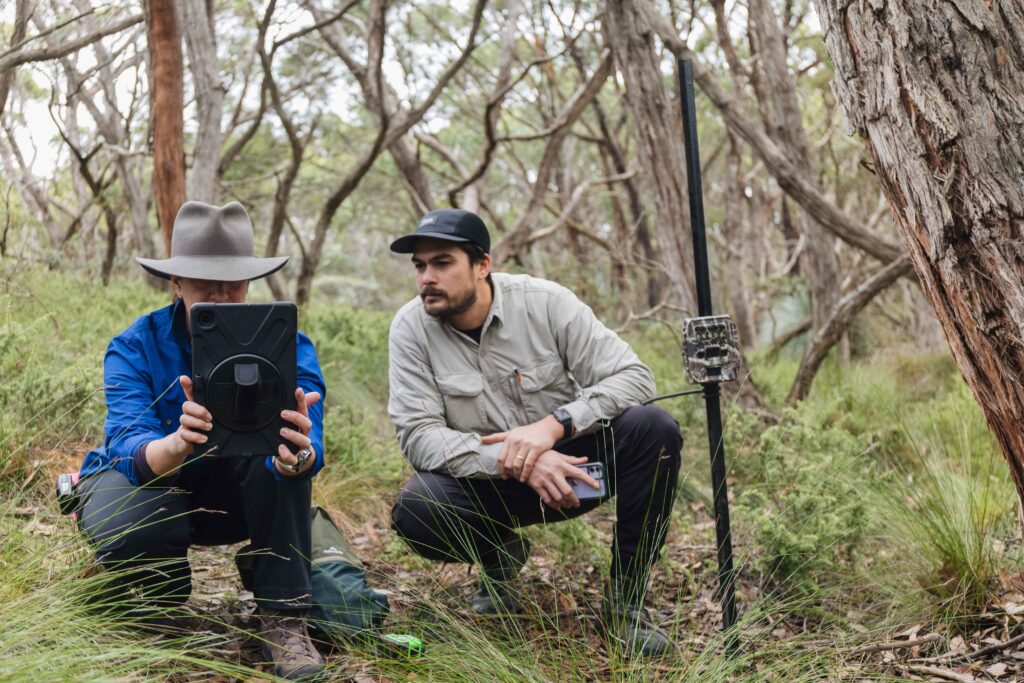

Led by TERN’s Strategic Engagement and Futures team, the survey took place in September–October 2025 and received a strong level of engagement relative to sector benchmarks, particularly given the scientific diversity of the research community: the 181 respondents included researchers, practitioners and leaders in ecology, agriculture, climate, data science and conservation.
They were asked what research questions they hoped to answer over the next decade, as well as which types of observations or scales of analysis are becoming more important in their fields. We also asked which other research disciplines they are now working more closely with, or are likely to in the future.
The full synthesis of the the TERN Research Directions 2025–2035 survey will be published in early 2026 and will include emerging data needs, methodological trends, and cross-disciplinary opportunities.
“We are taking the time needed to do justice to the depth, courage and originality shown by the respondents,” says TERN Futures Manager, Dr Isabel Ceron.
In the meantime, the preliminary findings of the survey are already yielding valuable insights, and offer a broad snapshot of Australia’s environmental research landscape — spanning the spectrum from fundamental science to applied practice, from fieldwork to data infrastructure, and from research insight to policy impact.
In particular, the survey responses reveal how Australia’s terrestrial ecosystem research community sees its field evolving — what questions are rising in importance, how observation and analysis practices are changing and where researchers see gaps or emerging needs.

“Early themes from the survey point to a research community that is both ambitious and deeply reflective about Australia’s environmental future,” says Isabel.
Respondents raised more than 300 distinct ecosystem research questions they hope to explore, ranging from foundational ecosystem processes to sophisticated modelling, restoration strategies and whole-landscape management challenges. Today, TERN is releasing an interactive snapshot of these 300+ questions, offering a first look at the ideas and ambitions shaping Australia’s next decade of terrestrial ecosystem research. Please explore the interactive infographic below:
If you are having trouble viewing the interactive infographic, please just follow this link to view on a separate page: TERN Survey Ecosystem Research Questions
The remarkable breadth of these questions shows a community that is not only advancing scientific understanding, but also looking for practical, scalable ways to support decision-making across agriculture, conservation, climate adaptation and land management.
Moreover, the survey responses are already informing TERN’s strategic conversations about how national-scale ecosystem monitoring, data integration and analytical infrastructure can evolve to meet future needs. The insights will guide TERN’s planning for new capabilities and will contribute to wider national processes seeking to understand what Australia’s science system needs to help protect, manage and restore its ecosystems in the decade ahead.