


What is ILTER and why does it matter?
Somewhere in Patagonia, a researcher measures how a forest responds to decades of shifting rainfall. In Tasmania, sensors track carbon moving through towering eucalypt canopies. In South Korea, scientists monitor the slow creep of nitrogen through ancient soils. These observations are separated by thousands of kilometres, yet they are united by a shared purpose and a shared network: ILTER, the International Long Term Ecological Research Network.

Somewhere in Patagonia, a researcher measures how a forest responds to decades of shifting rainfall. In Tasmania, sensors track carbon moving through towering eucalypt canopies. In South Korea, scientists monitor the slow creep of nitrogen through ancient soils. These observations are separated by thousands of kilometres, yet they are united by a shared purpose and a shared network: ILTER, the International Long Term Ecological Research Network.
Founded in 1993 at a gathering of US scientists in Estes Park, Colorado, ILTER grew from a recognition that ecological change, the kind that really matters, unfolds over decades, not grant cycles. What began as a loose alliance of national research programs has grown into one of the most significant environmental science partnerships on the planet. Today, ILTER brings together 39 member networks spanning more than 750 research sites across every continent, covering an extraordinary breadth of ecosystems: tropical forests, Arctic tundra, Mediterranean shrublands, grasslands, rivers, and coasts.
ILTER describes itself plainly as “a network of networks.” Its members are a combination of dedicated individual scientists along with their lab teams and entire national long-term ecological research programs, each with their own sites, monitoring infrastructure and datasets built up over years or decades. What ILTER offers is the connective tissue between them: the common standards, collaborative frameworks and global platforms that allow a researcher in Austria and a researcher in Chile to compare their data meaningfully and to ask questions neither could answer alone.
The network’s vision is equally plain: a world in which science helps prevent and solve environmental and socio-ecological problems. Its method is patient, rigorous and irreplaceable, long-term, site-based observation that builds the kind of evidence base needed to understand not just what ecosystems look like today, but how and why they are changing.
Australia in the network
Australia’s membership of ILTER is maintained by TERN Australia, the Terrestrial Ecosystem Research Network, which holds that seat on behalf of the entire Australian long-term ecological research community. Membership is not exclusive to TERN itself; participation in ILTER and its international science conferences is open to any Australian researcher working in this space.
Australia at the table: shaping ILTER from the inside
Australia’s engagement with ILTER extends well beyond membership. Two TERN staff members currently hold positions on ILTER’s international committees, helping to shape the direction of the network from within.


Dr Siddeswara Guru (left, above) serves as Co-Chair of the ILTER Information Management Committee (IMC). This role places him at the centre of one of the most consequential challenges in global ecological science: making data from hundreds of research sites, collected by dozens of independent national networks, genuinely interoperable and useful. The IMC works to establish a Data Management Framework for ILTER that defines a federated shared infrastructure along with the standards, policies and best practice that underpin it. Current activities include developing a shared conceptual model for site description; building and upgrading DEIMS-SDR, the open registry of ILTER research sites, their variables under observation and their instrumentation; and surveying member networks on their readiness to contribute site and data catalogue information into a federated data structure. The committee is also working to link ILTER into major international initiatives including the Group on Earth Observations (GEO) and the Research Data Alliance (RDA). Beyond its technical work, the IMC functions as a practical knowledge exchange, a forum where networks can learn from each other’s data management approaches and avoid reinventing solutions that colleagues elsewhere have already found. Guru’s co-leadership of this committee reflects both his own expertise and the strength of TERN’s data infrastructure, which has long been recognised within ILTER as a model worth learning from.
Tayla Lawrie (right, above) brings a different but equally important perspective to the international table as a member of the ILTER Science Committee. Comprising researchers from multiple disciplines across many of ILTER’s member networks, the Science Committee is the body that defines ILTER’s scientific agenda, identifying the questions the network should be asking and the priorities it should pursue. In practice, this means the committee shapes the scientific programs for ILTER’s events, including the Open Science Meetings, working with the ILTER Executive Committee to invite keynote speakers and evaluating the abstracts submitted by prospective presenters. The committee also assesses proposals for ILTER Research Initiatives and advises on ILTER’s educational activities. Tayla’s seat on this committee ensures that Australian perspectives, such as the distinctive research questions raised by this continent’s ecosystems and the scientific insights generated from long-term monitoring here, have a voice in the conversations that set the direction of global long-term ecological research.
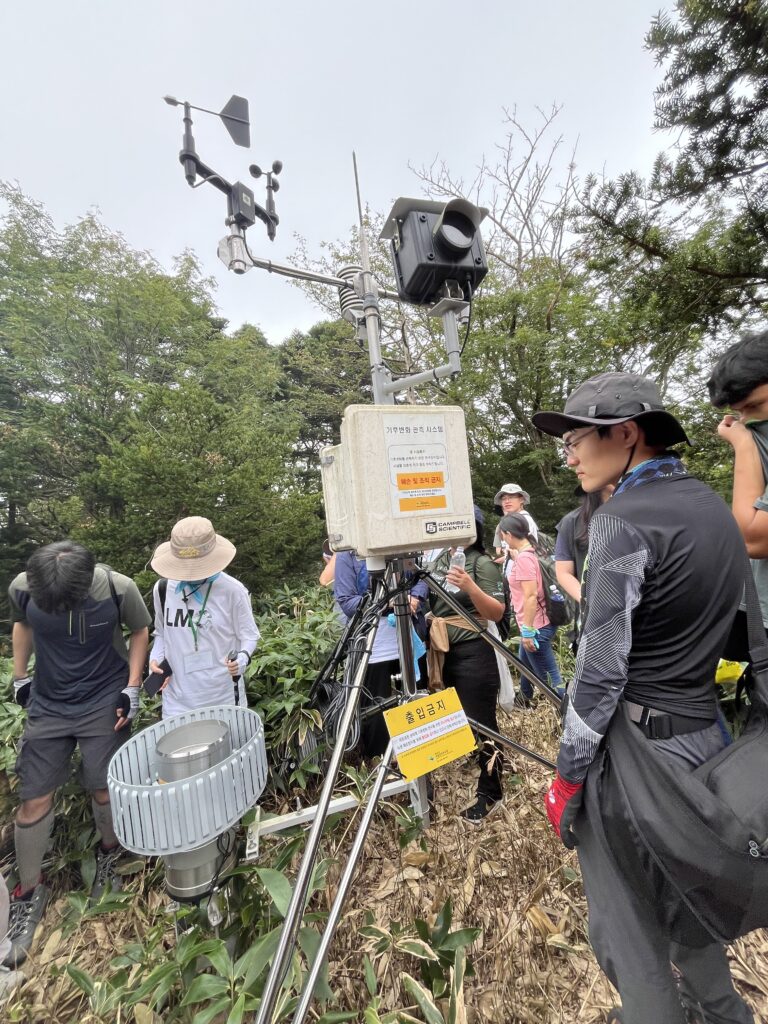
2024 International Ecology School – a feature of the EAP-ILTER calendar (image: Eleanor Velasquez)
Australia sits within ILTER’s East Asia-Pacific regional grouping, alongside Japan, South Korea, China, Taiwan and other nations. It is one of 39 member networks in the global body and TERN currently has 27 long-term research sites formally registered in ILTER’s global site database (DEIMS-SDR), though the actual number of qualifying Australian sites is understood to be considerably larger.
Feedback from within ILTER has consistently noted that Australia is leading the way in several areas of long-term research infrastructure and data capture. TERN’s contribution to global studies, including multi-country investigations into nitrogen pollution and its effects on ecosystem function, has placed Australian ecosystems in global context and demonstrated their importance to broader questions about how the planet is changing.
A new opportunity: the ILTER Global Activity 2026–2027
ILTER is preparing to launch one of its most significant collaborative scientific initiatives in recent memory: the ILTER Global Activity 2026–2027, designed specifically to showcase the network’s collective strength and demonstrate what coordinated global ecology can achieve.
The concept is deliberately ambitious but practically elegant. Teams are invited to propose a scientific topic of their choosing: any ecologically meaningful question, except decomposition studies (which have been the subject of previous ILTER initiatives), with the aim of generating a simple, standardised dataset that can be collected consistently across ILTER sites worldwide. The goal is not complexity for its own sake, but comparability, producing the kind of data that can only emerge when hundreds of research teams, spanning every biome on Earth, measure the same thing in the same way.
The call for proposals opened in March 2026 and is structured in 2 stages. In the first stage, interested teams submit proposals for the scientific topic and their capacity to coordinate the initiative. The selected team will then work closely with ILTER centrally to co-design the activity in detail, developing training materials, agreeing on data standards and conducting pilot tests across a subset of sites. During the implementation phase, the coordinating team will liaise with participating sites across the global network, manage incoming data and ensure results are visible through ILTER’s platforms and communication channels.
This is a genuine opportunity for Australian researchers. The initiative is explicitly designed to foster broad participation across ILTER member sites and Australia, with its distinctive and globally important ecosystems, is well placed both to contribute data and potentially, to lead. Any research team with the capacity to coordinate an international ecological study and an idea for a compelling, cross-network scientific question is encouraged to consider submitting a proposal. TERN is happy to discuss with interested researchers how it could support proposals via its sites, data, protocols, international linkages, etc.
Mark the calendar: Bariloche 2027
The next major gathering of the global ILTER community is already taking shape and the setting is extraordinary.
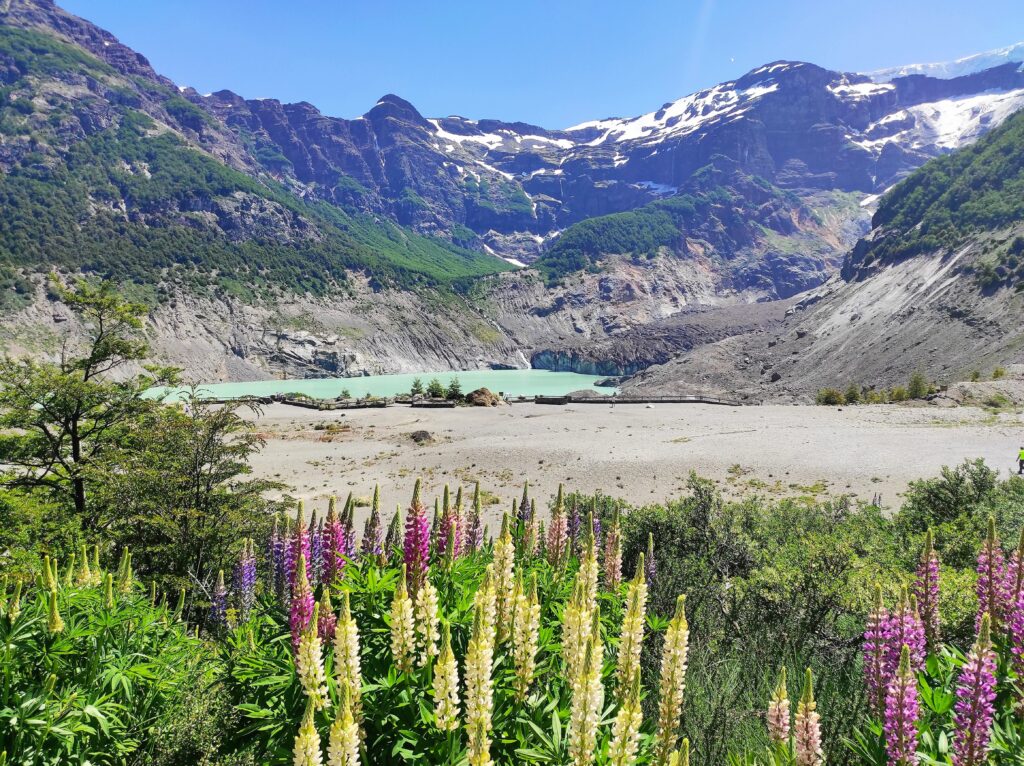
Glacier Manso et Ventisquero, in Nahuel Huapi National Park near San Carlos de Bariloche, Argentina (image: lescarexpat)
The Fourth ILTER Open Science Meeting (OSM) is planned for 7–12 March 2027 in Bariloche, Argentina, hosted at the Bariloche Convention Centre (BEC). The event is being supported by the University of Buenos Aires, the Ecological Society of Argentina and a range of other Argentinian research institutions.
ILTER’s Open Science Meetings are held every three years and represent the flagship event of the international long-term ecological research community. They bring together scientists, policymakers and research practitioners from across the ILTER network and beyond to share the latest findings in ecosystem science, forge new collaborations and take stock of where the discipline is heading. Early career researchers and postgraduate students are always actively encouraged to attend.
The 2027 meeting carries additional significance. It has been conceived with an explicit purpose beyond the usual scientific program: to elevate the Americas Ecological Network, strengthen the profile of ecology across South America, and improve ILTER’s representativeness in the Americas and the Global South more broadly. Bariloche sits on the edge of Patagonia, one of the most ecologically remarkable and scientifically important regions on the planet and the meeting is expected to include field trips that allow participants to experience firsthand the landscapes that long-term ecological research exists to understand and protect.
More details on the event will be published at ilter.network/latest/events as they are confirmed.
For Australian researchers, this is a meeting worth planning for now. Whether to present long-term data from Australian sites, explore international collaboration possibilities, or simply to engage with the pulse of global ecological science in one of the world’s great wilderness settings, Bariloche 2027 is shaping up to be unmissable.
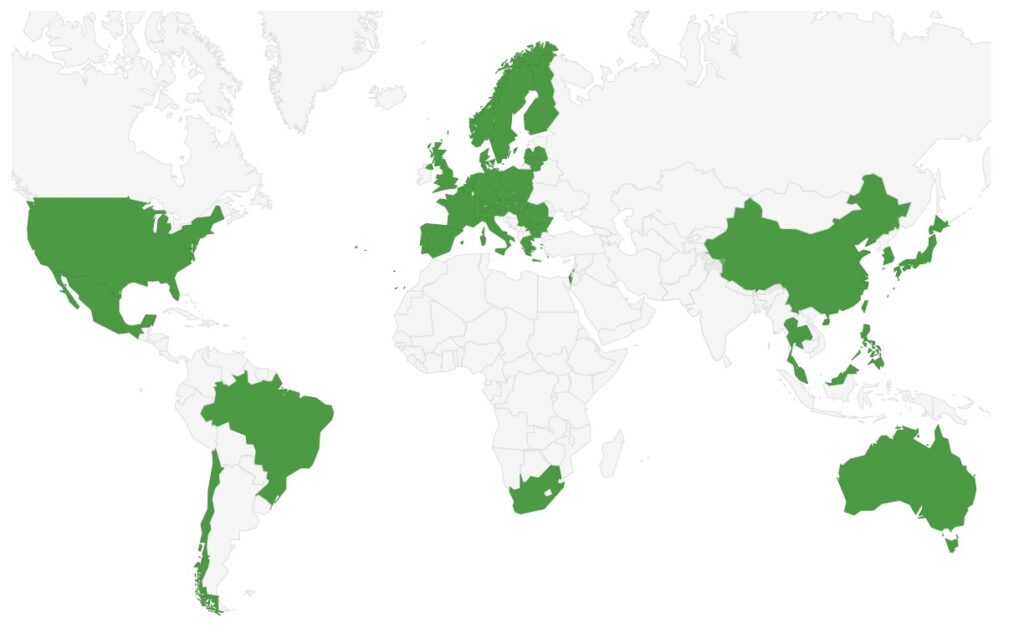
ILTER currently encompasses 39 member networks (image: ILTER)