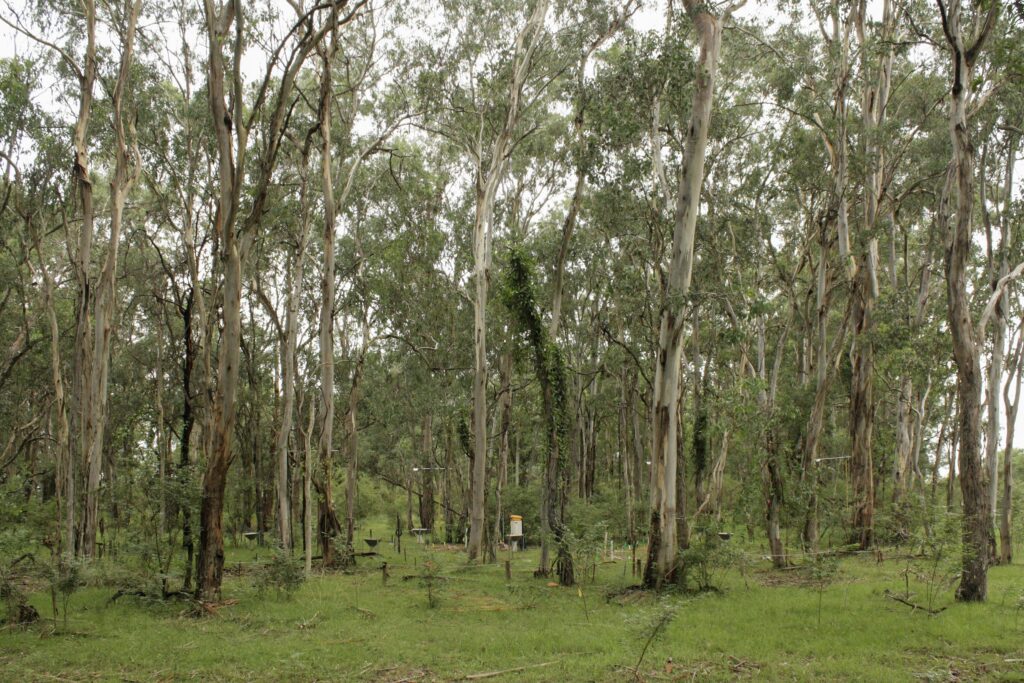

TERN was delighted to welcome its newly appointed Advisory Board Chair, Dr Les Trudzick, to the Cumberland Plain Woodland SuperSite on 3 March, marking his first field engagement since stepping into the role. Travelling from his home base in Melbourne, Dr Trudzick spent the day immersed in one of Australia’s most comprehensively instrumented ecological observatories, an ideal introduction to the scale, ambition, and national value of TERN’s research infrastructure.
Dr Trudzick was hosted by leading researchers from Western Sydney University’s Hawkesbury Institute for the Environment (HIE): Distinguished Professor Belinda Medlyn, Chair of the TERN Science Advisory Committee; Professor Elise Pendall, who has led the SuperSite for TERN for many years; and Professor Brendan Choat, whose Blue Mountains transect forms a recent critical extension of TERN’s monitoring network. TERN Director Dr Beryl Morris and Associate Director, Operations, Jill Penridge, accompanied the visit.
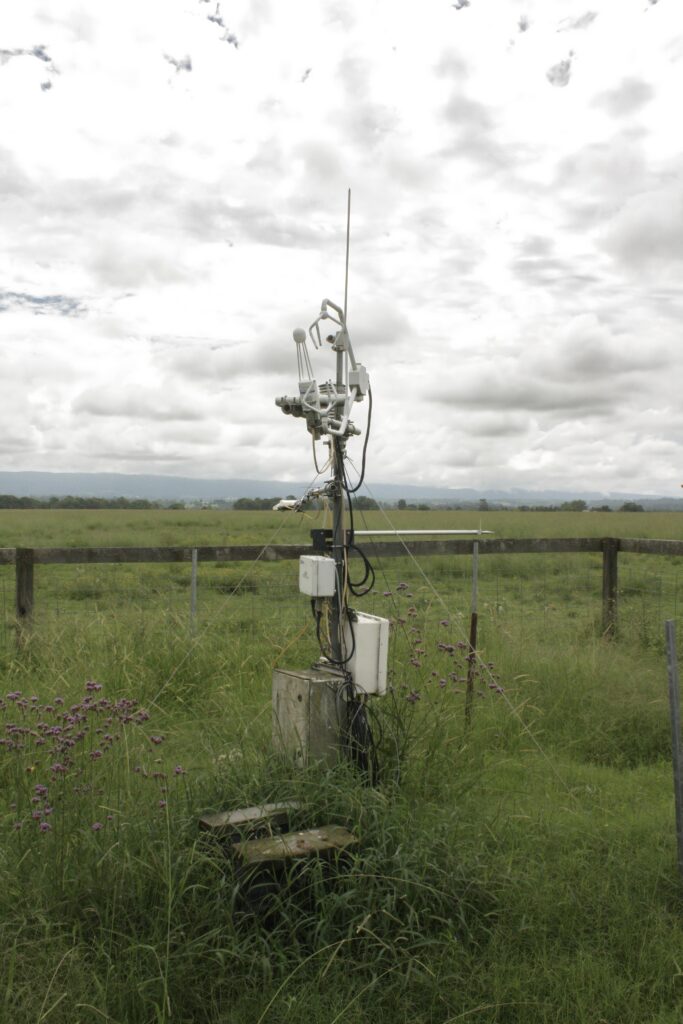
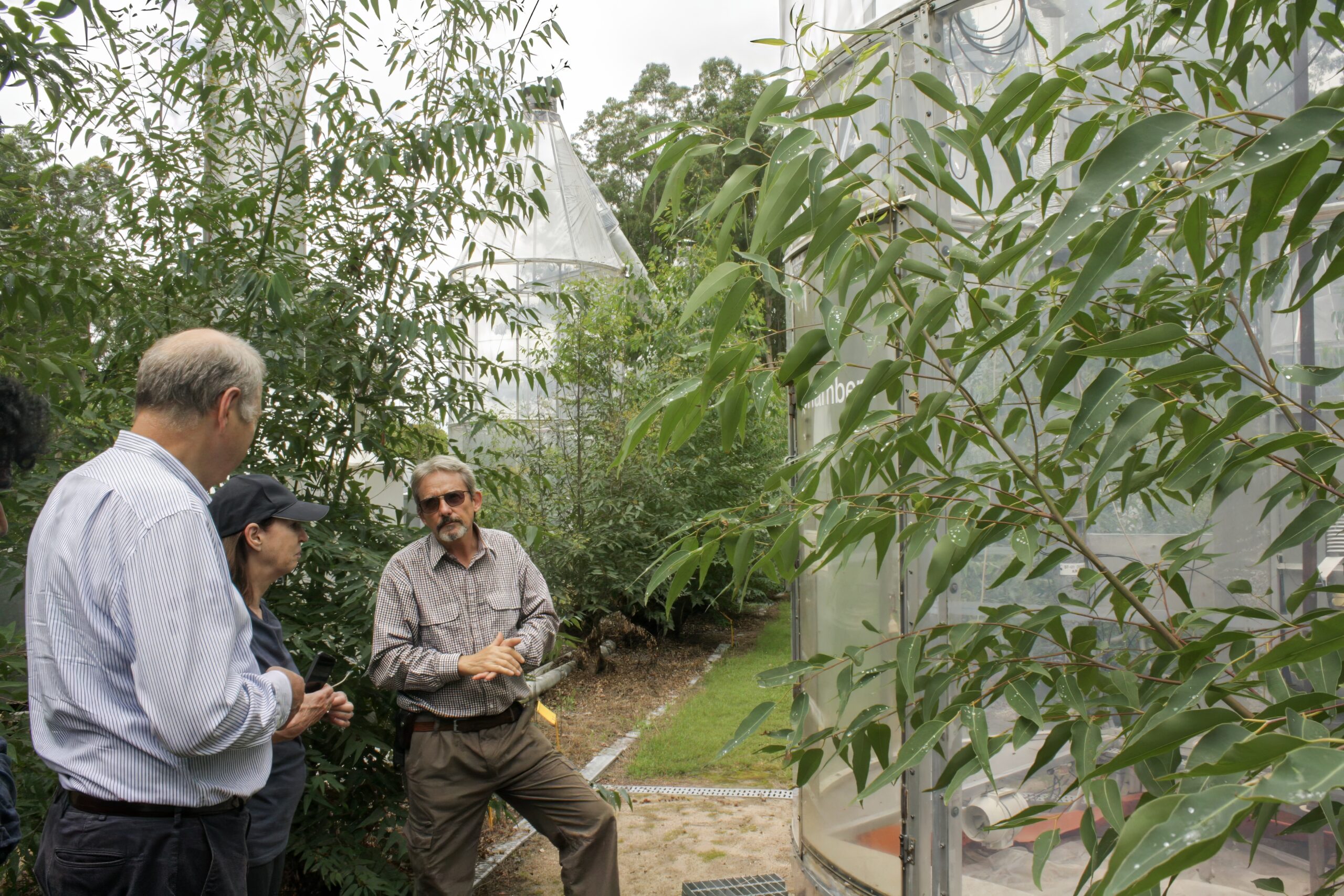
Risking ruination of shoes in the water-saturated paddocks, the result of recent heavy rains that have caused flooding across large areas of Australia and chance encounters with snakes enjoying rare sunshine, the group explored the SuperSite’s world‑class infrastructure, including the flux towers, whole‑tree chambers and the internationally significant EucFACE experiment. These platforms underpin more than a decade of continuous monitoring that has reshaped scientific understanding of climate change, carbon cycling, biodiversity pressures, and urbanisation impacts.
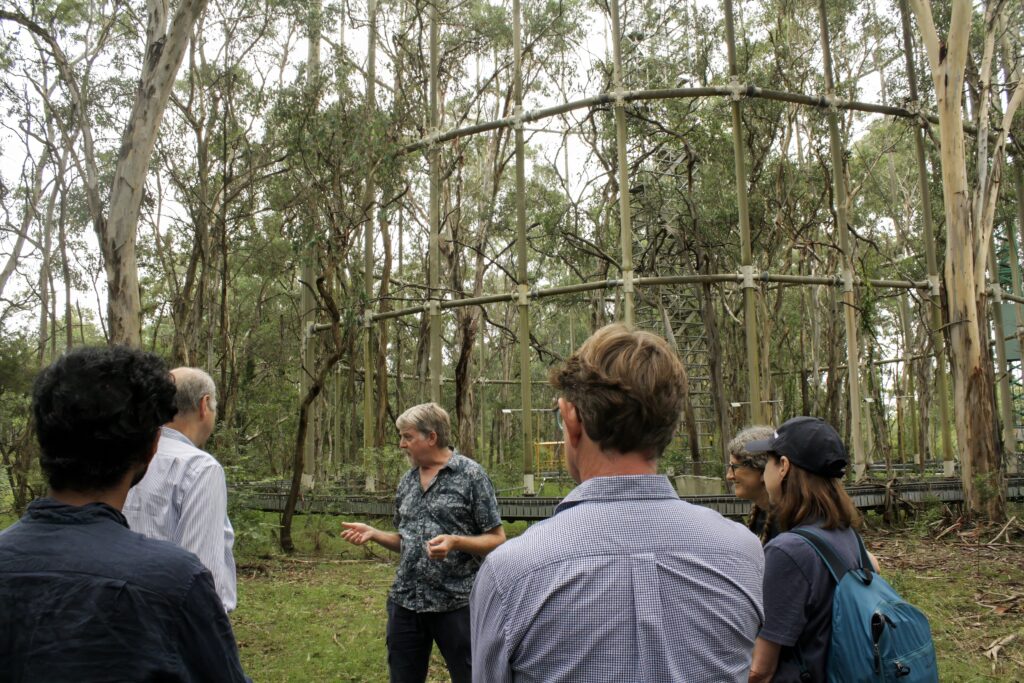
Professor David Ellsworth explains the Eucalyptus Free-Air CO2 Enrichment (EucFACE) experiment (image: Jill Penridge)
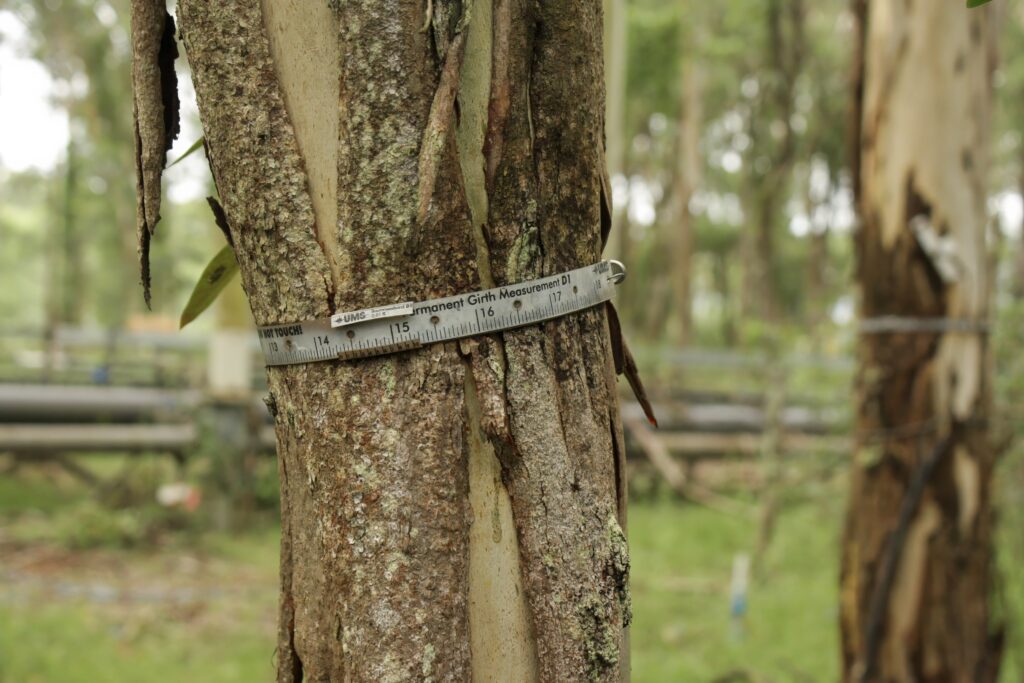
Researchers shared key findings with Dr Trudzick, including evidence that trees behave differently during heatwaves than models predicted, that elevated CO₂ does not increase carbon sequestration in mature native forests, and that woodland carbon uptake peaks in winter rather than summer. The team also discussed long‑term vegetation and soil insights, such as the threshold at which mistletoe load halts tree growth and the importance of soil physico‑chemical properties in controlling carbon and nitrogen stocks.
The visit concluded with a discussion of the Blue Mountains transect, a step change in ecological research capacity, which extends TERN’s monitoring from the lowland woodland into the Blue Mountains World Heritage Area using innovative IoT‑enabled sensors.
Reflecting on the day, Dr Trudzick noted the strategic importance of long‑term ecological data for Australia’s climate resilience, biodiversity conservation and sustainable urban development. The visit provided a powerful demonstration of how TERN’s national research infrastructure delivers the evidence base required to meet Australia’s environmental challenges.