Australia’s NCRIS: celebrating a model for long-term environmental research infrastructure funding
Published
As NCRIS marks its twentieth anniversary, the experience of Australia’s national research infrastructure program offers an important lesson for environmental research worldwide: meaningful evidence of environmental change depends on long-term investment, not short funding cycles.
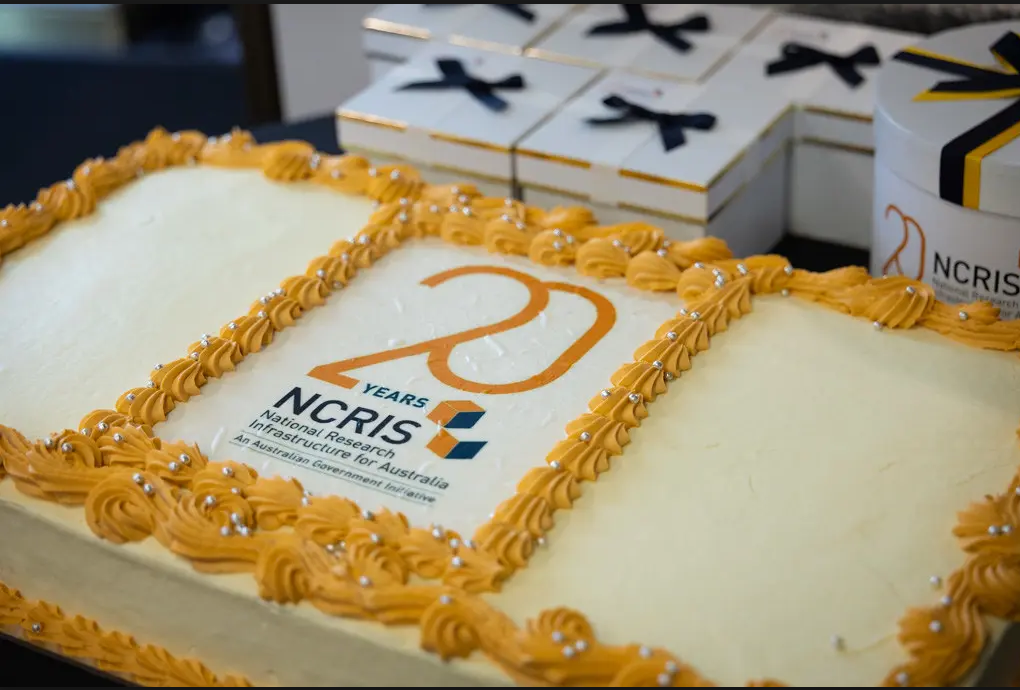
At the end of June, Canberra hosted three days of events marking the 20th anniversary of the National Collaborative Research Infrastructure Strategy (NCRIS), Australia’s long-term investment in the shared facilities, instruments, and data platforms and expertise that underpin national research. A Parliamentary Reception, a community breakfast for NCRIS staff and a full-day symposium brought together researchers, facility operators, policymakers and industry to mark the occasion and to look ahead to the next chapter of investment.
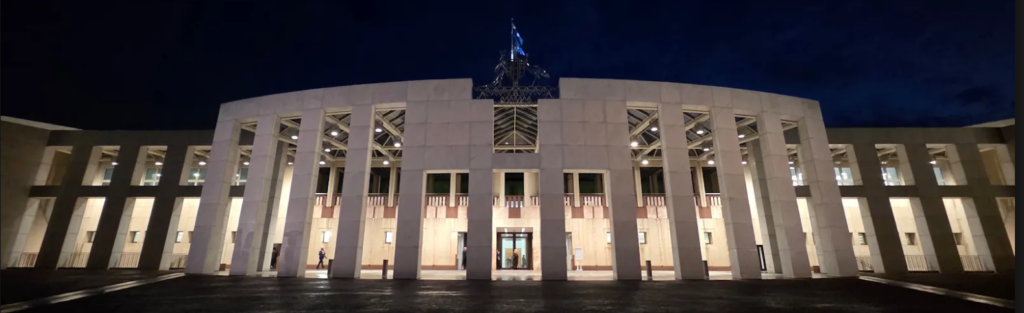
Top: Australia’s Parliament House, Canberra, venue for the NCRIS@20 Parliamentary Reception.
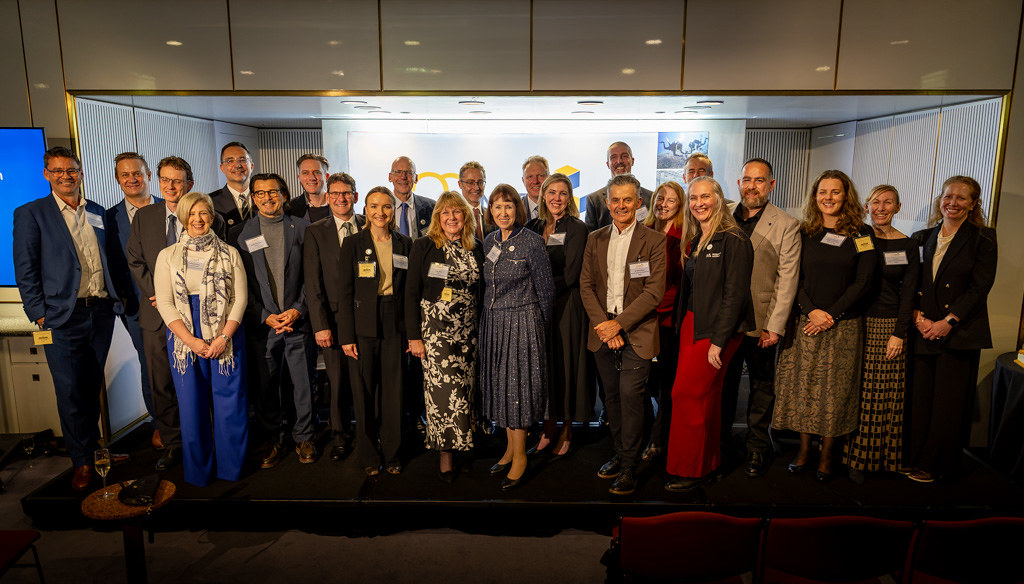
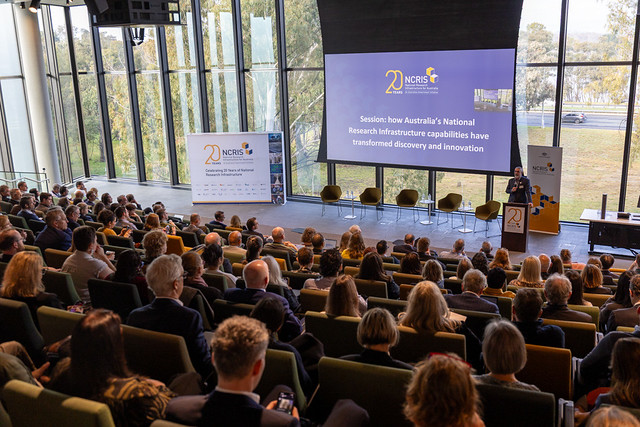
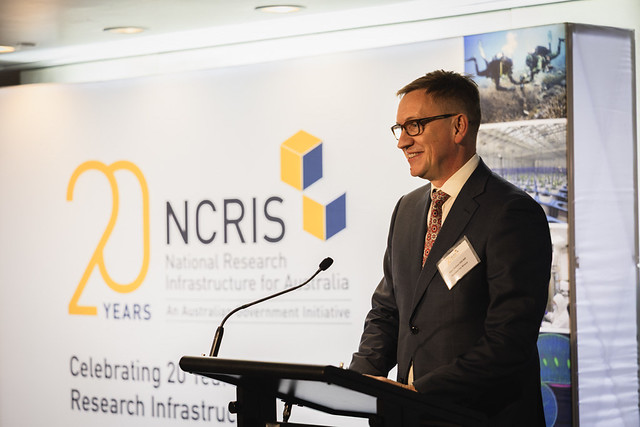
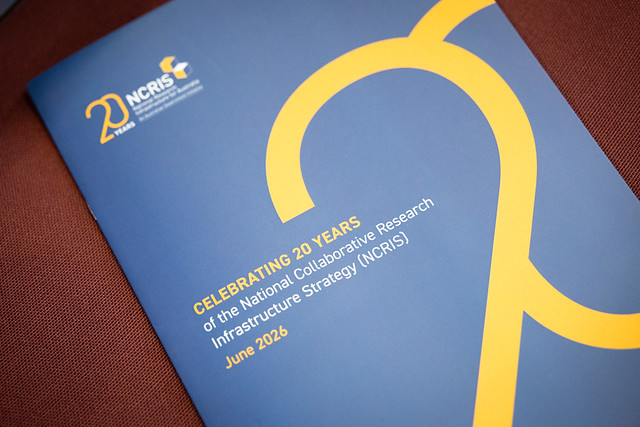
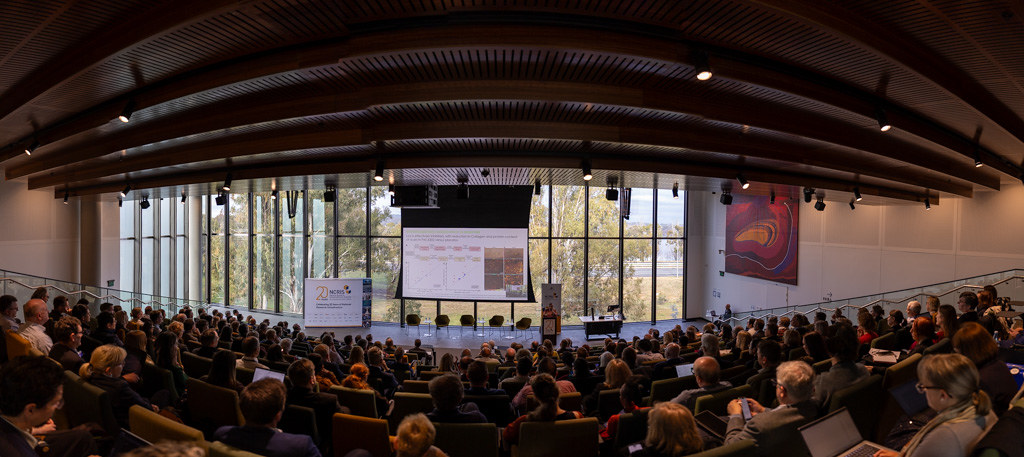
L-R: 2026 Directors of NCRIS Capabilities; breakfast networking for staff of NCRIS – simultaneous gatherings were held Australia-wide; NCRIS@20 Symposium in Canberra celebrated achievements and looked forward to the next 10 years.
The headline figure is AU$5.5 billion invested since 2006, supporting 26 major facilities and around 130,000 users a year, more than 5,000 of them Australian startups and small businesses. But for those of us working in long-term environmental research, the most important number is not AU$5.5 billion. It is twenty.
NCRIS has now been funded, renewed and rebuilt across eight federal parliaments and successive governments of both political colours. As Assistant Minister Julian Hill noted at the Parliamentary Reception, NCRIS is one of Australia’s most successful long-term science and innovation policies precisely because it has outlasted the ordinary churn of politics. Former minister Kim Carr, who helped establish the program two decades ago, used his own address to argue that this kind of patient, nationally coordinated investment is exactly what allows scientific knowledge to be converted into economic capability and social progress over time, not just in a single budget cycle.
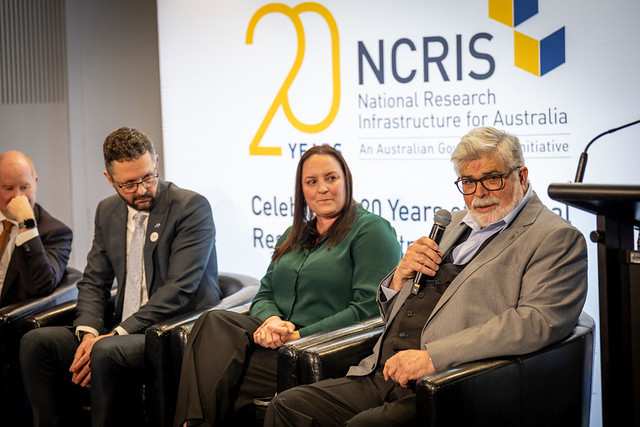
Parliamentary Reception to celebrate NCRIS@20 on 29 June 2026, Canberra. L-R: Hon Julian Hill MP, Assistant Minister for International Education, Australian Government; Hon Kim Carr, former Minister for Industry, Innovation, Science & Research (speaking) with Profs Nicole Pratt, Mark Hutchinson and Tim Sendon; networking among the invited guests.
That bipartisan endurance is itself a form of return on investment. Scientific infrastructure is only valuable if it remains available long enough to generate cumulative knowledge. Facilities cannot be switched on and off. Skilled technical teams take years to build and international partnerships depend on being able to make reliable long-term commitments. When funding survives changes of government, it signals to researchers, institutions and international collaborators that Australia is a dependable long-term partner, which is worth more than any single grant
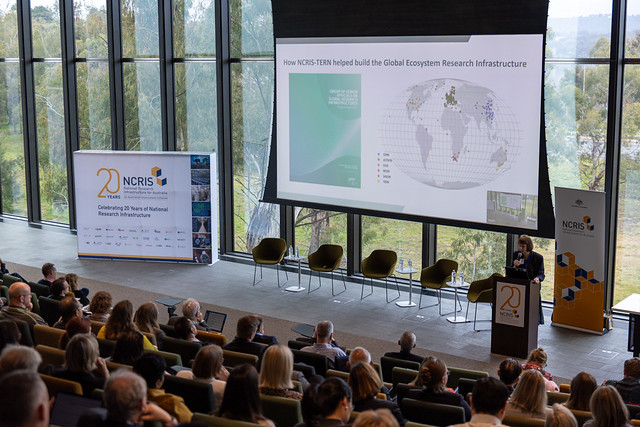
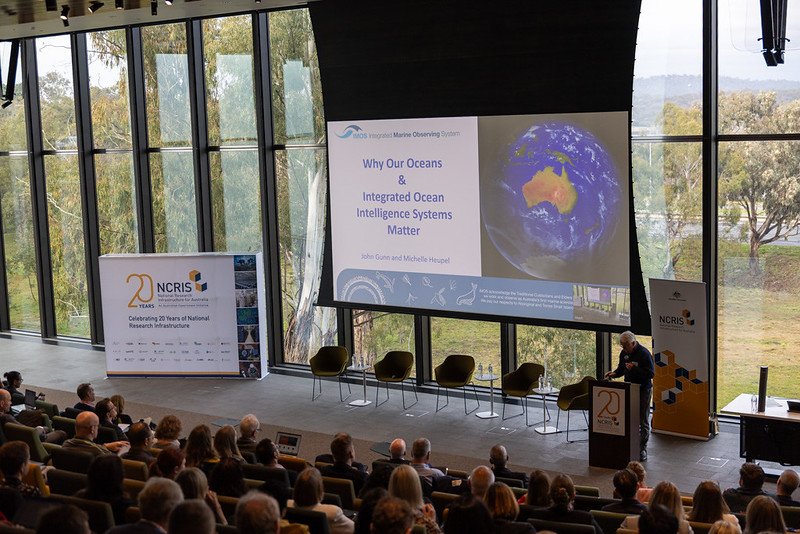
At the NCRIS Symposium on 30 June, the cluster of Earth and environment NCRIS capabilities showcased their connectivity, both nationally and internationally. TERN (L) focused on its place in the Global Ecosystem Research Infrastructure (GERI) and IMOS (R) highlighted the necessity for integrated ocean intelligence systems.
For TERN and the broader environmental monitoring community, this longevity is not a nice-to-have. It is the entire point. Detecting genuine environmental change requires distinguishing a real trend from the ordinary noise of seasonal cycles, droughts, floods and multi-year climate oscillations such as El Niño and La Niña. That signal only emerges from datasets that run for decades, not years. A monitoring network that is refunded every three or four years, with gaps and uncertainty in between, cannot deliver the same evidence base as one with a twenty-year (and counting) track record. The NCRIS model has allowed environmental observation infrastructure, from flux towers to ocean buoys to long-term ecological plots, to keep collecting comparable data for long enough that real change can be told apart from natural variability.
The value of long-term observation networks has been demonstrated repeatedly through international collaborations such as ILTER and GEO BON where decades of consistent measurements reveal environmental change that would otherwise remain invisible.
Of course, the impact on long-term infrastructure funding extends well beyond environmental science. For example, NCRIS-supported genomics, bioinformatics and supercomputing capabilities are helping researchers respond to the current H5N1 avian influenza threat. Long-term ocean observation programs have also contributed to AI-powered technologies that help shipping operators reduce fuel use and emissions. Meanwhile, advanced microscopy and geoscience infrastructure have supported improvements in cochlear implant technologies used by hundreds of thousands of people worldwide.
Australia is not alone in wrestling with how to fund research infrastructure for the long term. Europe’s ESFRI process sets roadmaps stretching ten to twenty years ahead, but a place on that roadmap signals political support rather than guaranteed national funding. Many countries face the same tension between political cycles that run in years and scientific infrastructure that needs decades. The challenge is particularly acute for environmental observing systems, where interruptions in data collection can permanently reduce the value of long-term records.
NCRIS offers a rare example of a program that has actually delivered on that longer time horizon in practice, not just on paper, though as the NCRIS@20 statement released at the symposium makes clear, funding beyond 2028 to 2029 is not yet guaranteed.
Twenty years of bipartisan support is worth celebrating. It is also a reminder of what is at stake if that continuity is not maintained. Long-term environmental records cannot simply be restarted once they are interrupted, and many of the research questions that matter most, from climate change and biodiversity loss to ecosystem resilience, can only be answered through decades of sustained observation. For research communities around the world, Australia’s NCRIS experience offers both an encouraging model and a continuing challenge: building the long-term commitment needed to generate knowledge that outlasts political cycles.
Links to media and opinions marking the NCRIS@20 celebrations