


Day 1 — Monday 5 July 2021
 Keynote
Hugh Possingham
TERN – Looking forward, looking back
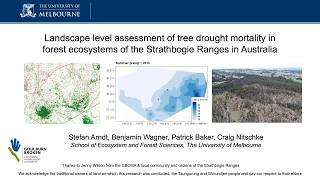
Stefan Arndt
Landscape level assessment of tree drought mortality in forest ecosystems of the Strathbogie Ranges in Australia
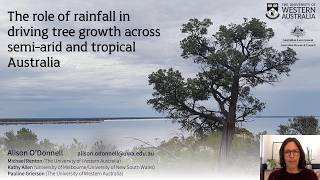
Alison O'Donnell
The role of rainfall amount and intensity in driving tree growth across semi-arid and tropical Australia
Jamie Cleverly
Stress, recovery and resilience to climate extremes in Australian ecosystems and agricultural landscapes
Anne Griebel
Tapping into the physiological responses to mistletoe infection during heat and drought stress
Lucas Cernusak
The water-use efficiency response of eucalypts to rainfall is modulated by soil phosphorus across Australia
Alfredo Huete
Developing best practice Himawari data products for enhanced sub-daily monitoring and climate impact studies of Australia's ecosystems
Tamara Potter
Demonstrating post-fire changes in vegetation and soil using TERN Surveillance monitoring: a case study from the Kangaroo Island bushfires
Thomas Van Niel
Assessment of flux tower energy and water balance variables over Australian climate zones: implications for modelling
Jeff Powell
Biodiversity and biogeography of wood decay fungi within the TERN Australian Field Observatory SuperSites

Emrys Leitch
Celebrating 10 Years of TERN Ecosystem Surveillance across Australia
Irene Martin-Fores
Applying conservation reserve design strategies to define ecosystem monitoring priorities
Arko Lucieer
Advances in drone remote sensing for ecosystem monitoring
Alison Hewitt
Investigating fire responses in endangered ecological communities of the Cumberland Plain in northwest Sydney
Katie Irvine
Extending biodiversity monitoring across space and time through citizen science
Qiaoyun Xie
Australian land surface phenology product from MODIS
Juan Guerschman
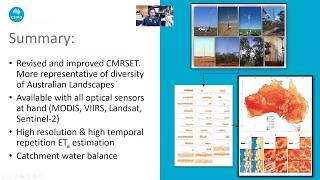
Developing a multi-decade, operational, Australia-wide, monthly, 30m actual evapotranspiration dataset: Part 1
Jamie Vleeshouwer
Developing a multi-decade, operational, Australia-wide, monthly, 30m actual evapotranspiration dataset: Part 2
Matthew Stenson
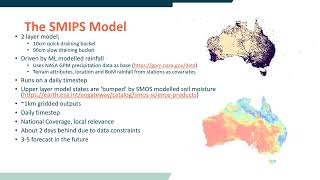
Building a near real time continental soil moisture prediction using a Data-Model Fusion Approach system for Australia
Ashley Sommer
Detecting and correcting data errors in time series observations from geographically remote monitoring stations
Siddeswara Guru
Towards harmonisation and integration of ecology data
Greg Guerin
ausplotsR – rapid access to vegetation plot data across environments
Julia Bignall & Mark Laws
Standardising environmental monitoring protocols and data systems for improved decision-making
Kimberley McCallum
The value of standardised field survey methods for researchers
Bethany Cox
Using objective, standardised data collection to increase the efficiency of reporting under Federal programs
Day 2 — Tuesday 6 July 2021
 Keynote
Professor Stuart Phinn
Effective Transition from Research to Operations for Government and Industry
Megan Wong
Enabling soil data reuse for ecosystem management and decision making: A standards-based approach

Lewis Walden
Spatially explicit estimates of brown and blue carbon stocks in Australia's terrestrial and coastal marine biomes
Brendan Malone
Updating Australia's digital soil mapping products: Soil texture case study
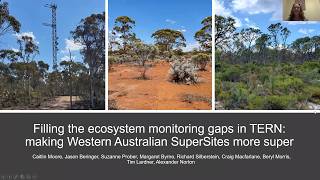
Caitlin Moore
Filling the ecosystem monitoring gaps in TERN: making Western Australian SuperSites more super
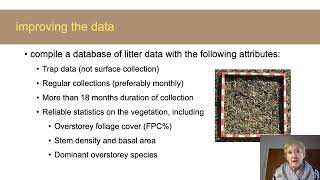
Alison Specht
Litterfall dynamics: developing a national dataset of daily fall rates and associated algorithms

Peter Grace
Reducing Australia's greenhouse gas emissions through soil management
Rachel Atkins
Soil carbon isotopic proxies for determining the photosynthetic pathway of floral communities: A method intercomparison
Marcela De Freitas Silva
Carbon and water exchange in a plantation during initial years of growth
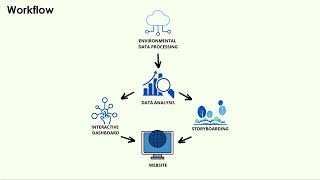
Hoang Long Nguyen
An Online Portal for Accessible OzFlux Data
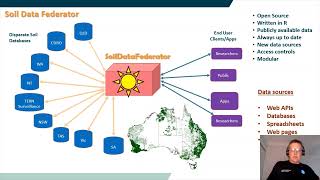
Ross Searle
The TERN Soil Data Federator
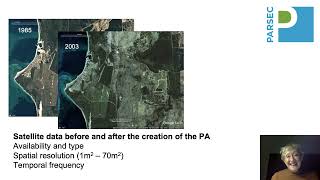
Alison Specht
The detection of socio-economic impacts of protected area creation
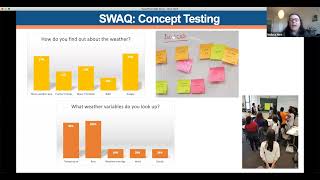
Melissa Hart
Where citizen science meets the built environment: the schools weather and air quality (SWAQ) network

Anu Devaraju
Enabling FAIR Flux Data in TERN
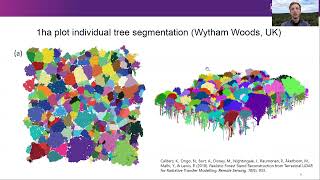
William Woodgate
TERN observatory synergies for scaling carbon pool and flux observations with remotely sensed data
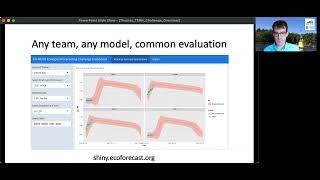
Quinn Thomas
The NEON Ecological Forecasting Challenge: Using forecasting challenges to leverage observational networks and advance prediction in ecology
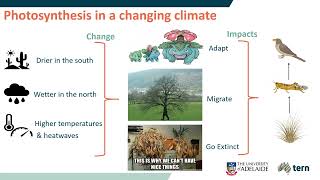
Samantha Munroe
Plants down under: defining and mapping the photosynthetic pathway of plants across Australia
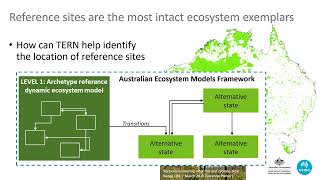
Kristen Williams
Using TERN products to predict habitat condition nationally
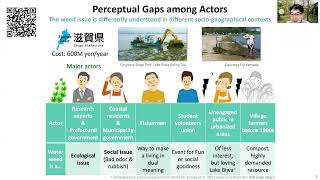
Yasuhisa Kondo
An inclusive approach to develop community capability for environmental conservation in Lake Biwa (Japan)

Andrew Tokmakoff
Paratoo: Next-Generation Field Data Collection Infrastructure
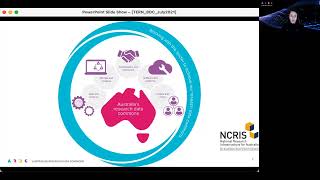
Adrian Burton & Sheida Hadavi
Bushfire data commons
Wilma Karsdorp
Robust scalable data management for EcoImages
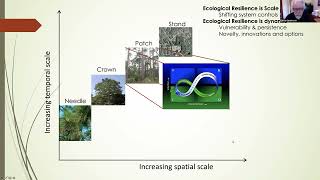
Lance Gunderson
Assessing resilience of terrestrial ecosystems in Australia across scales
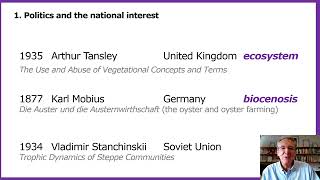
Ted Lefroy
Supersites and superorganisms: recurring themes in 85 years of ecosystem science
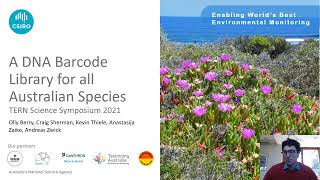
Olly Berry
A DNA Barcode Library for all Named Australian Species