
June has brought important outcomes for TERN through the Department of Education’s funding of National Data Research Infrastructure and the NCRIS Capability Gap process. These decisions shape our trajectory for the next two years and confirm both the strength of our national role and the areas in which we must continue to advocate for investment.
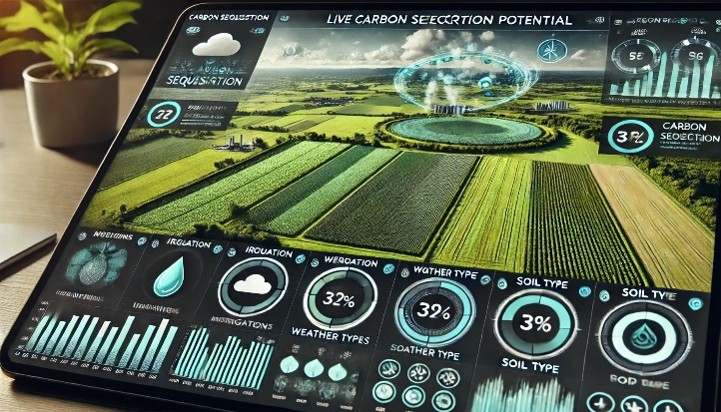
I am pleased to report that TERN has been awarded $7 million across the 2026–27 and 2027–28 financial years to deliver AgPathways, our major proposal to build nationally consistent monitoring systems for agricultural landscapes. The application highlighted the absence of integrated systems that reveal how soils, vegetation and management practices interact at scale and the risks this poses for climate resilience and market access. Among other deliverables, AgPathways will help TERN to create integrated databases as an aid to increasing rangeland productivity, tracking nitrous oxide emissions and nitrogen use efficiency and will also deliver digital tools that enhance training and standardise data capture for farmers and Indigenous groups.
This funding enables TERN to establish new flux towers and landscape monitoring sites in remote regions and to build the digital infrastructure required for national scale data integration. It also supports the development of training tools, including virtual reality modules and drone protocols, that will strengthen regional workforce capacity. The award recognises TERN’s leadership in agricultural landscape monitoring and our ability to deliver national capability that aligns with both climate commitments and industry needs.
In addition to this major investment, TERN has received over $2.4 million under the NCRIS Capability Gap round. This funding addresses urgent shortfalls in governance and staffing, repairs critical alpine sensors and supports continued operation of the acoustics network. These activities are essential for maintaining continuity across our long term ecosystem monitoring programs and for ensuring that TERN remains responsive to national priorities. The Capability Gap support provides stability during a period of significant demand for environmental data and ensures that our core infrastructure remains operational and reliable.
TERN will also gain small amounts of additional NDRI funding support via successful bids by consortia of NCRIS providers. In one example, TERN’s surface elevation table network will play a part in the new CoastRI consortium, led by IMOS. And in a second example, a consortium led by AURIN will see TERN contributing flux and other sensor data to the new Australian Urban Climate Research Initiative (AUCRI). This second initiative aims to enhance Australia’s ability to understand, model and respond to urban climate risks, focusing on both physical impacts from extreme weather events and longer term climate shifts.
Not all outcomes were positive. TERN was unsuccessful in its bid for NDRI funds to support scaling up our data team’s capacity to manage ever-increasing data heterogeneity and volume and to advance a foundational ecosystem model that would have enabled greater use of AI across our data assets. While disappointing, this decision reflects the high level of competition in the round and the need for continued advocacy for investment in digital capability.
Regardless of the funding outcomes for its data team, TERN will continue to demonstrate the national value of our data infrastructure and the importance of modern analytical tools that allow researchers and decision makers to work with complex environmental information at scale. Indeed, TERN has just been mentioned in an international blog as an exemplar of best practice in IGSN publication (IGSN stands for International Generic Sample Number, a persistent unique identifier for physical samples used in scientific research).
Across all funding outcomes, the message is clear. TERN remains central to Australia’s environmental research infrastructure landscape. The AgPathways investment positions us to deliver a major national uplift in agricultural monitoring and the Capability Gap funding ensures continuity of our core operations. We will continue to work closely with partners across NCRIS, government and industry to secure the remaining digital capability required to meet Australia’s environmental and climate challenges.
I close this update as celebrations are underway in Canberra to mark 20 years of NCRIS funding to capabilities in Australia. A successful event has taken place at Parliament House with positive reflections on NCRIS from the Hon Julian Hill MP and former MP, the Hon Kim Carr. On this last day of June, around the country, NCRIS staff have joined together for breakfast. In Canberra, participants at the NCRIS@20 Symposium are not only celebrating the remarkable milestone in longevity of bipartisan funding support, but also discussing what is needed to maintain the NCRIS program so it continues to elevate Australia’s world-leading research for the benefit of our innovation landscape, well-being and a sustainable future.
Happy reading of this month’s stories.
Dr Beryl Morris, Director, TERN Australia
Image above: AI-generated concept of a future carbon sequestration dashboard, as envisioned to be delivered to Australian agricultural land users by TERN Australia