

This is an important time to look ahead, both for TERN and for Australia’s national research infrastructure landscape.
Help shape the next 5 years of national research infrastructure investment
This year, the Australian Government will be delivering its 5-yearly National Research Infrastructure (NRI) Roadmap, identifying Australia’s research infrastructure needs and establishing priorities to guide future investment. Australia is making choices now about the research infrastructure it will need over the next decade. The 2026 NRI Roadmap Exposure Draft gives us a peep at the proposed direction for that future, including how national capabilities should work together, where greater coordination is needed and how research infrastructure can better translate research into practical outcomes. The exposure draft is briefly open for consultation, giving us, the environmental research community, an opportunity to participate in shaping those choices.
The draft Roadmap provides a rare opportunity for researchers and other users of environmental research infrastructure to ask that their future needs be visible in national planning. Have your say: read the 2026 NRI Roadmap Exposure Draft and respond to the consultation by 12 pm AEDT, 26 October 2026.
Read our new Strategic Plan
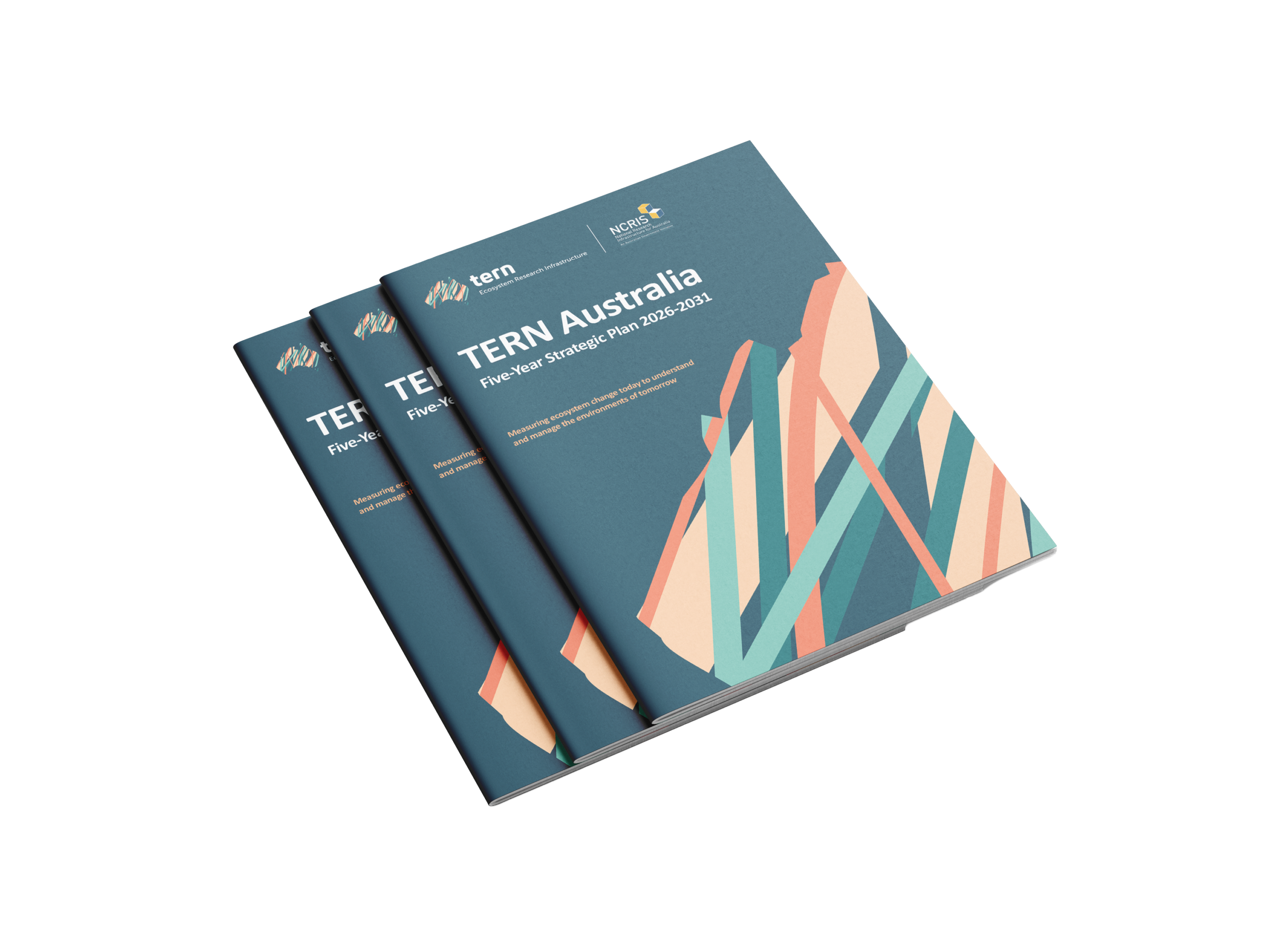
TERN has released its Strategic Plan 2026–31, replacing the 2023–28 plan.
Bringing forward a refreshed strategy allows TERN to: better align with the 2026 NRI Roadmap; include activities that were made possible with the award of additional infrastructure funding in July 2026 to expand our agricultural and faunal monitoring activities; and also gives us an opportunity to respond to a rapidly changing research environment. This includes findings from TERN’s extensive community consultation undertaken through its Research Directions 2025–2035 process. That consultation highlighted increasing emphasis on ecosystem stewardship and restoration, integration across biodiversity and climate research, stronger coupling of observations and models and clearer pathways from data to decision-making.
Additionally, as AI becomes a routine part of research, data quality, provenance and trust become more important, not less. Powerful analytical tools can process extraordinary amounts of information, but their outputs are only as reliable as the data underpinning them. This is why our new strategy goals place an even stronger emphasis on data quality control and assurance. TERN’s ambition is not simply to provide more environmental data, but to deliver trusted data for environmental intelligence.
Over the next 5 years, we will need to balance continuity with innovation. Long-term observations become more valuable with time while new technologies, expanded monitoring capabilities and AI create opportunities to ask questions in ways we could not previously envisage.
I encourage you to read the new TERN Strategic Plan and to engage with the 2026 NRI Roadmap consultation. Both are ultimately about the same challenge: ensuring Australian researchers have access to the trusted, sustained and forward-looking infrastructure they need to deliver excellent science and better understand our changing environment.
Dr Beryl Morris
Director, TERN Australia