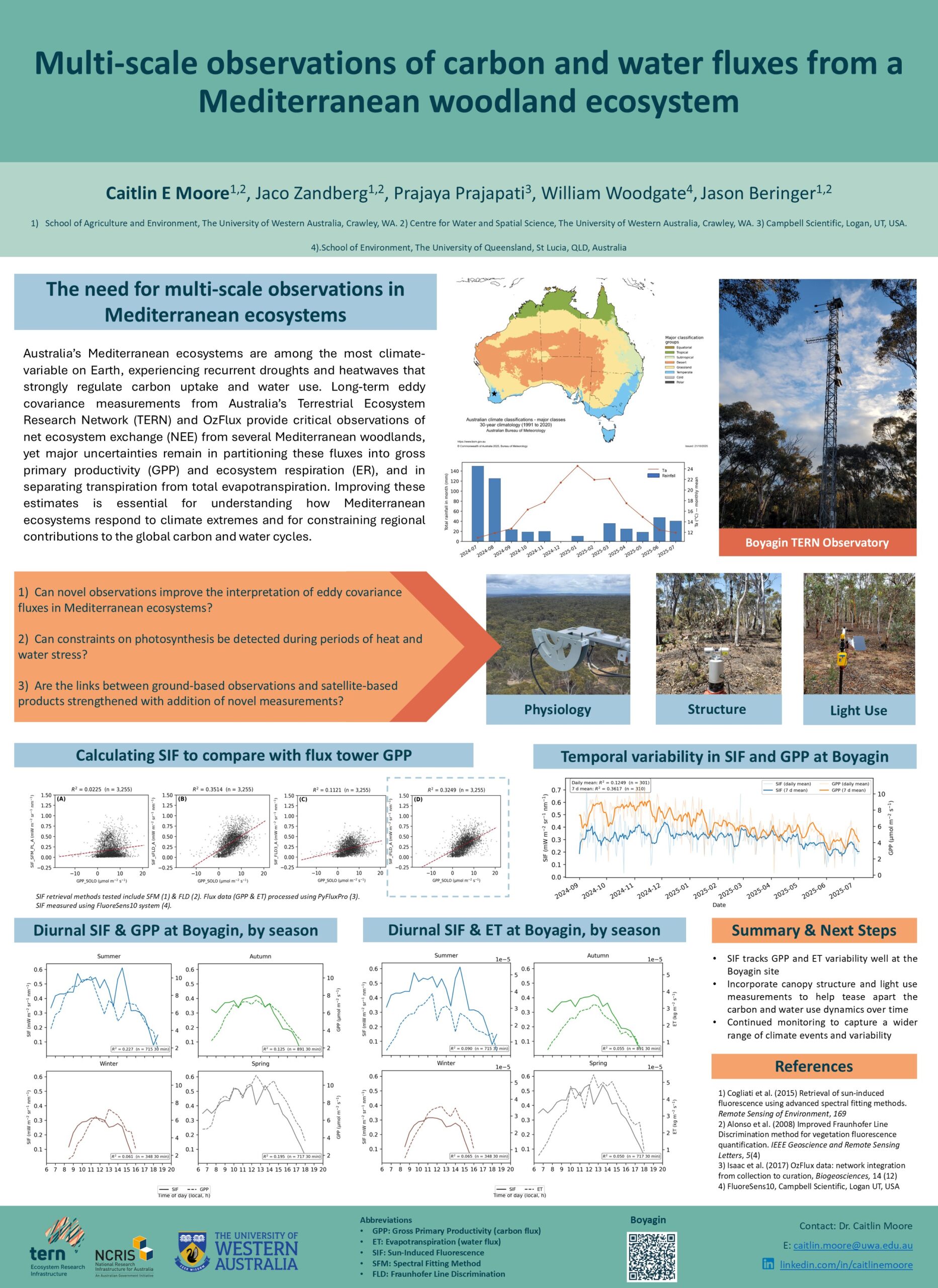
Mediterranean ecosystems are famously biodiverse yet remarkably vulnerable to climate change, and Australia’s Mediterranean ecosystems are no exception. To improve our understanding of these unique ecosystems and what the future might hold for them, researchers are testing cutting-edge spectral sensing technologies to improve early detection of vegetation stress. As this work unfolds across TERN’s flux tower sites in Western Australia’s Mediterranean ecoregion, encouraging preliminary data suggests this approach is on the right track and could soon offer new insights into ecosystem health.
The Mediterranean climate is characterised by mild, wet winters and hot, dry summers. The unique ecosystems that evolved under these conditions are famously biodiverse, favouring species that tolerate heat and drought. Many of the plants are also fire adapted and depend on ground water to survive long intervals between the cool rains.
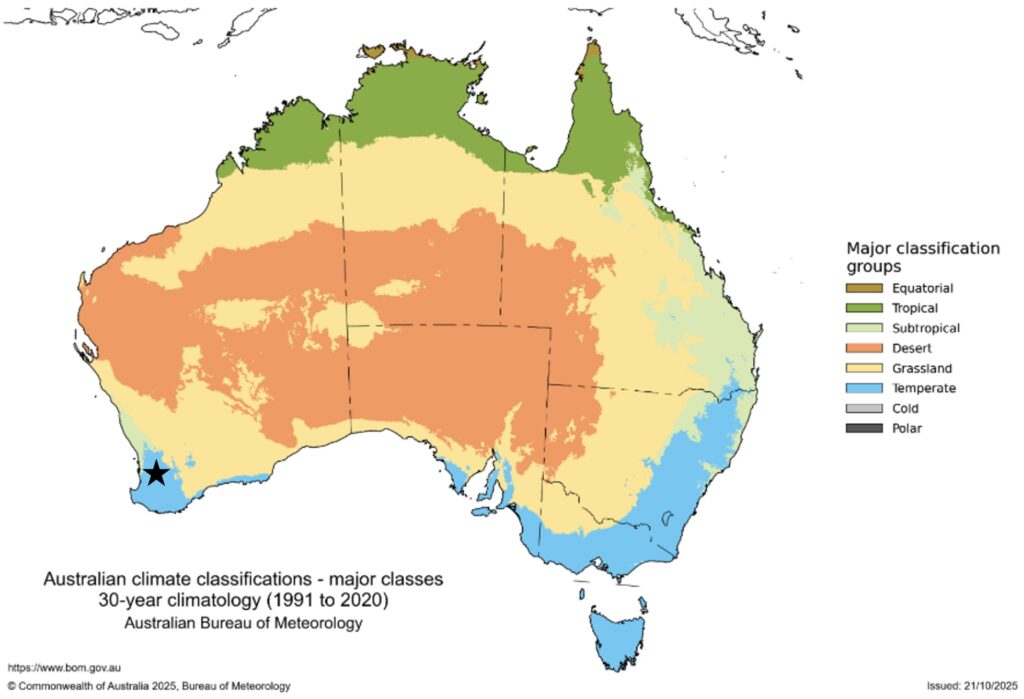
Australia is home to a substantial Mediterranean ecoregion which covers a large area in Western Australia’s southwest and skirts the continent’s southern coastline all the way to South Australia’s southeast. From there, it extends into the lower reaches of the Murray Darling basin.
This region contains a rich mosaic of highly biodiverse Mediterranean ecosystems – such as the threatened Banksia woodlands in Western Australia or South Australia’s ancient Mallee woodlands. The species that live there have adapted well to the Mediterranean climate and many of them are found nowhere else in the world. Unfortunately, all Mediterranean ecosystems are at high risk due to climate change, and projections suggest Australia’s will be severely affected.
“Australia’s Mediterranean ecosystems are among the most climate-variable on Earth — they’re already experiencing a drying and warming trend, punctuated by increasingly extreme climate events,” says Caitlin Moore, a research leader of TERN’s WA node at the University of Western Australia, and who specialises in ecosystem-climate interactions.
“Recurrent droughts and heatwaves strongly regulate carbon uptake and water use, and as a result, these ecosystems are increasingly stressed by climate change trends, such as declining rainfall.”
There’s an urgent need to understand ecosystem responses to these changes, she says. “It will be critical for sustainable water and land management in a drying climate.”
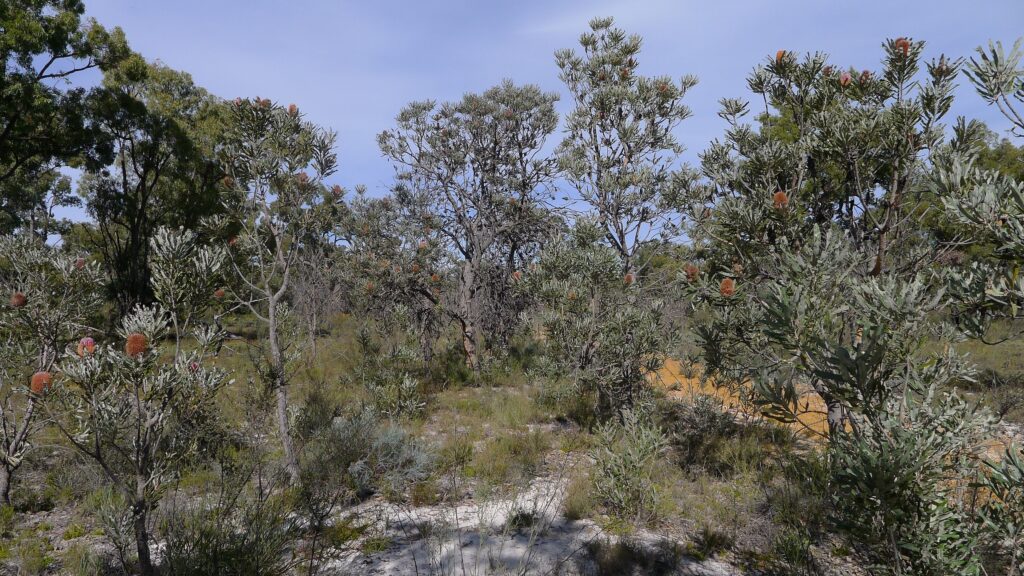
Banksia menziesii habitat, Wandoo National Park, Western Australia (image credit: John Tann via Wikimedia commons)
Stress Signals
To understand how Mediterranean ecosystems respond to climate extremes and other societal pressures, Caitlin and her colleagues are collecting long term data from eddy covariance flux towers, which are situated across four key ecosystems in southwestern Western Australia (SWWA), including Mediterranean woodlands. These flux towers, which are supported by TERN, provide critical observations of how net carbon and water exchange varies with climate in these ecosystems.
The flux observations reveal important trends in carbon, energy and hydrology processes within a specific ecosystem. This site-based data is immensely valuable, says Caitlin, but adds, “we want to expand the scale of our understanding from ecosystem site-based studies to landscape and regional scales.”
To do this, she and her colleagues have begun measuring solar-induced chlorophyll fluorescence (SIF) at the flux tower sites.
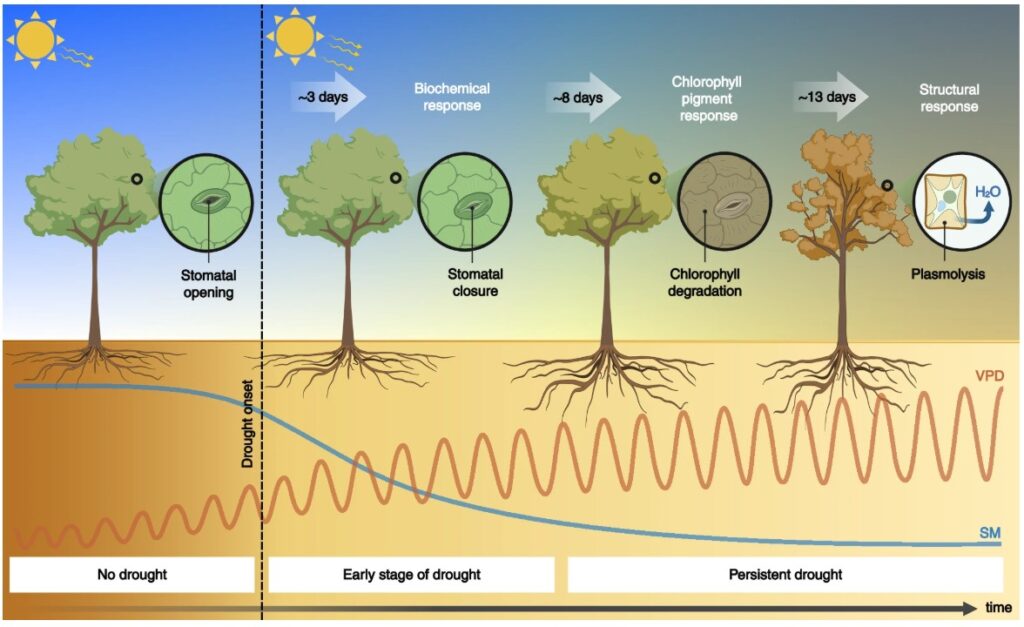
Vegetation responses to drought (image credit: Tang et al (2026) Nature Communications 17, 2886
doi.org/10.1038/s41467-026-70076-0)
What is SIF?
Plants need solar energy to grow, but too much causes damage. To contend with this, plants can get rid of excess sunlight via heat dissipation or a process called solar-induced chlorophyll fluorescence (SIF). When plants are actively photosynthesising they emit a fluorescent signal at wavelengths just a bit too long for humans to see.
Although this fluorescent SIF signal is invisible to the naked eye, it can be detected with spectrometers. As such, it has been gaining a lot of attention among ecophysiologists and remote sensing scientists as a useful proxy for monitoring photosynthetic activity in vegetation communities, not least because satellites equipped with spectrometers are able to detect SIF from space.
Satellite measurements of SIF make it possible to study ecosystem-climate interactions at landscape to global scale, says Caitlin. “But in order to have confidence in the measurements, they need high quality ground-based information to verify against.”
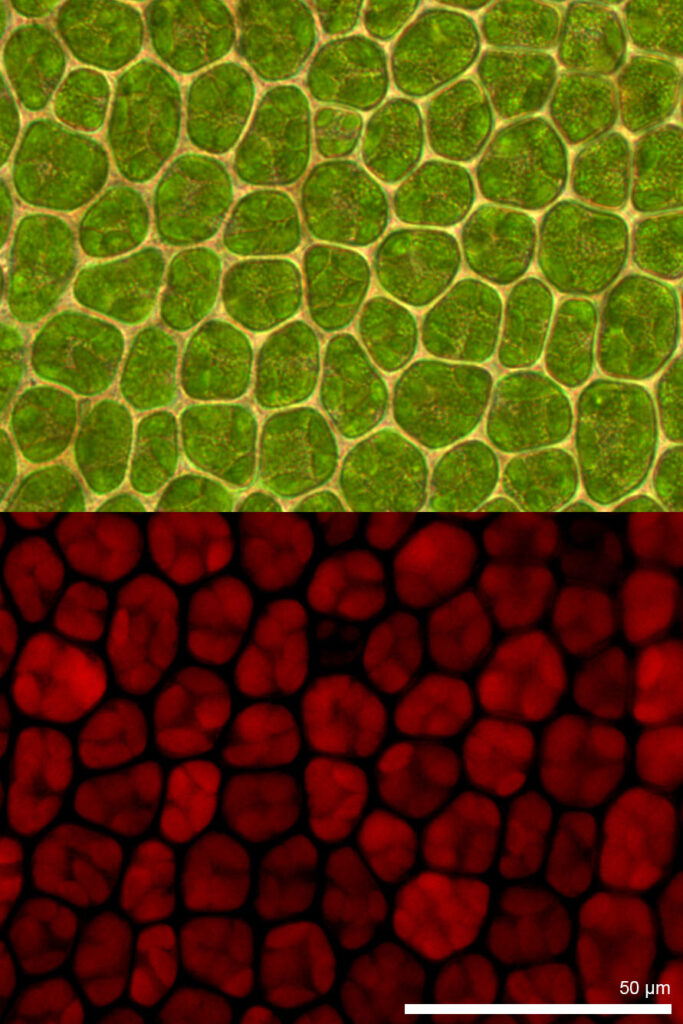
Chlorophyll fluorescence as seen in microscopic images of a moss leaf. Top: bright field microscopy; Bottom: same cells under fluorescence microscopy (image credit Dietzel65 Wikimedia commons)
Ground-based validation
Caitlin reasoned that integrating SIF spectrometer capabilities at TERN’s Boyagin Wandoo Woodland SuperSite in SWWA would provide valuable ground-level data to complement existing site-based flux measurements on Mediterranean ecosystem processes. Moreover, it could improve comparison and verification of satellite SIF measurements and, in so doing, open-up a wealth of very useful large-scale data.
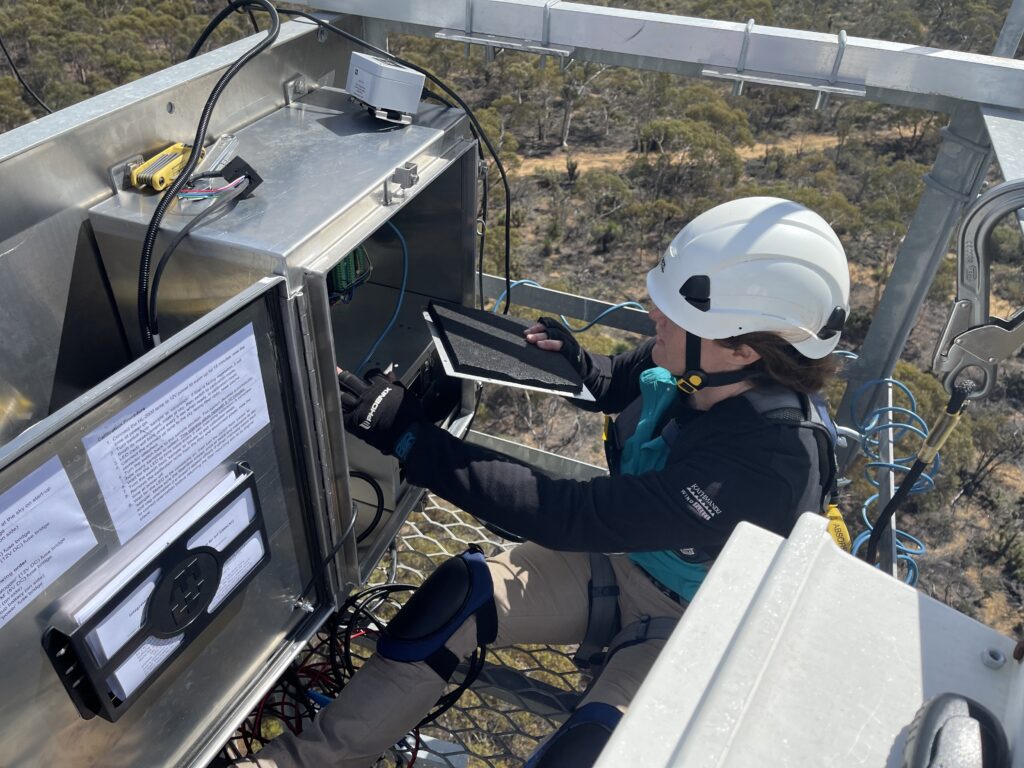
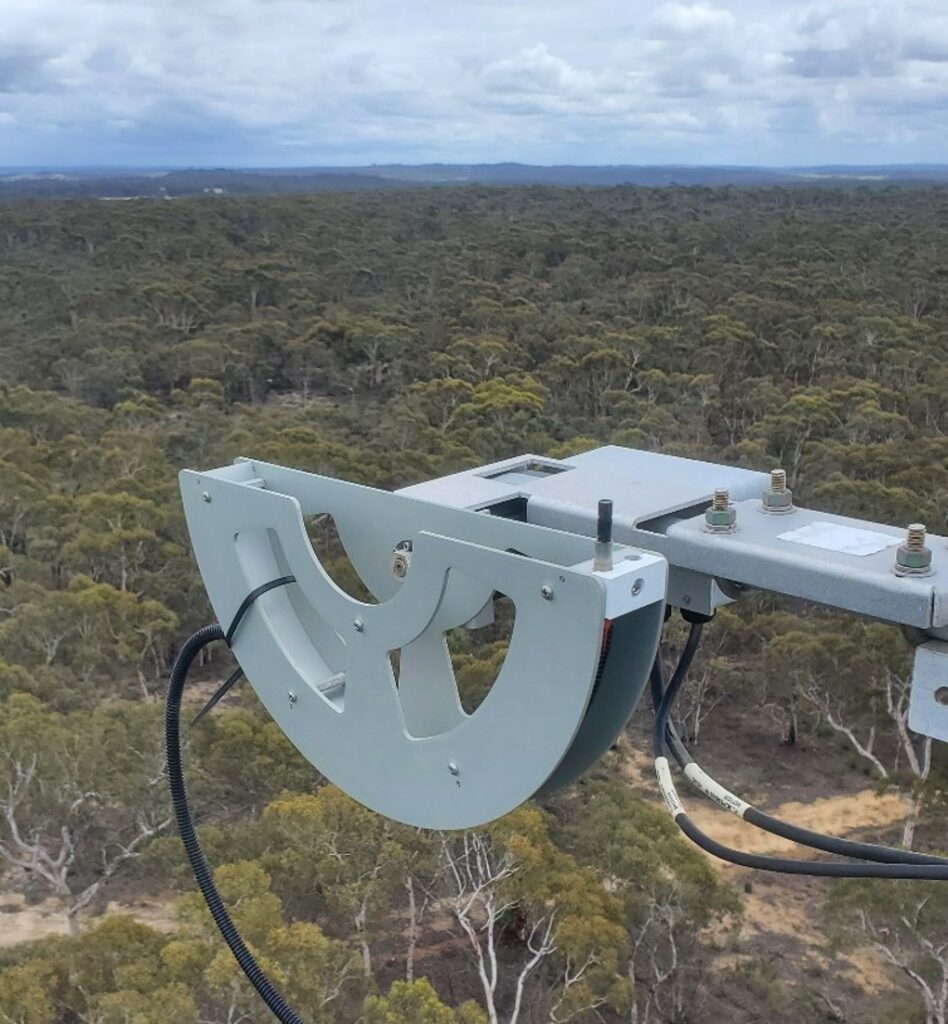
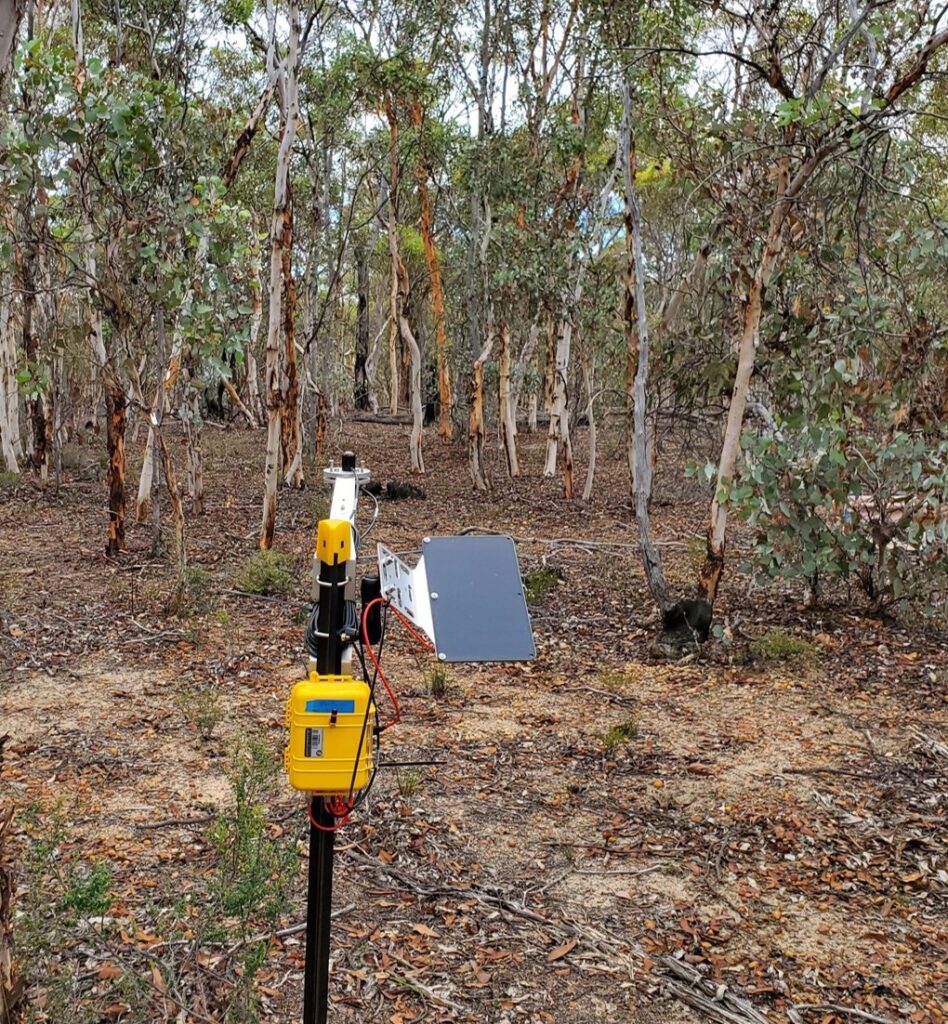
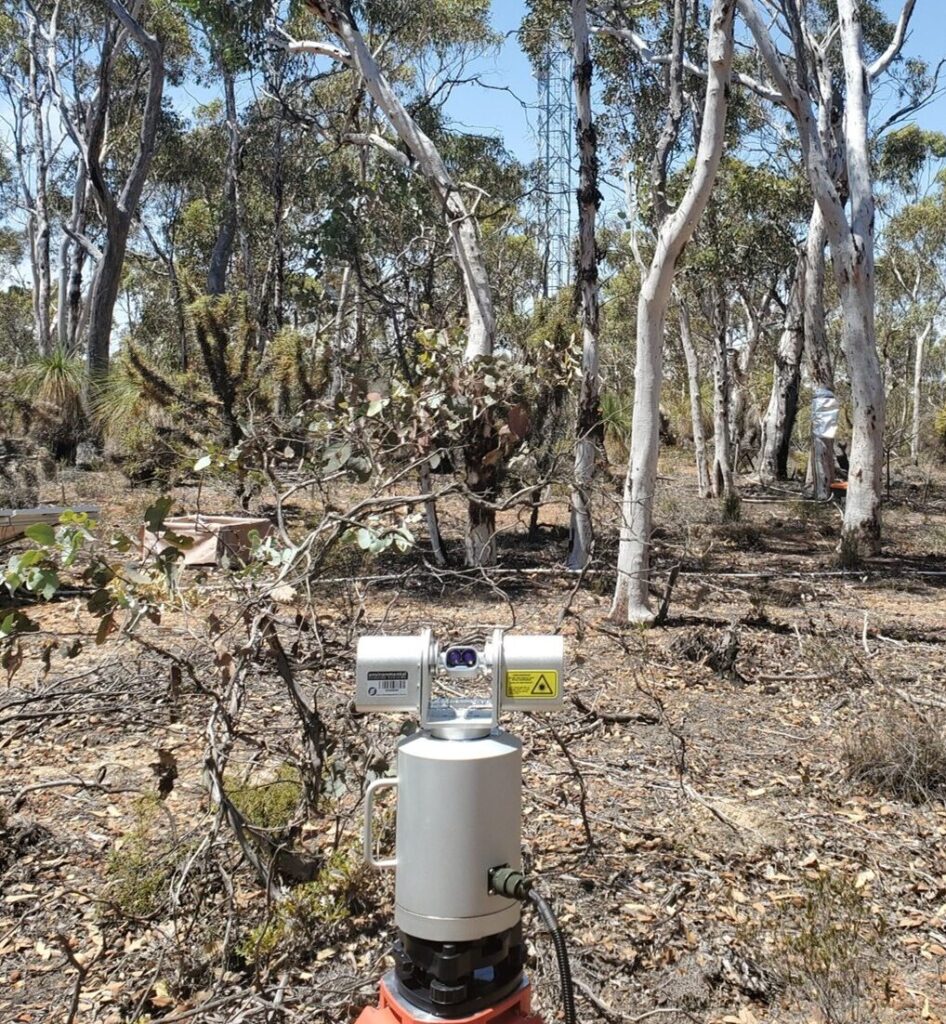
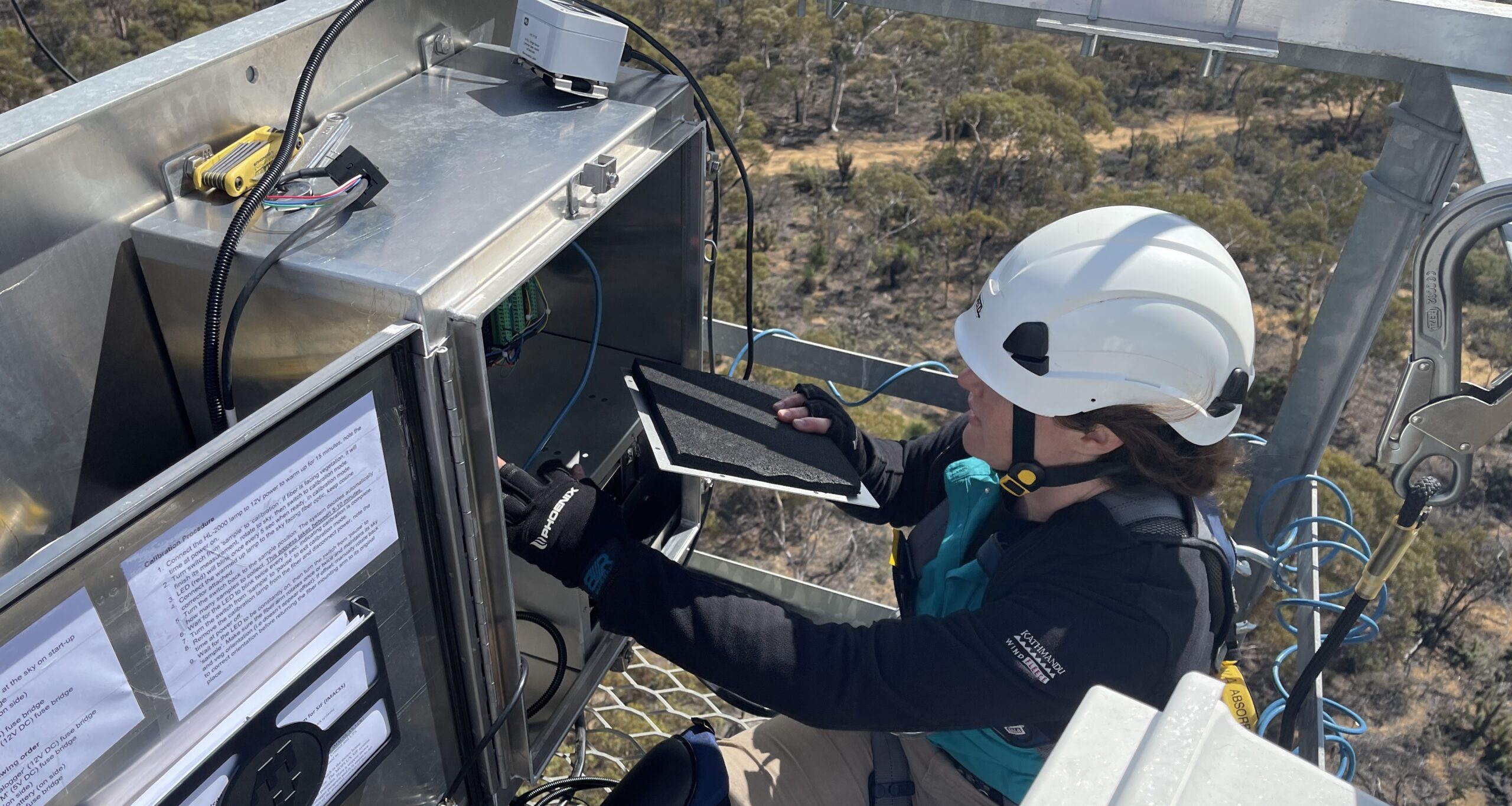
With co-contribution to NCRIS-enabled TERN from the Western Australian government, Caitlin and her colleagues installed a spectrometer on the flux tower at Boyagin. To provide an independent measure of light levels and detect any structural changes in the ecosystem related to plant stress, they used sensors to monitor the light absorbed through the canopy and set up laser scanners to quantify daily changes in leaf and canopy structure.
After collecting data for over a year, they found SIF signals correlated with expected seasonal variability in photosynthesis. “We found that SIF signals measured at the TERN Boyagin site are tracking well with flux tower derived measurements of carbon exchange and water use,” says Caitlin.
In addition, the SIF data appears to detect immediate responses to stress. For example, SIF revealed an afternoon decline in photosynthesis and water use in spring and summer indicative of plant response to daily heat stress and/or water stress.
“SIF has emerged as a useful proxy for plant productivity in a variety of ecosystems around the world, and the data from Boyagin is showing this is also true for Mediterranean woodlands,” she explains.
Caitlin Moore installing the SIF sensor on the Boyagin flux tower (image credit: Jason Berrenger)
Meanwhile, this data will improve remote sensing model estimations of SWWA ecosystem productivity dynamics over much larger spatial scales.
There’s still more work to do, but progress so far is encouraging, says Caitlin.
“By comparing site-based SIF data with the generally accepted ‘gold standard’ in ecosystem productivity monitoring – flux tower data – we should be able to get more precise estimates of vegetation productivity across a larger spatial range and ecosystem types, including Mediterranean ecosystems,” says Caitlin. “It will help us monitor their response to environmental stresses such as drought and heat stress not just at individual sites, but at landscape scale.”
The world is watching
Earlier this month, Caitlin presented the Boyagin SIF data at the European Geosciences Union conference in Vienna and was pleased to see how much attention it received.
“There is a lot of interest in the global research community,” she says. “The Mediterranean ecosystems in Western Australia are really at the forefront of heating and drying events,” she says. “These woodlands are like climate sentinels, offering early warning signs of broader climate change impacts on terrestrial ecosystems.”
“So, if we make beneficial improvements to the way we pulse-check Australian Mediterranean ecosystems, this information will be useful in many other places.”