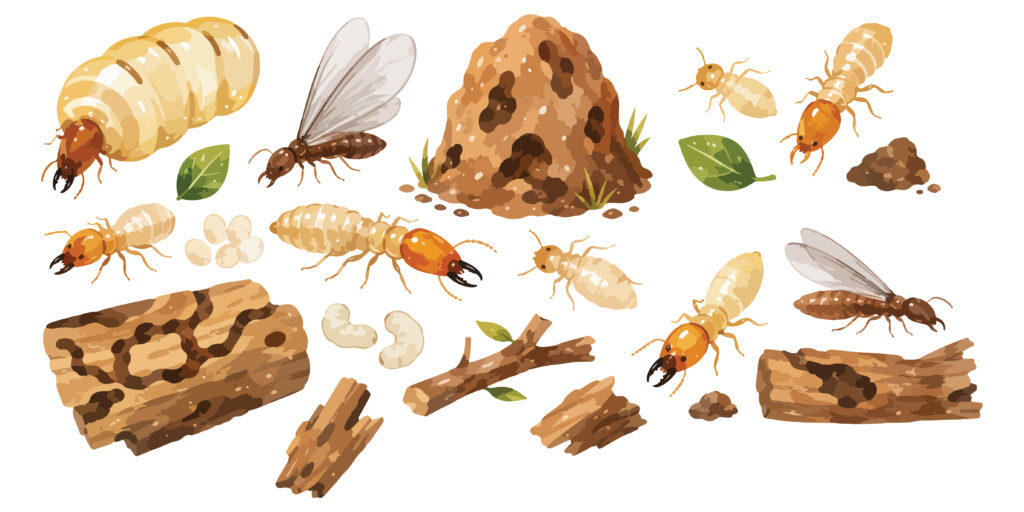
Termites are perhaps the world's most consequential herbivores. They are vital ecosystem engineers in many landscapes and their collective penchant for methane production has far-reaching impacts on global greenhouse gas (GHG) dynamics. Yet termite-driven processes are often overlooked in biogeochemical models that underpin national and international estimates of soil carbon stocks and GHG emissions. With TERN’s support, researchers at CSIRO are developing a novel modelling framework that integrates termite activity to better represent nutrient, carbon and methane dynamics in terrestrial ecosystems.
Despite their widespread reputation as destructive pests, only a small number of termite species have any interest in consuming housing timber or agricultural crops, and even those are simply doing what they evolved to do. For millions of years, termites have been dominant herbivores and decomposers across many terrestrial ecosystems, promoting soil moisture and fertility, mediating nutrient and carbon cycles, and supporting biodiversity. In this way, termites have shaped many of the world’s biomes, particularly arid and tropical ecosystems. They may also have a significant impact on atmospheric chemistry.
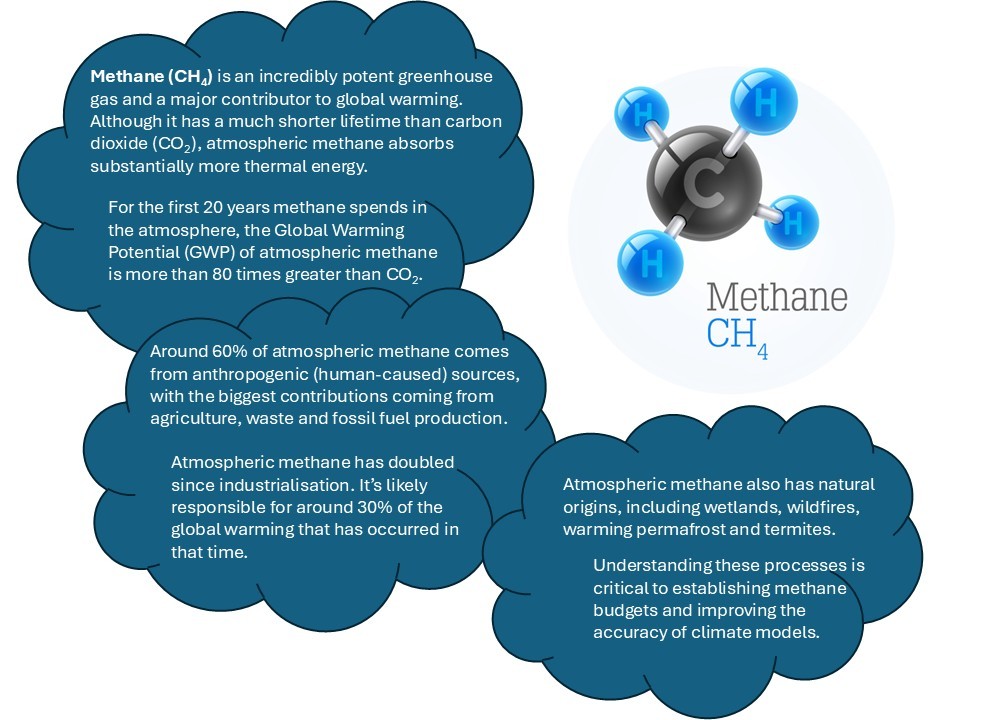
With the help of microbial gut-dwelling symbionts, termites break down plant and soil matter, releasing CO₂ and methane (CH₄) as byproducts. When scaled up to the global termite population, the collective impact is substantial: it’s estimated termites contribute up to 3% of total global methane emissions.
credit: Adobe iStock
Not all methane produced by termites ends up in the atmosphere, though. Termite mounds filter a substantial amount of methane before it reaches the atmosphere. Then again, not all termites live in mounds. In fact, there are around 3000 species of termites globally, including more than 300 in Australia. Their diets, behaviours and ecological impacts vary widely from one ecosystem to another. So, whether a termite population is a prolific methane emitter or more methane-neutral can vary.
“There’s still a lot of uncertainty around termite-driven ecosystem processes including their methane emissions,” says Ben Macdonald, who leads the Soil and Landscapes Group in CSIRO’s Agriculture and Food Research Unit, as well as the TERN Landscapes capability. He explains that the main problem is scarcity of data.
Indeed, most termite research to date has focussed on only a few species, particularly those that cause economic damage. While a small amount of termite-related greenhouse gas flux data exists, this only covers a few Australian ecosystems, climates, and species. Moreover, most of these data are from laboratory incubations and manual chamber measurements, says Ben, so they offer only a limited understanding of termite responses to environmental conditions.
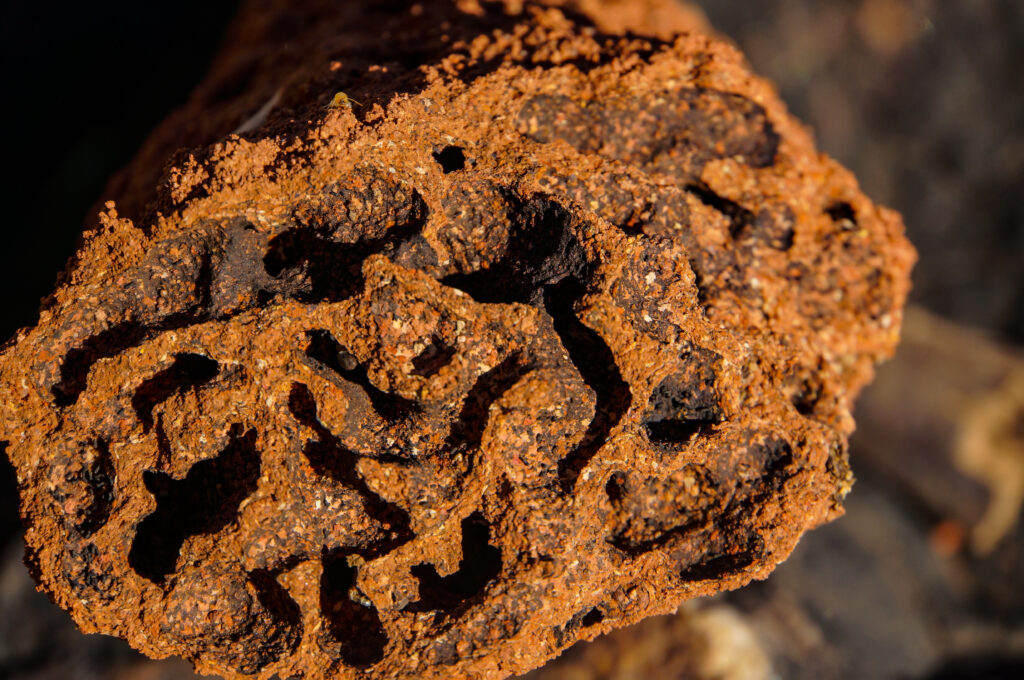
Close up of the inside of a Red termite mound, Northern Territory (credit: Martin via Adobe iStock)
“We need to fill these data gaps in order to develop accurate models of termite biogeochemical dynamics and improve our understanding of termite responses to climate change.”
The extraordinary diversity of termite habitats and behaviours means that there’s a lot of ground to cover, both literally and figuratively.
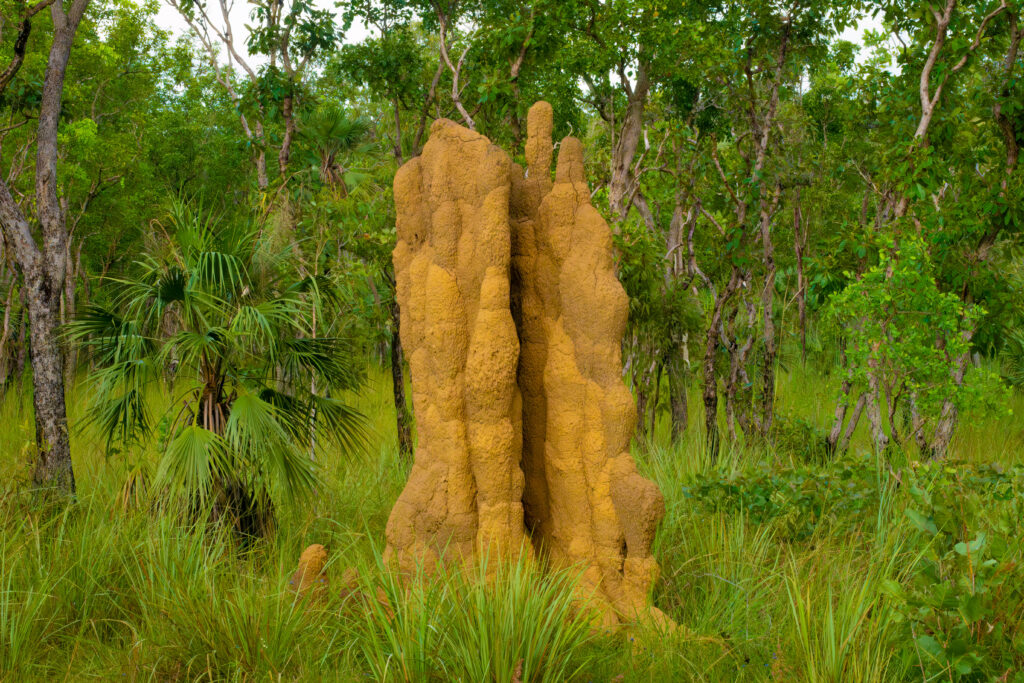
Magnetic termite (Amitermes meridionalis) mounds, Litchfield National Park, Northern Territory (image credit: Adobe iStock)
Mounds of data
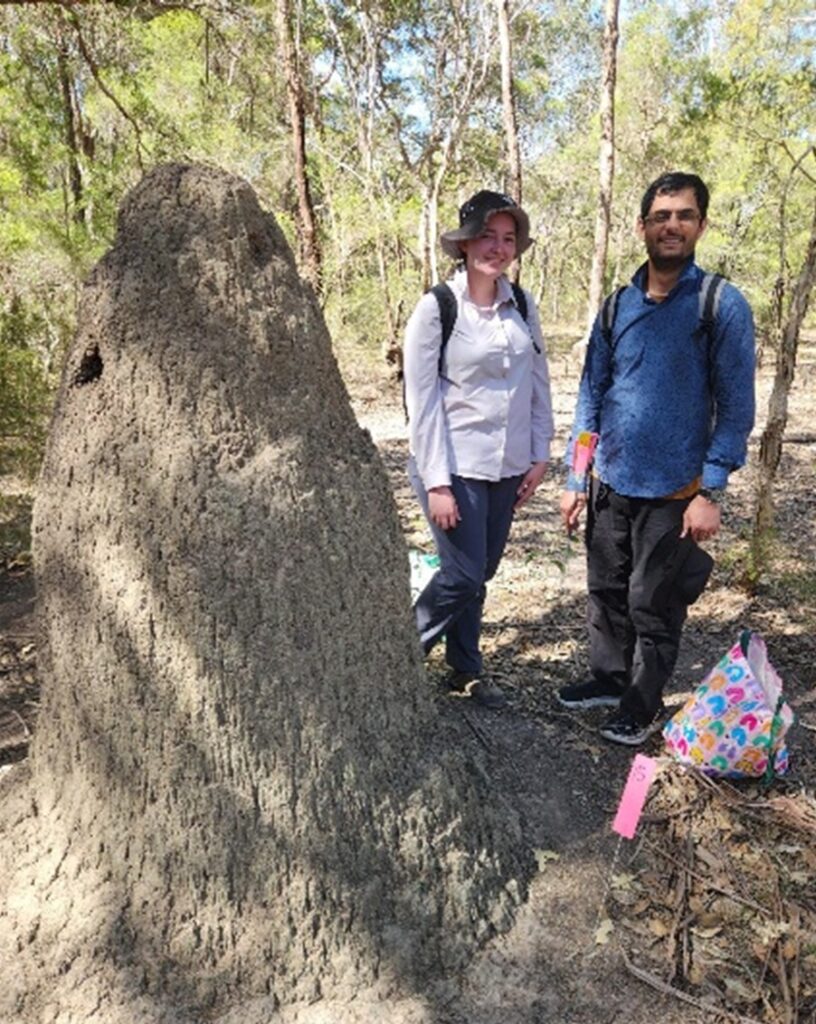
The team knew that if they wanted to build better models, they were going to need a lot more data. With this in mind, CSIRO scientists Zach Brown, Umar Farooq, Chiara Pasut, and Senani Karunaratne established a landscape-level survey of termite activity, biodiversity and GHG emissions at two locations: TERN’s Cumberland Plain Woodland SuperSite, and the Southern Tableland Dry Sclerophyll Forest site at the Australian National Botanic Garden on Black Mountain. At each location, they collected termite specimens, identified species and adapted the TERN AusPlots Rangelands data collection protocols to collect consistent, robust data on termite nesting and diet. Using the Atlas of Living Australia, they also determined the dominant termite feeding guilds, which are used to broadly classify termites based on their feeding patterns (e.g. wood-feeding, grass-feeding, soil-feeding and fungus-growing termites).
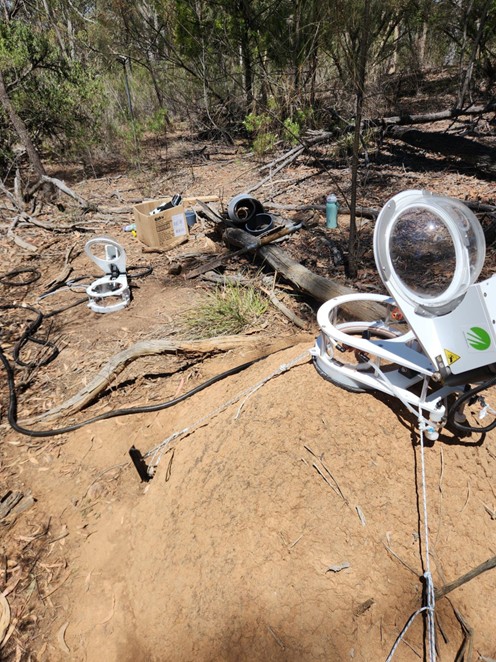
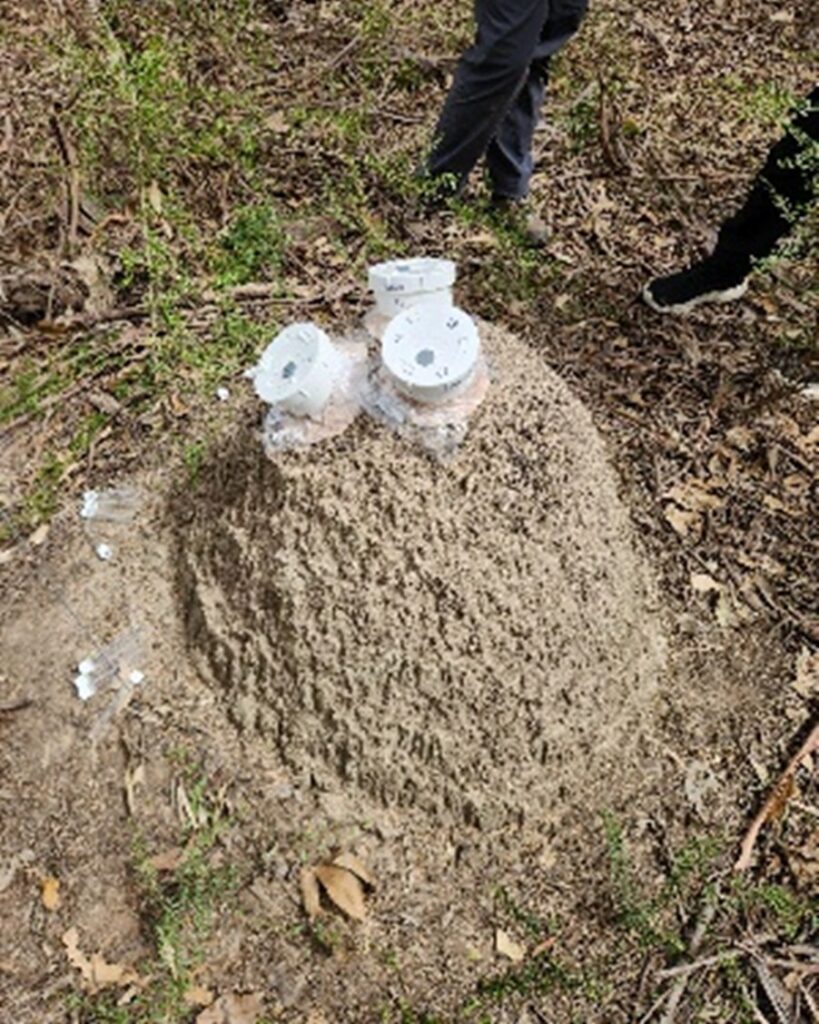
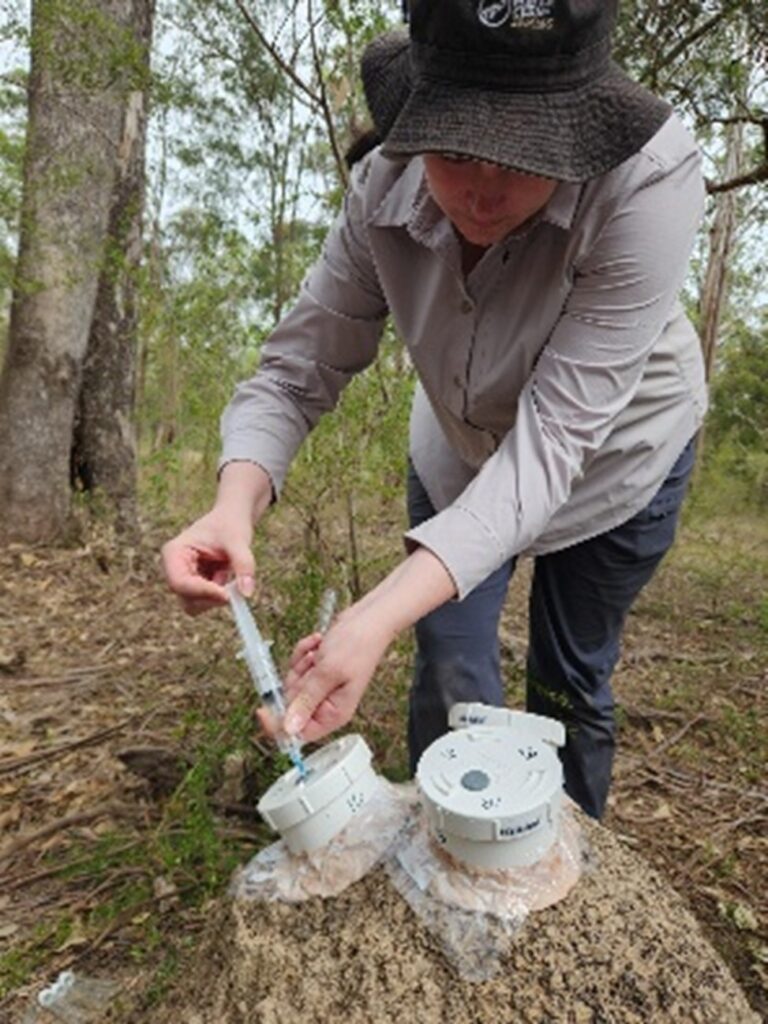
With TERN’s support, the team was able to purchase specialised chambers and as well as a trace gas analyser. Placing the cylindrical chambers on a termite mound is delicate work, says Ben. Termites are extremely sensitive to disturbance so if they suspect the nest is in danger they’ll vacate. On the other hand, termites can get a little too comfortable with the setup. On one occasion the termites found the chamber to be quite cozy and protected, so they expanded their nest into it. The chamber had to be moved.
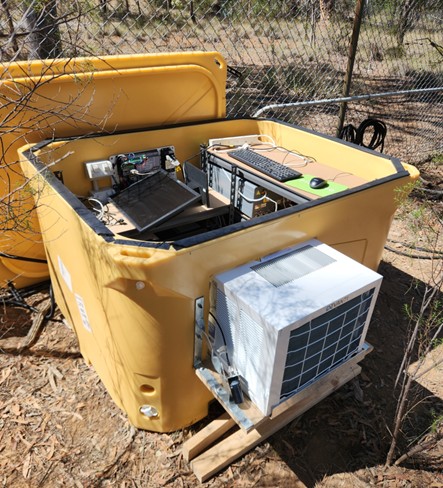
Manual and automatic gas flux measurements. Automated chamber measurements of greenhouse gas fluxes (left) at the Australian National Botanic Garden, Canberra using a Picarro trace gas analyser (right).
At the TERN Cumberland Plain Woodland SuperSite, the chambers were manually sampled every six weeks to monitor the GHG fluxes from the mounds. Meanwhile, at the Australian National Botanic Garden on Black Mountain, they deployed a system of automatic flux chambers integrated with a purpose-built spectrometer for near-continuous measurement of termite mound GHG fluxes.
“The aim is to carry out both the manual measurements at Cumberland Plain and the automated chamber measurements at the Botanic Gardens for at least a year,” says Ben. “The flux data from these surveys will provide critical data for the associated modelling.”
Left and below: Cumberland Plain Woodland Supersite manual chamber measurements and surveys of termite nests
(images provided by Ben Macdonald)
Model behaviour
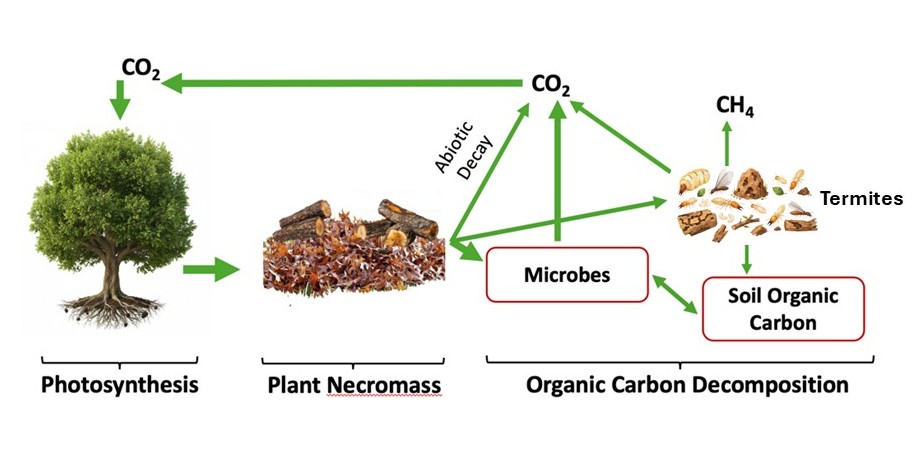
In a parallel project, Ben and his colleagues are building a novel modelling framework that integrates termite activity with soil processes to better represent carbon transformations and stabilisation, and methane (CH₄) dynamics in terrestrial ecosystems.
Central to this effort is the development of a new ‘termite module’ that represents key termite-driven activities such as litter decomposition, organic matter redistribution, and CH₄ production in termite mounds. The parameters are being informed and fine-tuned by the experimental and field datasets.
Schematic diagram of proposed soil organic carbon model (provided by Ben Macdonald)
The team integrated this termite module into a more comprehensive model of soil biogeochemical processes, thereby replacing generic decomposition parameters with more accurate criteria. The enhanced model is now able to link termite feeding activity and biomass dynamics to the movement of surface litter soil carbon pools.
The new model also incorporates the latest data and knowledge from multiple independent studies on carbon processes in Australian ecosystems, says Ben. By bringing all this information together into one place, the new framework – which includes both the new datasets and the new model – will be able to provide a clearer picture of how much methane termites produce in any one ecosystem and how much of that actually ends up in the atmosphere. This will give us a more realistic representation of carbon cycling and CO2-CH₄ dynamics in savannas, woodlands, and arid ecosystems where termites are ecologically dominant.
Early results are certainly promising: it predicts faster initial turnover of plant necromass during warm, dry periods, followed by greater stabilisation of carbon as termites incorporate material into soil. This is a much more faithful representation of what happens in these ecosystems.
Ben says it will be possible to generate local, regional and national-scale data packages which will support a variety of practical outcomes. For example, it could help agricultural land managers make more informed decisions about their livestock.
Currently, land managers rely on aerial measurements of atmospheric methane, but this only tells them the total land surface emission, he explains. “They don’t really know what’s coming from the cows, the termites, or in some cases the wetlands. People can’t make decisions.”
With the termite component of the equation better understood, they could determine their livestock emissions with more accuracy and take appropriate action.
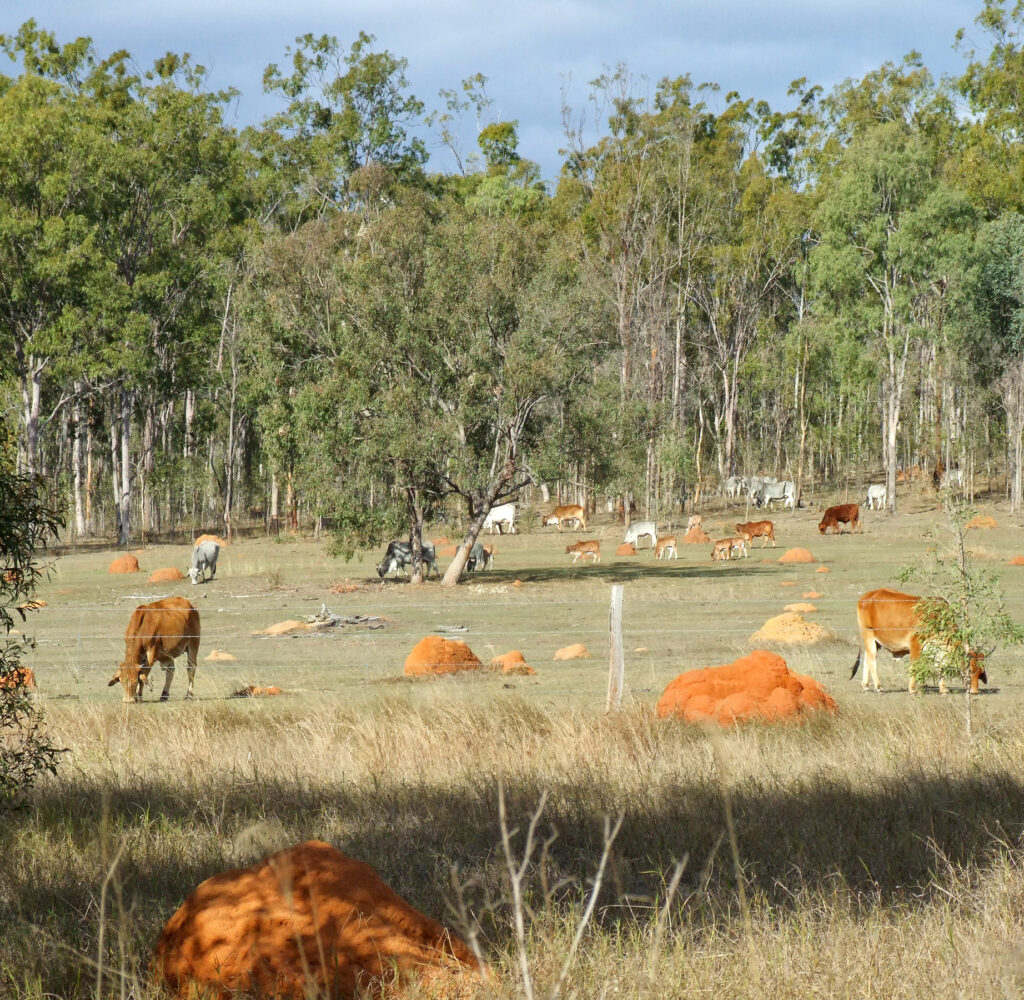
Cattle and termite mounds on farm near Esk in Queensland (credit: Adobe iStock)
More broadly, the regional and national data packages will be immensely valuable for research and will inform methane budgets and related policies. Ben and his team are therefore working on ensuring these TERN datasets and the new model will be publicly available soon via TERN’s Data Discovery Portal.
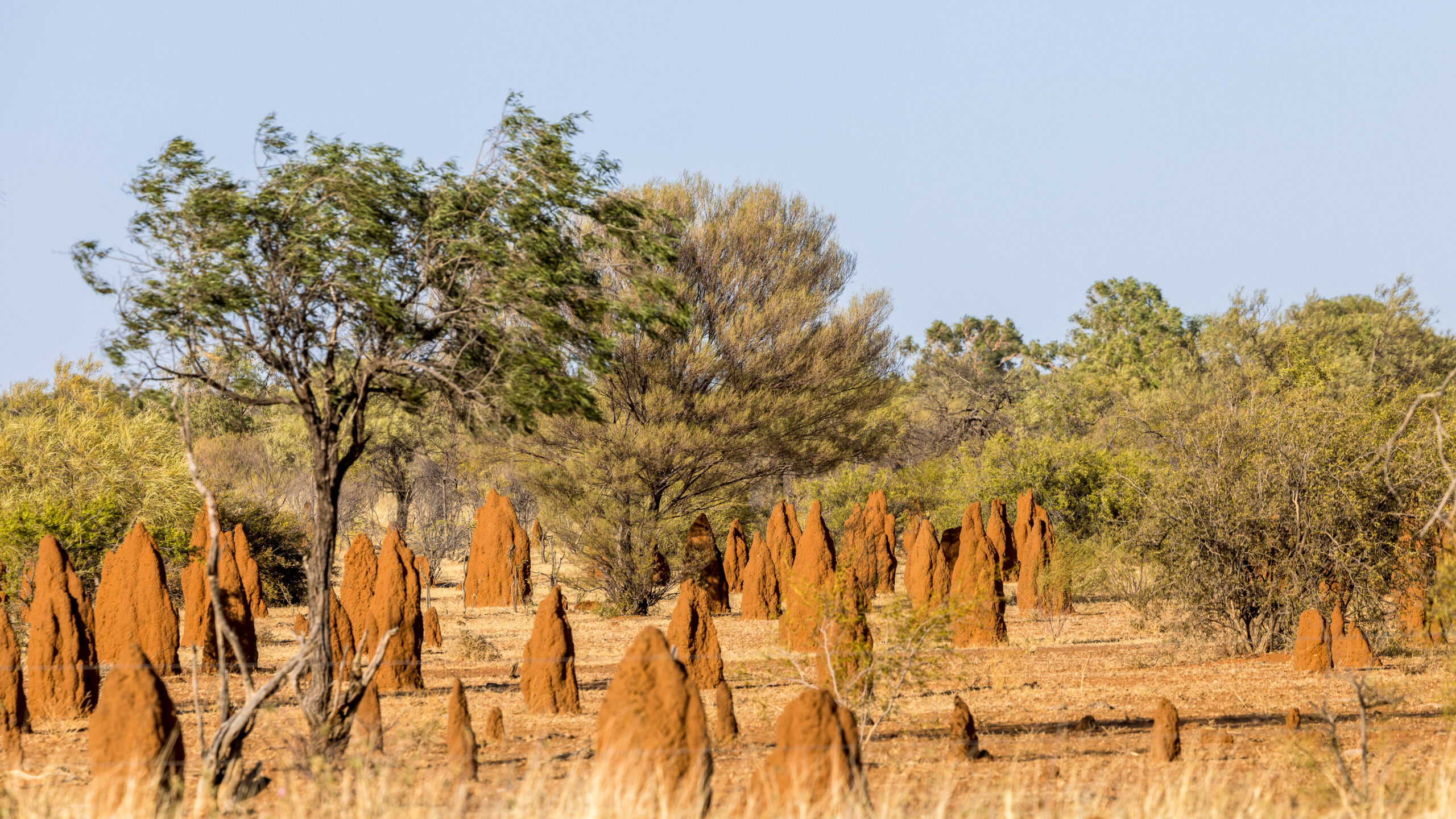
Feature image at top: Termite mounds in bushland along the Stuart Highway (image credit: Serge via Adobe iStock)