The Hidden World: a personal journey of discovering the biodiversity of Long Pocket
Published
Kaylyn Chleborad is a Masters student of Conservation Science at the University of Queensland with a keen interest in ecology field work and science communication. So, when TERN recently announced a new student partner project through UQ’s Student Staff Partnership (UQSSP) Program, Kaylyn leapt at the opportunity. Under the guidance of TERN’s Education & Training Manager, she explored new ways of sharing Australia’s environmental stories — through data, ecology, communication, and creative educational design. Here, Kaylyn share’s her experience of exploring UQ’s Long Pocket precinct, where TERN has its headquarters, as she developed the first biodiversity guidebook for this remarkably complex semi-urban ecosystem.
By Kaylyn Chleborad
Prior to this partnership, the Long Pocket precinct was largely an unknown part of the University of Queensland domain, somewhere I only knew by name. I had heard about it occasionally through my Masters of Conservation Science courses, but never fully understood what the area encompassed. It wasn’t until my first visit that I discovered the hidden world within it and the extent of biodiversity it supports.
My connection to Long Pocket stems from my involvement as a student partner in the project Enhancing engagement with real-world environmental science data repository with educational resources, undertaken through the University of Queensland in collaboration with Terrestrial Ecosystem Research Network (TERN). I work jointly with student partner Kevin Fang and staff partner Dr Eleanor Velasquez, Education and Training Manager with TERN, on a project that aims to bridge the gap between environmental data and education by making real-world datasets more accessible and engaging for students and the broader community. Our project aligns with TERN’s commitment under the Australian Government’s National Collaborative Research Infrastructure Strategy (NCRIS), which supports open-access data, ecological monitoring infrastructure, and analytical tools to assist researchers, governments, and industry in understanding and managing Australia’s land ecosystems.
Within this project, my role focuses on mapping the biodiversity of the Long Pocket precinct and translating these findings into an educational guidebook that documents the range of taxa present. I was drawn to this opportunity not only to deepen my ecological field experience, but to develop my skills in communicating science; an aspect of conservation I am particularly passionate about. The final deliverable, a publicly accessible guidebook, reflects this goal of making biodiversity knowledge tangible and engaging for others.
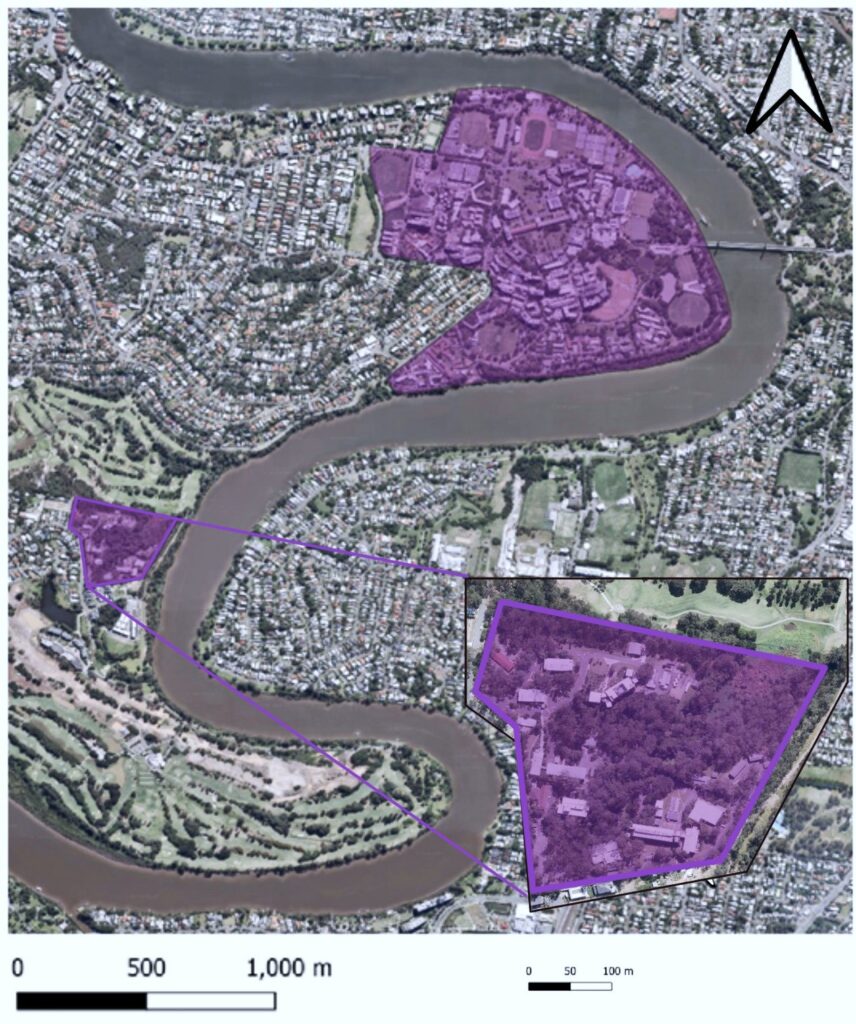
My first trip to Long Pocket involved navigating my way from the main St Lucia campus, bike in hand, on a 15-minute ride along the Brisbane River toward the lesser-known Indooroopilly peninsula. While the University of Queensland is based in Brisbane and spans several campuses, Long Pocket sits just beyond the main St Lucia grounds, somewhat hidden despite its proximity.
Map of main UQ campus (shaded purple in upper right) and Long Pocket Precinct is the smaller region (shaded purple on the lower left). The shaded region on the lower right is a zoomed-in view of the Long Pocket precinct.
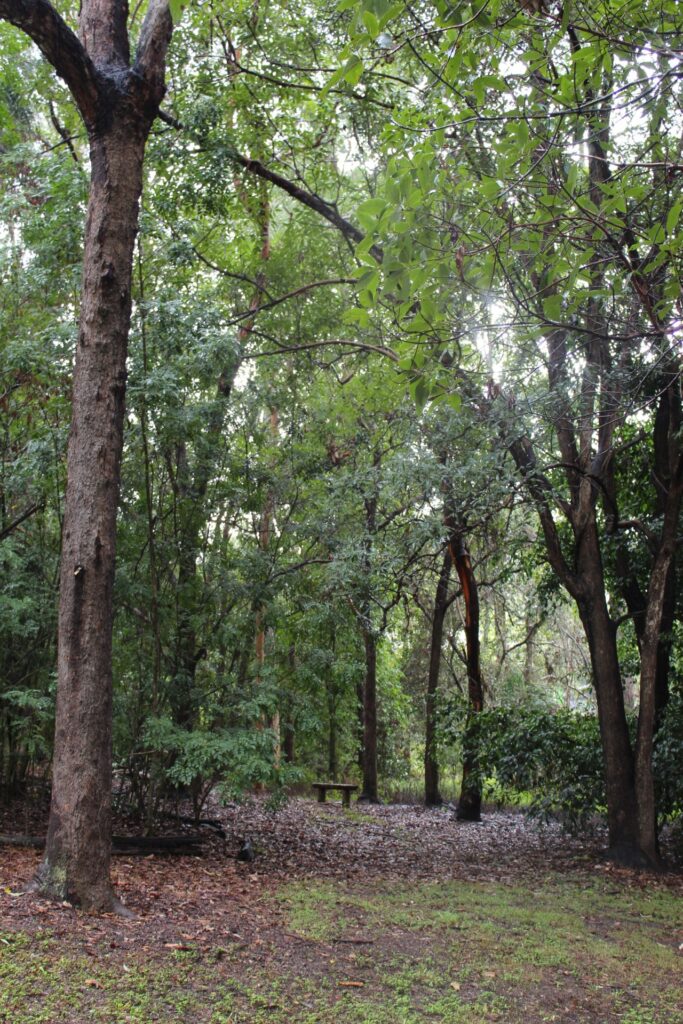
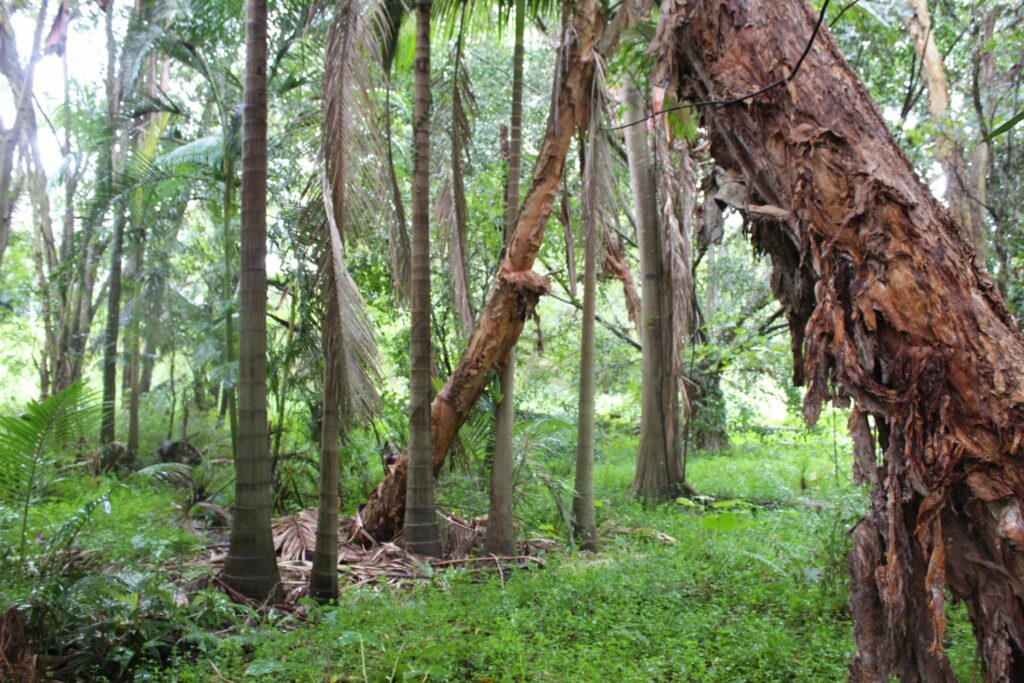
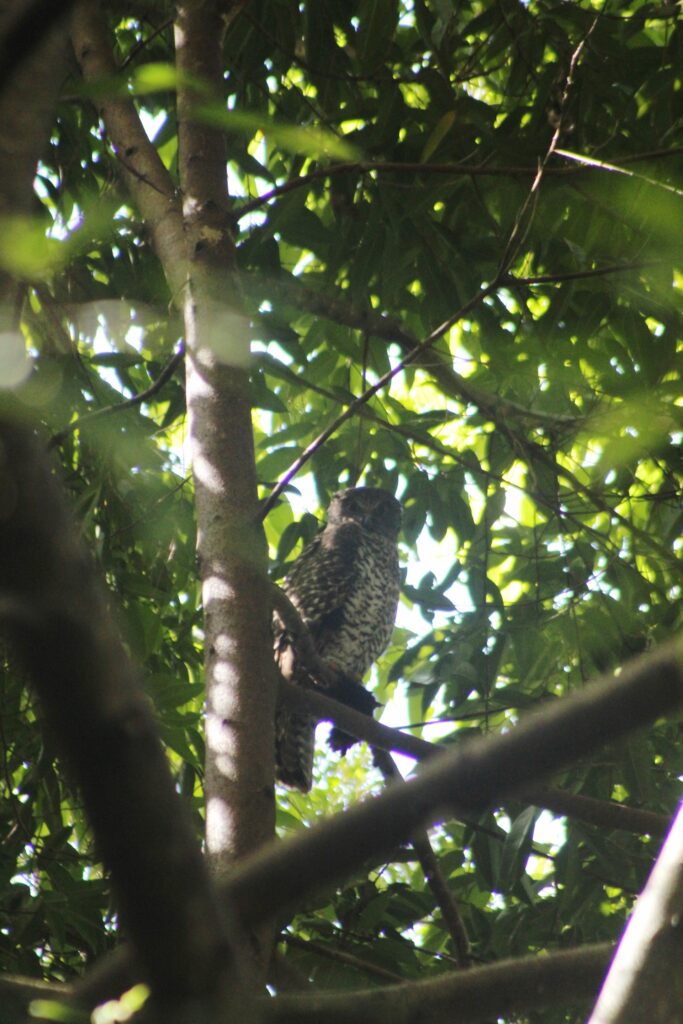
Scenes from Long Pocket, including a Powerful Owl sighting (on right) (images: Kaylyn Chleborad)
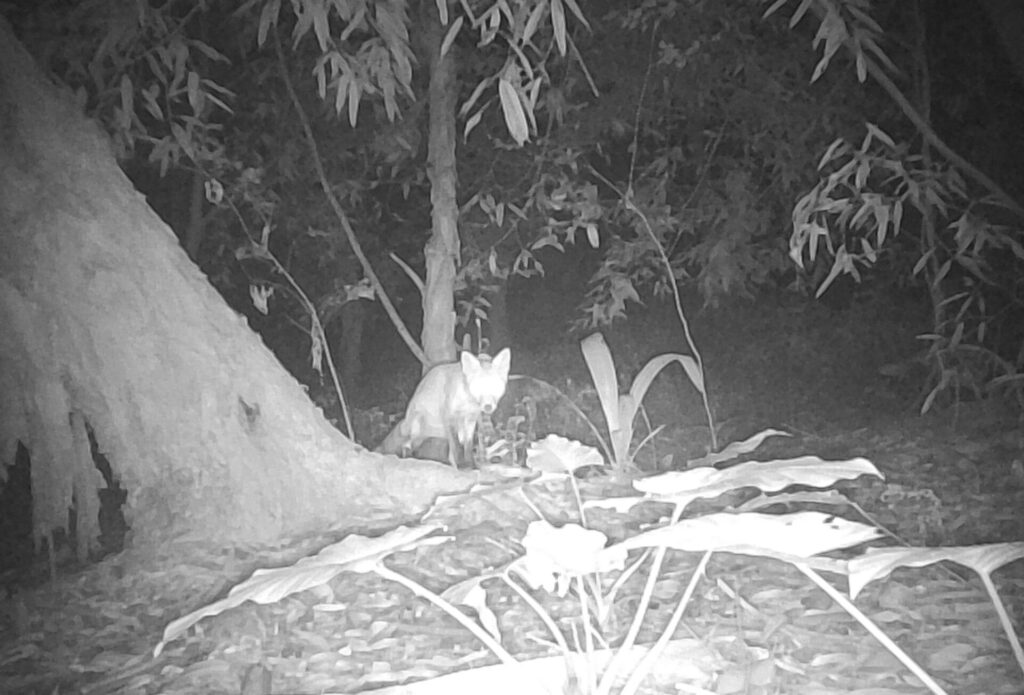
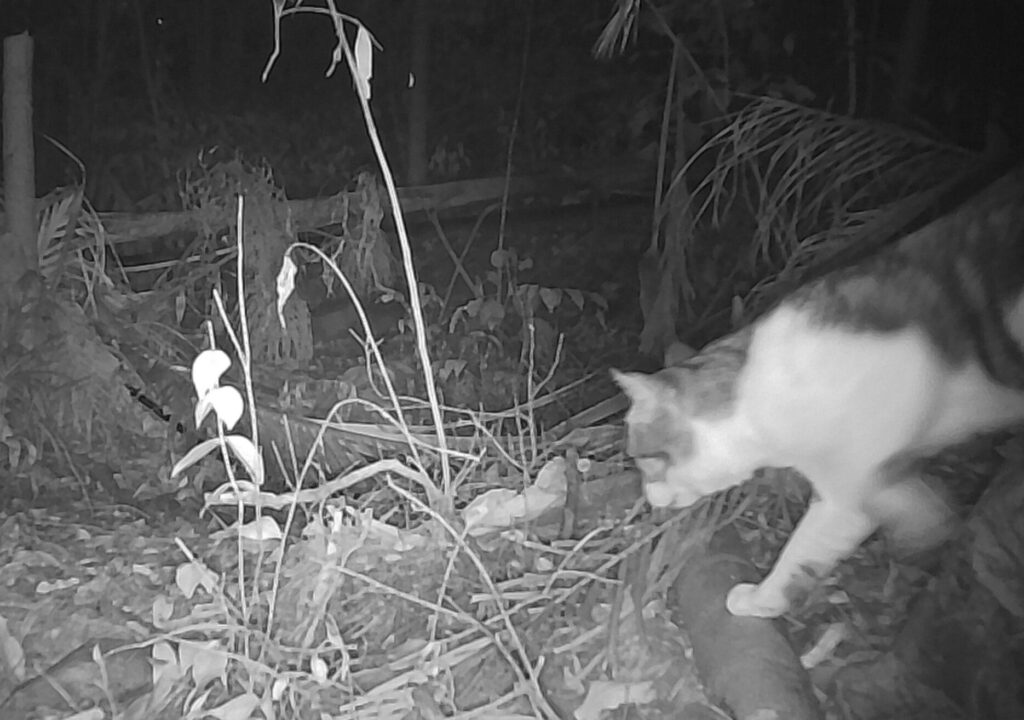
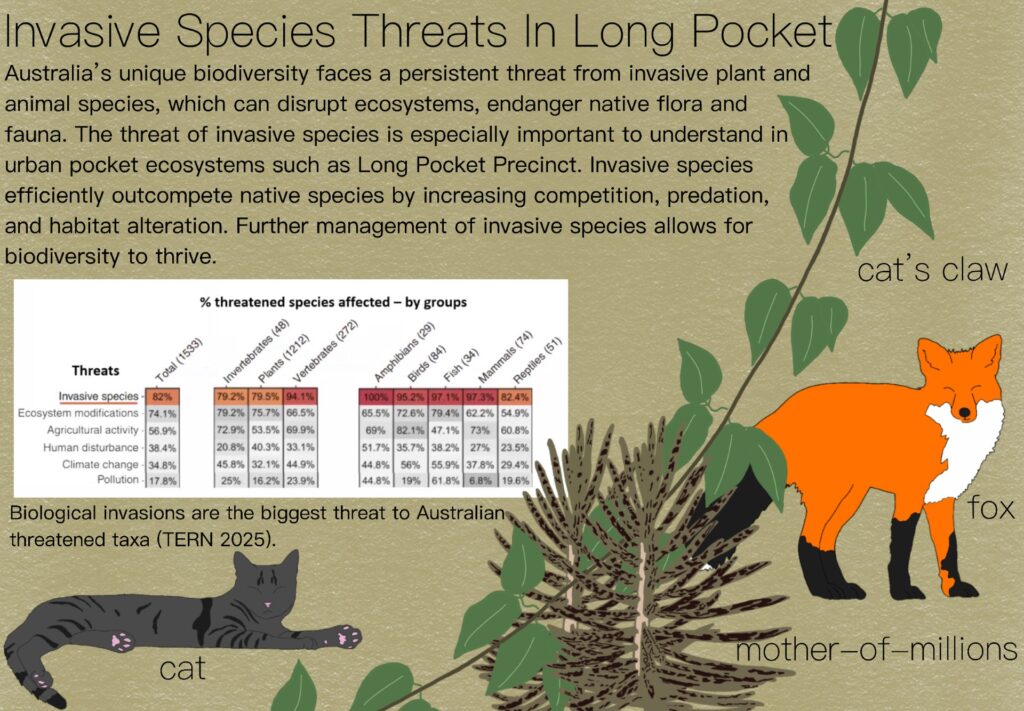
With the river to my left, I searched for a side gate to the property. When entering I saw a familiar plant that I had learned about in one of my courses, one that has the ability to transform an ecosystem: the invasive weed, mother-of-millions. I immediately knew that Long Pocket would entail a complex system of native and non-native species, an intuition that was further supported through the camera trap captures of feral foxes and cats.
Above left: A feral fox looking curiously at the camera trap; Right: a feral cat lounging about
(images provided by Kaylyn Chleborad)
The threat of invasive species was a fact that I was immediately made aware of at Long Pocket but what I would not be aware of until further surveying was the notion of how biodiverse the area is. Long Pocket is a precinct of the University of Queensland St Lucia campus, tucked away on the Indooroopilly peninsula, surrounded by residential homes and an engulfing golf course. It is a pocket of biodiversity in a surrounding degraded system.
Invasive species threats in Long Pocket (figure provided by Kaylyn Chleborad)
Deforestation for urban expansion is one of the leading threats to biodiversity loss. It causes the complete clearing of forest systems, expelling suitable habitat for endemic species. Through spending the last few months surveying the flora and fauna of Long Pocket, it is clear that this precinct has helped maintain a viable system for these species to live in. A residential kookaburra is a friend I frequently spot on my surveys. A kaleidoscope of butterflies is often seen flying high above my head and even powerful owls rest high up in the trees looking for their next meal. The flora within Long Pocket is highly diverse as well. Over 70 native trees are found on the property, each with different heights, girths, and distinct characteristics. One such tree that I often visit, the Lemon Ironwood, lives up to its common name by simply crushing its leaves.
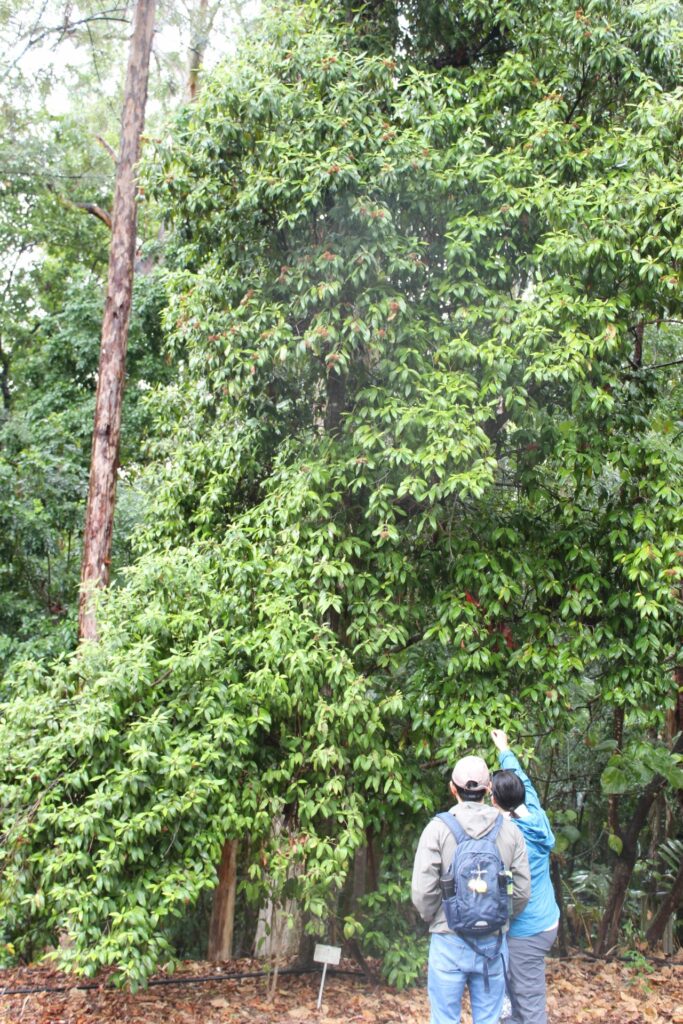
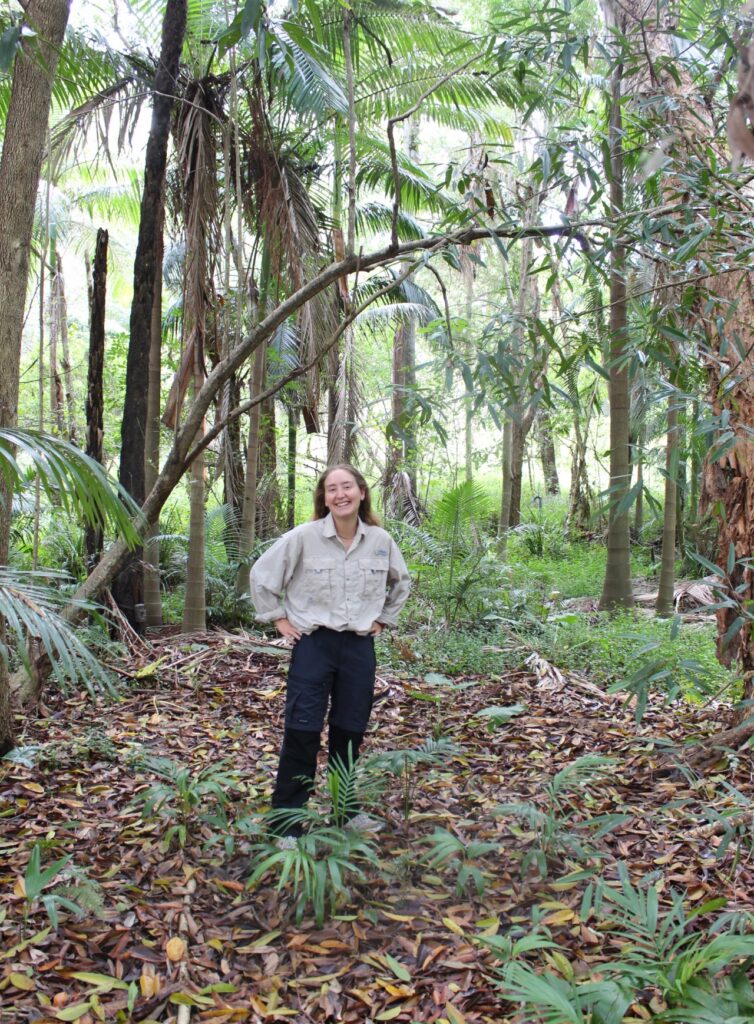
Right: Eleanor Velasquez and Kevin Fang
smelling the Lemon Ironwood
(Backhousia citriodora)
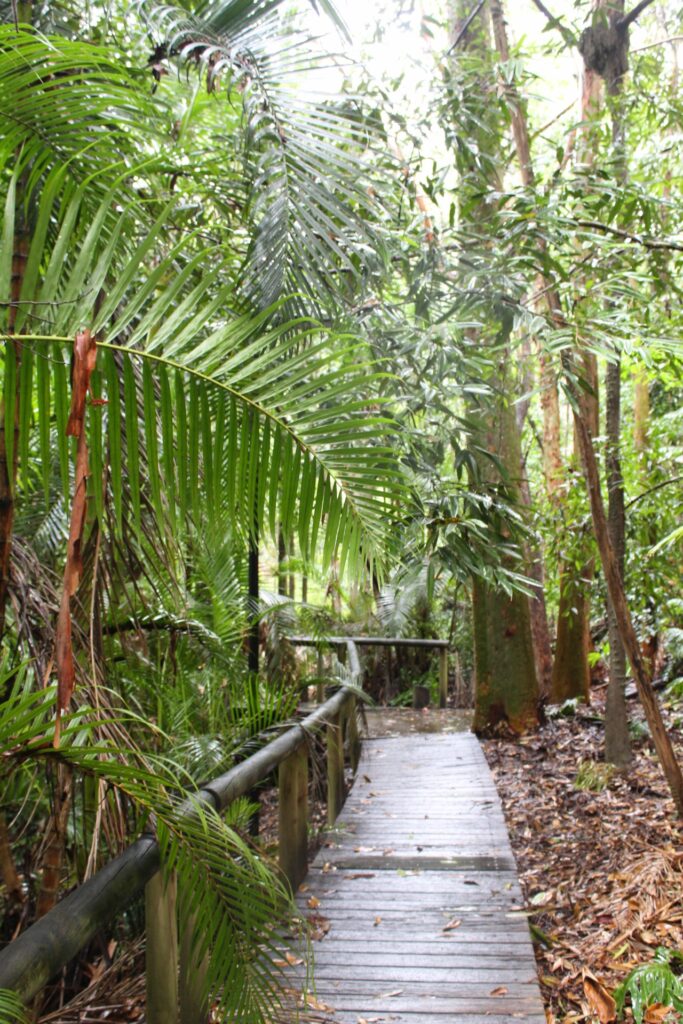
Above: Remnant rainforest of Long Pocket;
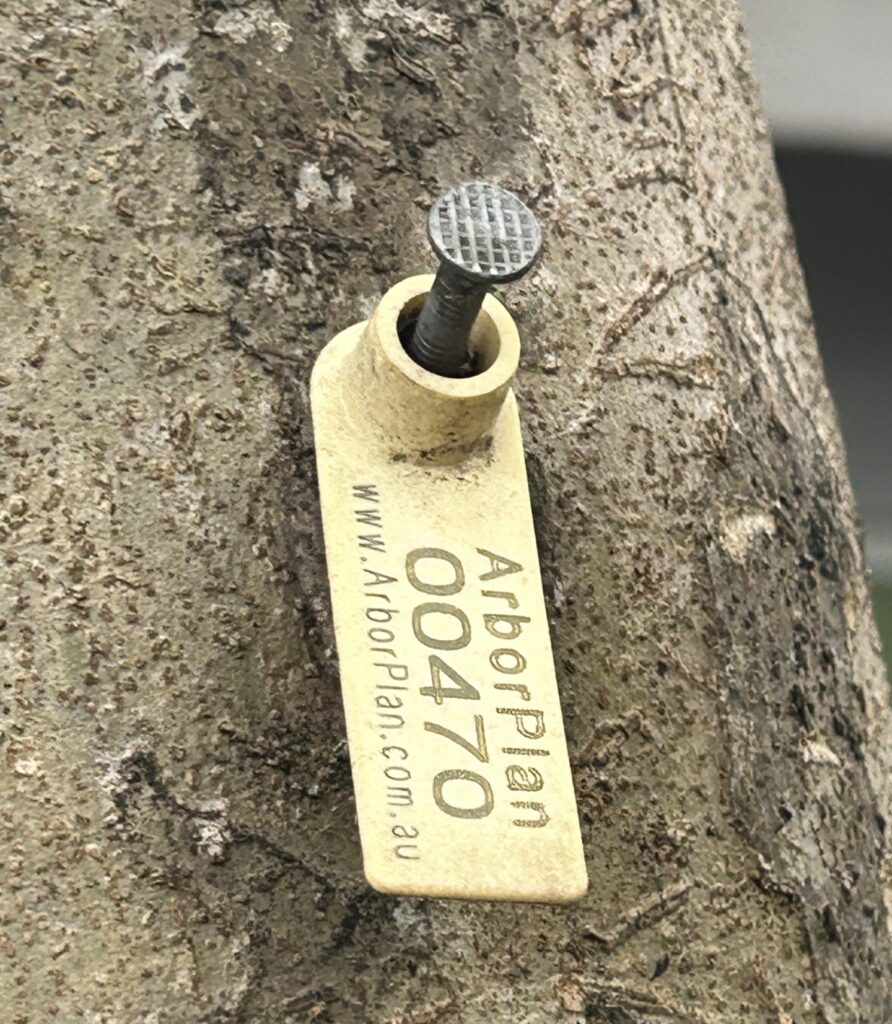
Right: ArborPlan tag
(images credit Kaylyn Chleborad)
One interesting aspect about the trees of Long Pocket is that many of them are tagged for easy identification through a project put in place by The Commonwealth Scientific and Industrial Research Organisation (CSIRO) called ArborPlan. These trees have been monitored for years for certain growth metrics such as height, canopy spread, and diameter at standard height. Because of the abundance of trees at Long Pocket, a rainforest ecosystem (~70% canopy cover) is present.
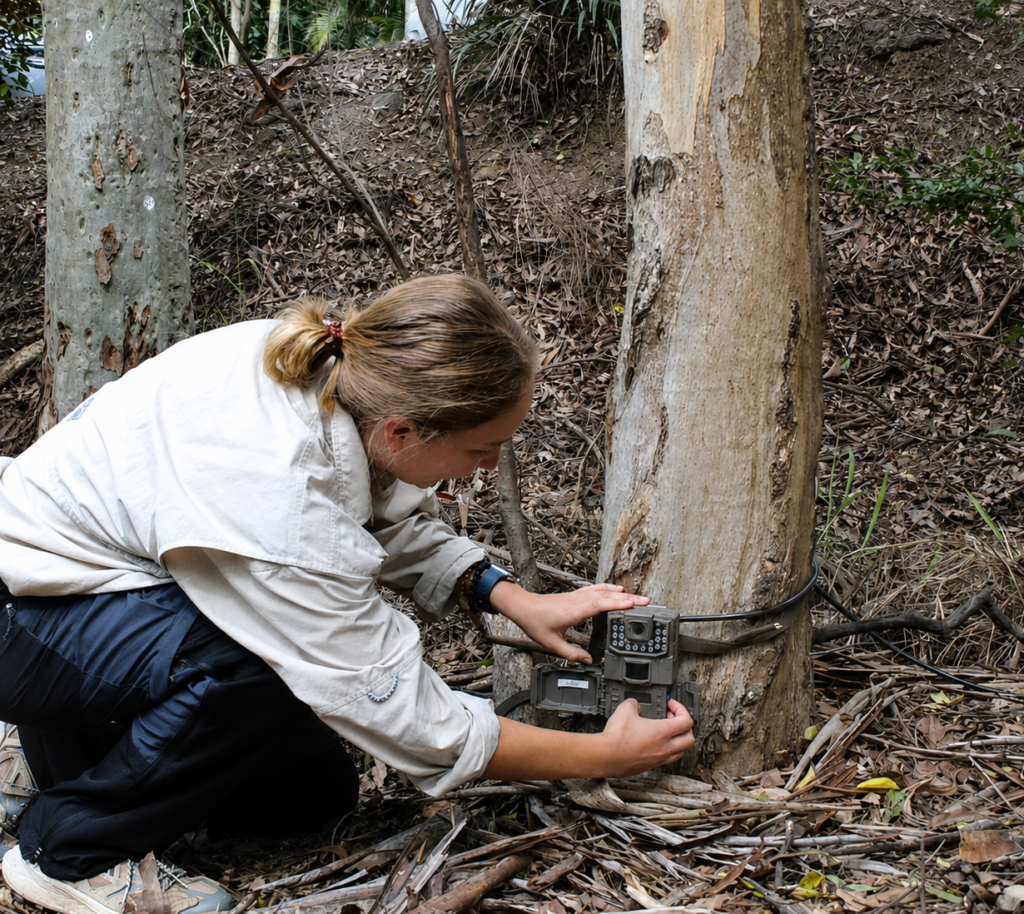
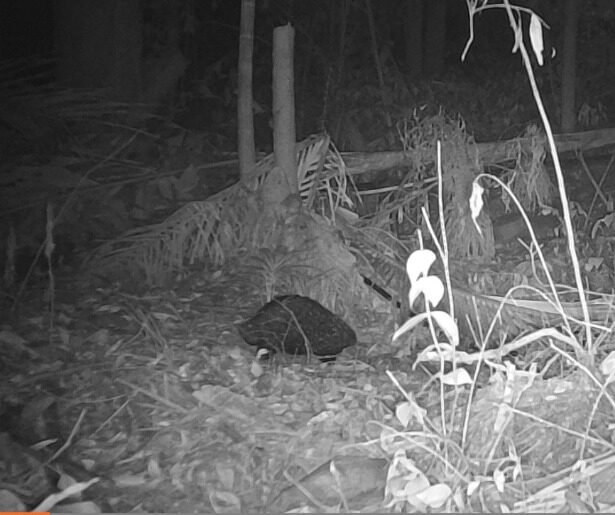
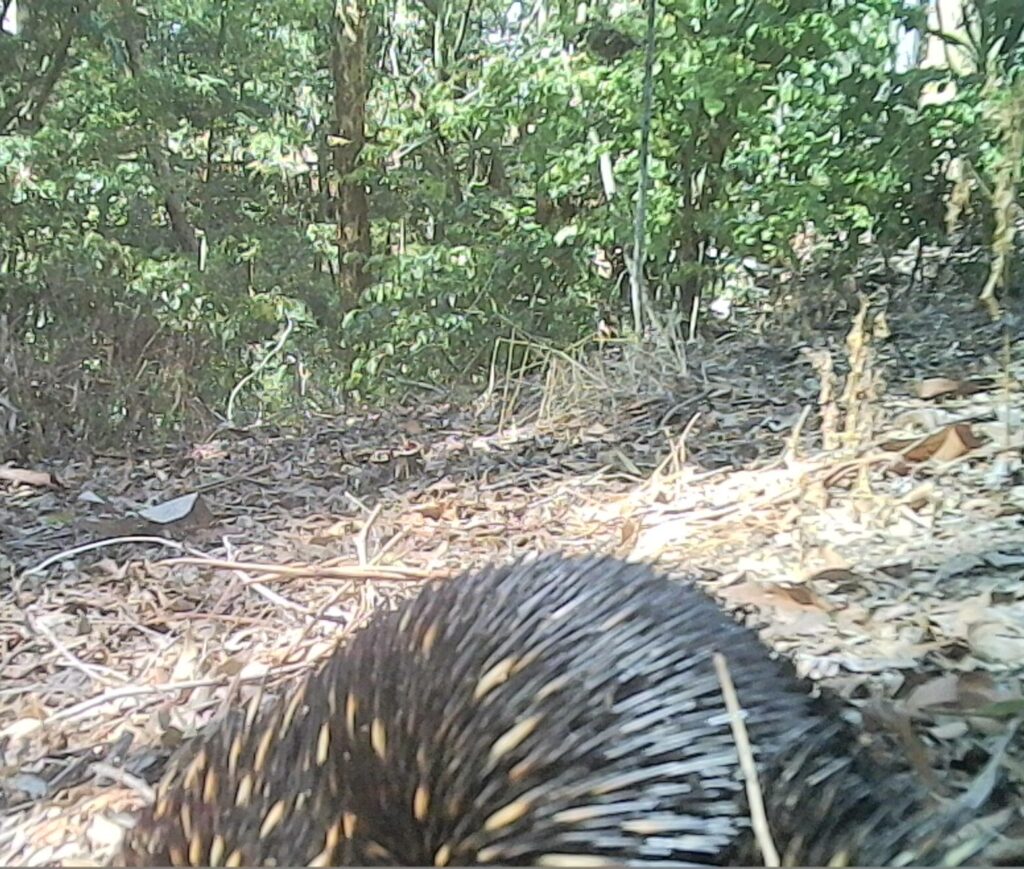
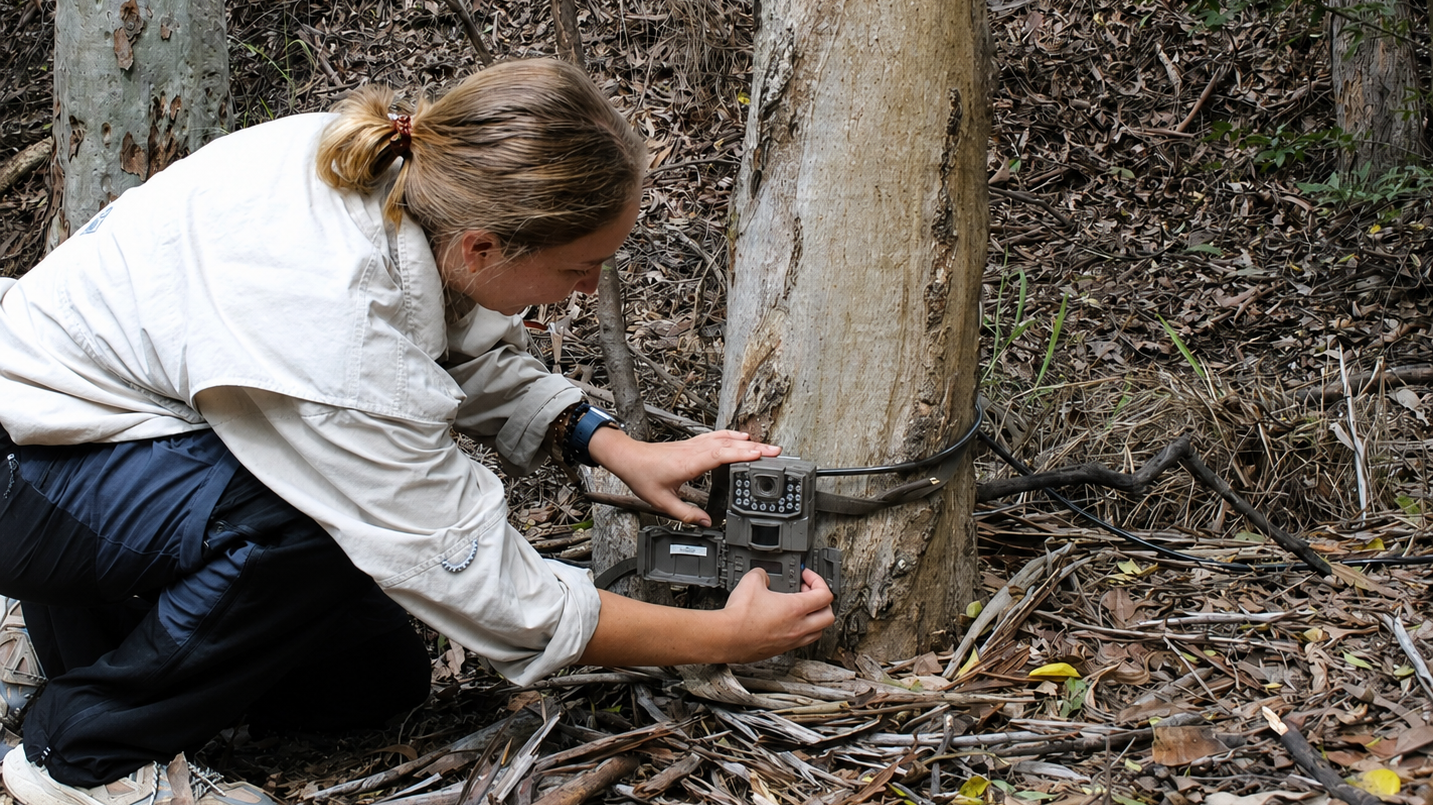
The inclusion of a remnant riparian rainforest system in Long Pocket allows for a diversity of species to occur, most notably the short-beaked echidna. By setting up camera traps in Long Pocket (kindly provided by Dr Zachery Amir of the TERN-supported WildObs project), I was able to record the presence of echidnas at the site. Echidnas are keystone species due to their constant digging behaviours which contributes to soil health, aids in water penetration, and promotes plant germination. The discovery of echidnas at Long Pocket is important because it shows that the overall health of Long Pocket is sufficient for supporting vital ecosystem engineering species; including ones that influence biodiversity.
Here I am, setting up the camera trap
(image credit Kaylyn Chleborad)
Above left and centre: echidna images captured by camera trap;
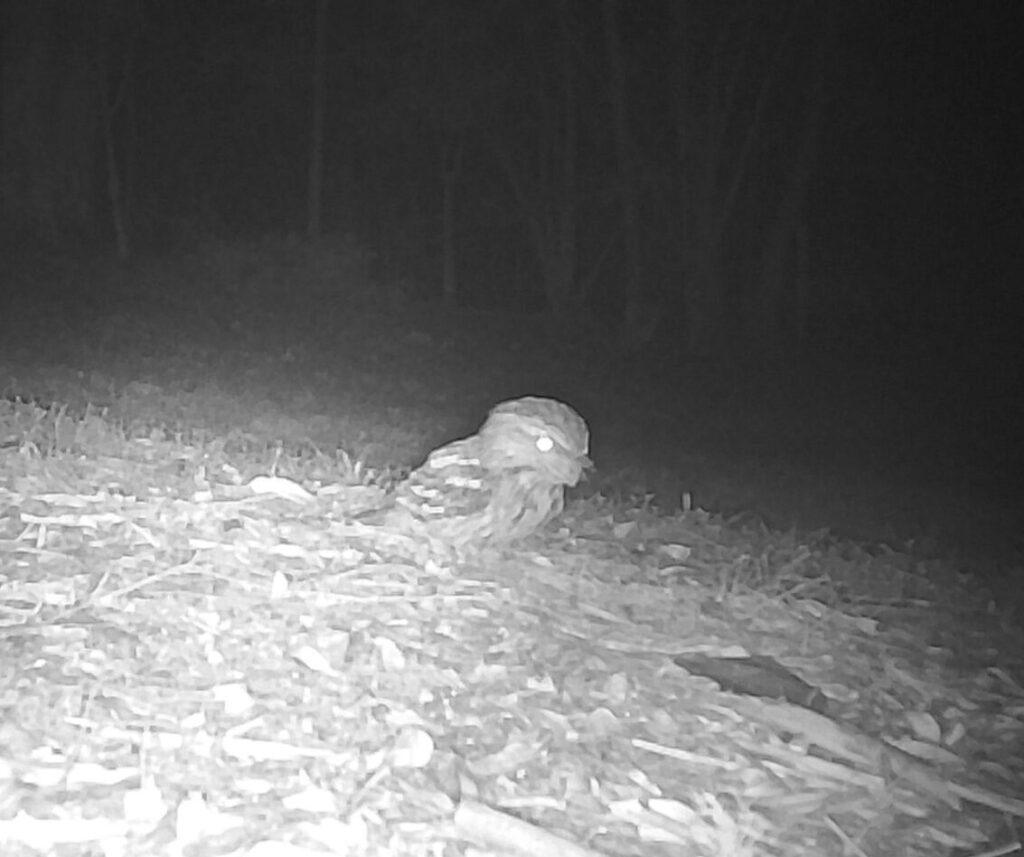
Above right: a tawny frogmouth also has its picture taken (images provided by Kaylyn Chleborad)
Long Pocket is a hidden world of biodiversity on the edge of the Indooroopilly peninsula. It is more than a research precinct; it reflects a story told across much of urbanised Australia, where native species persist under the constant pressure of invasive competitors and ecological degradation. Places like Long Pocket play a critical role in sustaining biodiversity that would otherwise be lost. My experience within this space has shifted my understanding of what these fragmented pockets can represent; not remnants of the past, but active, functioning ecosystems that continue to support complex ecological interactions. Protecting and valuing areas like Long Pocket is essential, not only for the species that depend on them, but for maintaining the ecological resilience of our urban environments far into the future.