

OzFlux Seminar Series

How Australian ecosystems function currently and in a future climate is a key knowledge gap that is important for landscape managers. However, the functioning of ecosystems is difficult to investigate and requires long-term monitoring and interdisciplinary approaches.

The TERN-OzFlux seminars bring together researchers from different disciplines and across different scales (leaves to landscape) to showcase studies of ecosystem resilience or vulnerabilities. The combination of studies from flux researchers, ecophysiologists, remote sensors and modellers will allow a more comprehensive overview about how adaptable ecosystems in Australia are and to what degree which ecosystem functions are impaired.

Seminar 1 recording

What the Flux? A Personal View

Dr Peter Isaac · 24 September 2026

Abstract

The surface fluxes of momentum, heat, water vapour and trace gases such as CO2 and CH4 are important. They function as boundary conditions in formulations of land-atmosphere interactions used in General Circulation Models. They are directly used terms in the hydrological and carbon budgets at patch to global scales. They tell us about ecosystem processes, how these are functioning and how they are influenced by changes in climate. They are direct measures of water lost and carbon gained or lost by ecosystems. They are the link between modelling, remote sensing and reality.

Advances in technology over the last 25 years have meant that measurement of the surface fluxes has progressed from sporadic field campaigns to networks monitoring these exchanges 24 hours a day, 7 days a week at decadal time scales. Two Australian sites now have records of 25 years and 10 are approaching record lengths of 20 years. The possibility of measuring surface fluxes over the 30 year time scale of climate norms is now a reality.

This talk gives a brief overview of the measurement of surface fluxes with emphasis on work done in Australia and New Zealand, including some of the founding documents and major events along the way. Some significant results from the last 2 decades get an airing and some lessons from the past are used to suggest future endeavours. Finally, some ideas on how OzFlux and Ecosystem Processes can continue contributing to both TERN and global initiatives are tossed into the ring, if only to stimulate discussion.
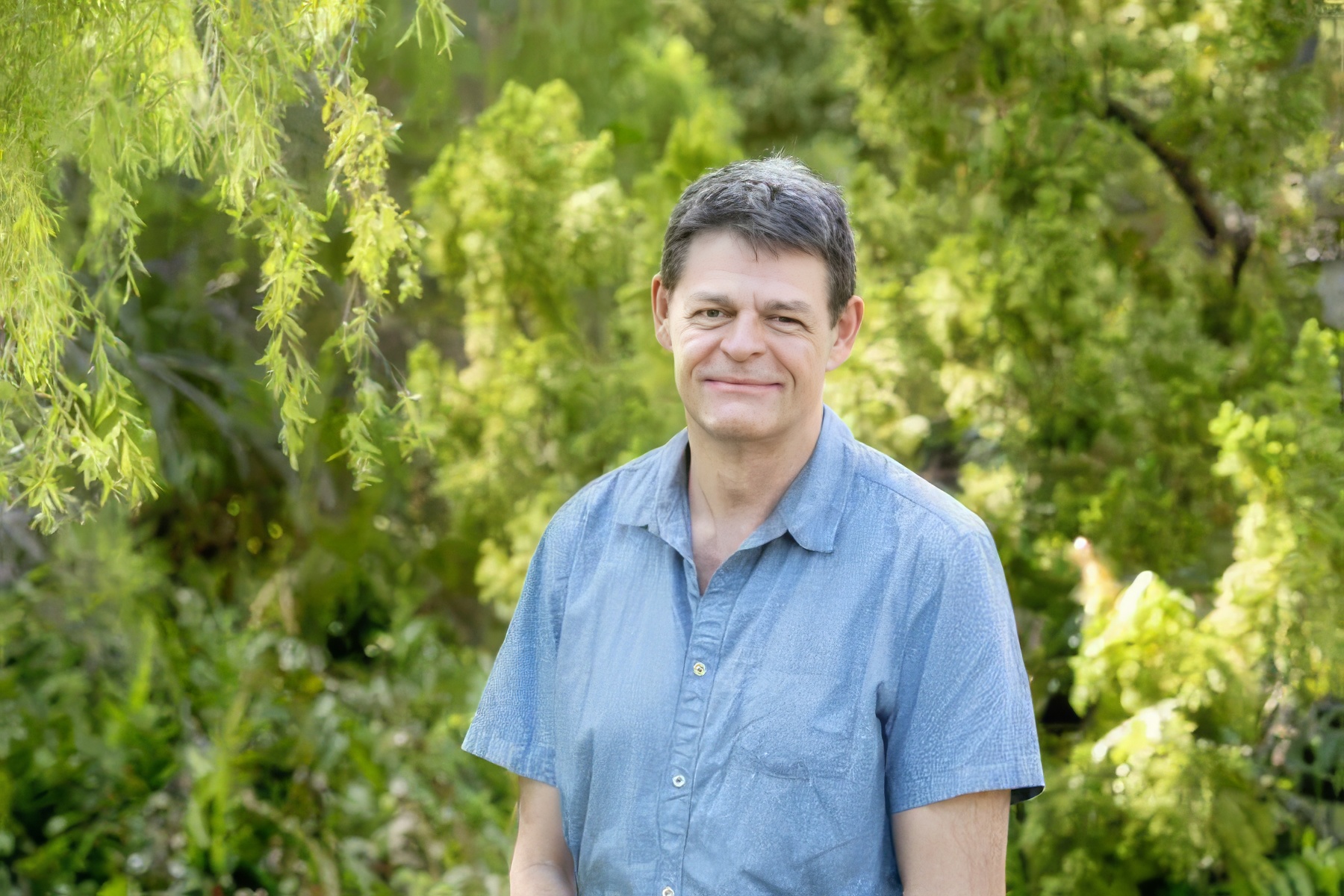
Lindsay Hutley
Coming up: Seminar 2

The North Australian Tropical Transect (NATT): the past and the future

Professor Lindsay Hutley, Charles Darwin University

Thursday 12 November 2026 1:00 pm AEDT

10:00 am Perth · 11:30 am Darwin · 12:00 pm Brisbane · 12:30 pm Adelaide · 3:00 pm New Zealand

Lindsay will look at 25 years of data from the NATT and how the transect's rainfall and vegetation gradients can be used to forecast climate change impacts on northern Australia's tropical savannas.

Register on Zoom
Abstract and speaker bio

Abstract

The North Australian Tropical Transect (NATT) provides a rare, sub-continental framework for climate change research in intact tropical savannas and grasslands. Extending from the humid Top End of the Northern Territory into drier inland savannas and grasslands, the transect captures strong gradients in rainfall, temperature, vegetation structure, fire regime and land-atmosphere exchange. We have collected data over the last 25 years that demonstrate that spatial variation in ecosystem function is strongly linked to changes in canopy structure, woody biomass, leaf area and water availability, rather than simply to species-level physiological change.

This demonstrates how the NATT can be used as a powerful space-for-time system for asking how northern Australian savannas may respond as warming, altered rainfall seasonality, fire and increasing water limitation may reshape ecosystem function. Under future climates, conditions currently expressed in drier inland parts of the transect may become increasingly relevant analogues for more northerly savanna landscapes.

By combining historic flux observations with contemporary climate projections and land-surface modelling, the NATT can be used to evaluate future changes in savanna carbon uptake, water use, fire feedbacks and ecosystem resilience by parameterising regional carbon and water balance models. It therefore offers a practical framework for translating existing spatial gradients into forecasts of climate change impacts across northern Australia's tropical savannas.

About Lindsay

Lindsay Hutley is a plant physiologist with expertise in plant ecology, ecophysiology, ecohydrology, land-atmosphere exchange and soil science. Lindsay completed his PhD in forest hydrology/botany at the University of Queensland. He held several post-doctoral fellowships at Charles Darwin University and is now a Professor in the Research Institute for the Environment and Livelihoods.

Recent work has focused on quantifying fluxes of carbon, water and energy balance from a range of ecosystems, including mangroves, temperate old-growth forests and Eucalypt-dominated tropical savanna ecosystems of north Australia. Understanding impacts of fire, land use change and climate change on these ecosystem processes is required to underpin natural resource management in north Australia and research programs are focused on this goal.

Loading results...