Measuring carbon, water and change at Australia’s longest-monitored ecological site
Published
With co-contribution support from the South Australian Government and Adelaide University, installation of an eddy covariance flux tower at the Koonamore Vegetation Reserve (KVR) has commenced recording data on gas exchange between soil, vegetation and the atmosphere to complement the nearly 100-year-old ecological dataset TERN holds from this arid site.
By Dr Katie Irvine, TERN Ecosystem Surveillance Communications Lead
A rich history
Koonamore Vegetation Reserve (KVR) is important to ecologists because generations of students and academics have been monitoring the site collaboratively for some 100 years, helping to build a multi-decadal ecological dataset. In 1925, Professor Theodore George Bentley (TGB) Osborn from the University of Adelaide partnered with the Koonamore Station landowners to establish a 4 km2 fenced area to exclude sheep and rabbit grazing. A century later, data and images from this experiment offer a rare insight into arid zone native vegetation response to feral herbivore exclusion. Officially named the TGB Osborne Vegetation Reserve, KVR has a fascinating social and ecological history, as described in this TERN news article, published September 2025: A Century of Watching the Bush Come Back: separating the effects of grazing from climate variability through long-term monitoring. Installation of the flux tower at KVR in September 2026 is set to provide a valuable new layer of ecosystem data from this unique resource.
Unprecedented arid zone data collection
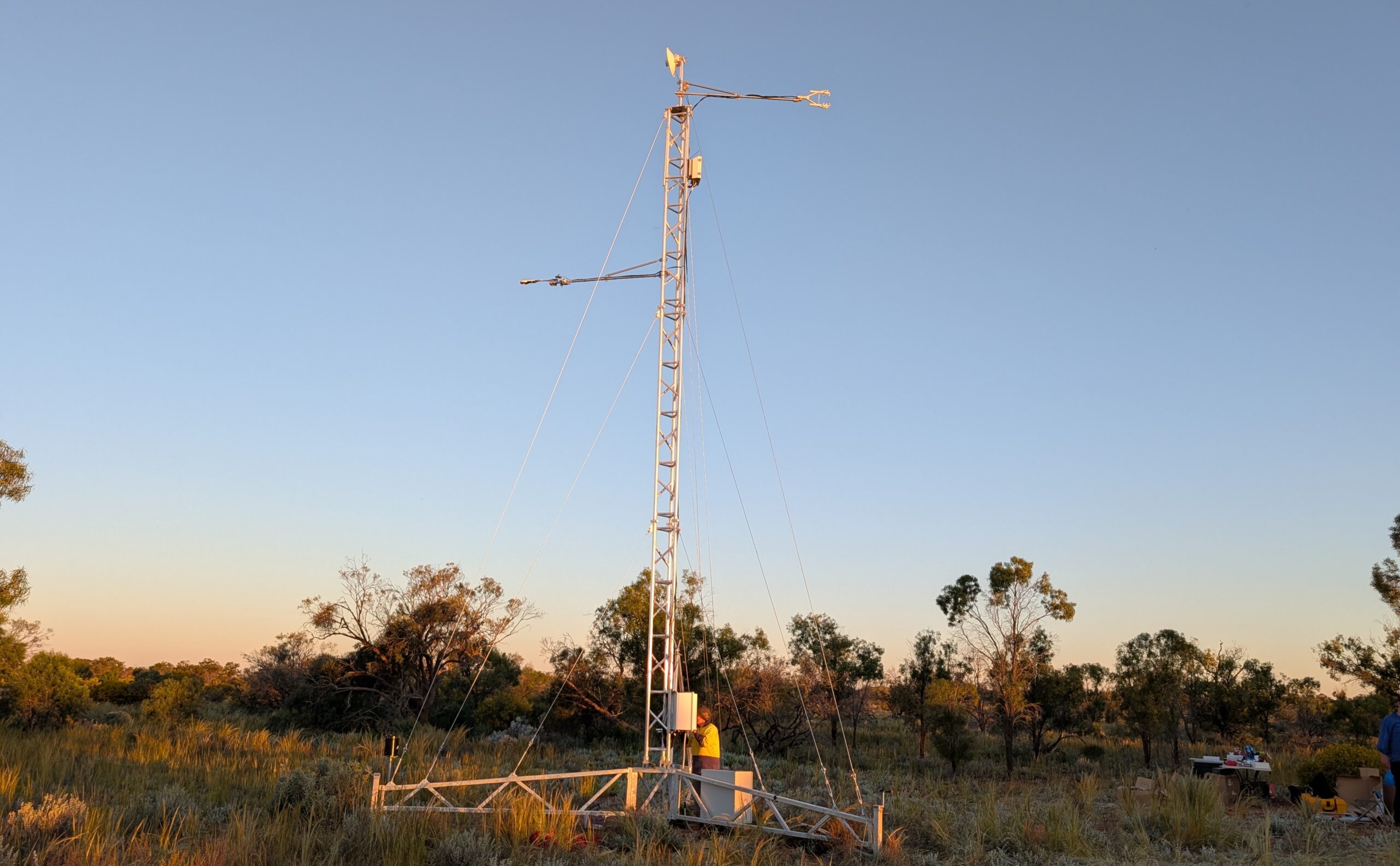
An Eddy Covariance Flux Tower (‘flux tower’) is an in situ micrometeorological measurement station, equipped with specialised sensors on the tower that continuously measure trace gas concentrations of carbon dioxide and water vapour, as well as air temperature, precipitation, wind, radiation, and soil temperature.
Flux tower data can be used for a vast range of research on ecosystem processes, from estimating plant productivity and ecosystem respiration to monitoring evapotranspiration and soil moisture dynamics. For this reason, flux tower data has become fundamental for determining carbon source/sink dynamics, measuring climate variability, validating land-surface models, and calibration and validation of satellite imagery.
“This project marks the first time in the Reserve’s magnificent 100-year history that the site will be connected to the outside world, with real-time data on ecosystem-level CO2 and water exchange,” says Dr Joe Atkinson, a plant community ecologist at Adelaide University, who is involved in the long-term experiment at Koonamore.
His colleague, Dr Sami Rifai, a forest ecologist at Adelaide University is also delighted to see the new tower up and running. “In October 2025, we celebrated the 100th year anniversary of the Koonamore vegetation stock exclusion experiment,” he says. “The construction of this tower has been a dream a few years in the making, and a big technological step into the next century of research at this exceptionally unique site.”
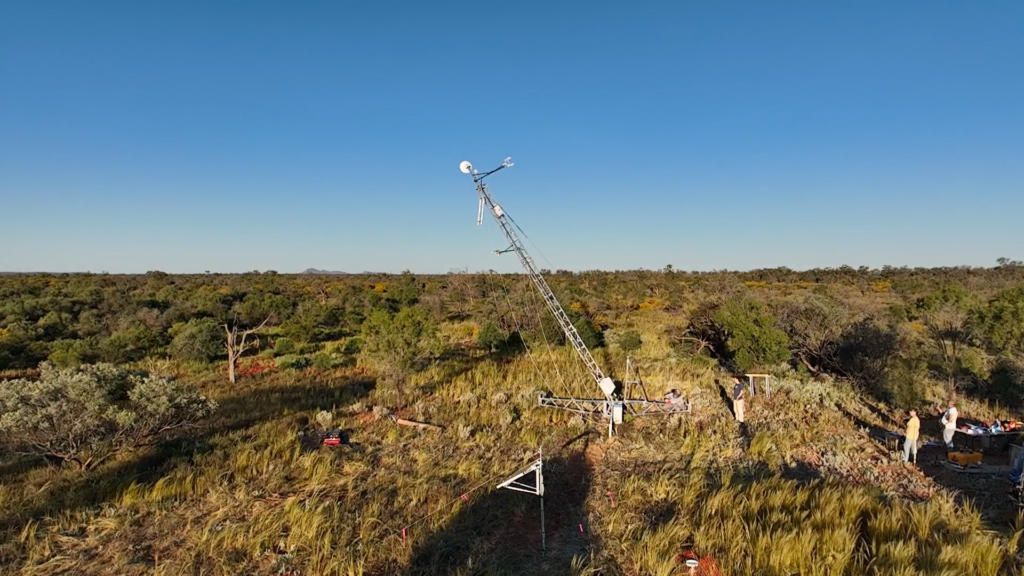
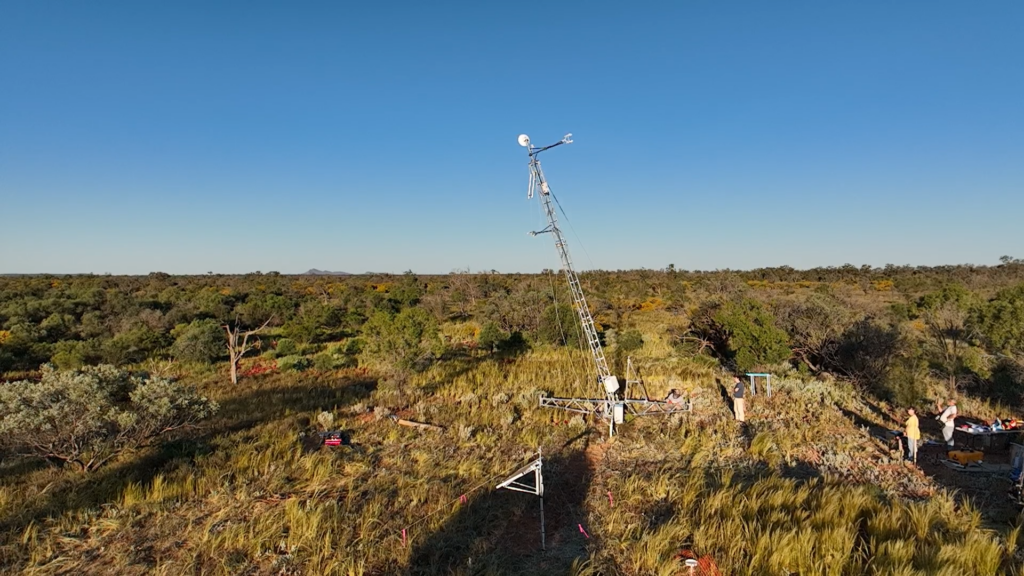
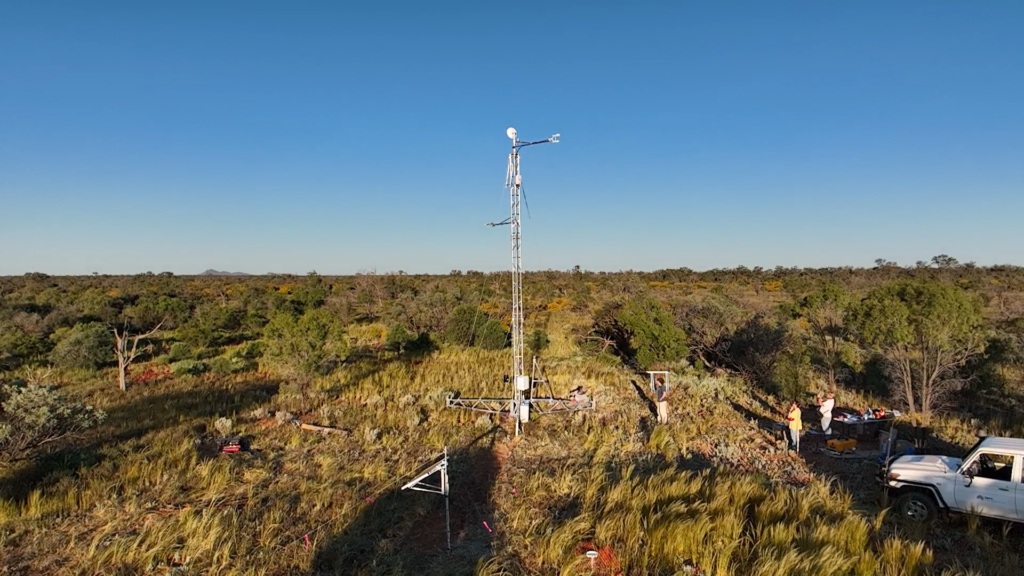
Top L-R: the team carefully winches the tower into place.
Bottom: all goes well and the tower is ready to collect data (images provided by Sami Rifai)
The flux data will give researchers new insights into the ecosystem processes at KVR, such as how the carbon metabolism and evaporation dynamics of vegetation in an iconic arid rangeland ecosystem responds to weather variability.
In particular, says Sami, “this flux tower will enable us to establish a counterfactual view into the carbon and water cycles of a chenopod shrubland ungrazed by stock (sheep) for a century.”
“The tower will also serve as a base to monitor plant phenology and wildlife, soil moisture dynamics, and better understand the trends and extremes of arid rangeland weather.”
A springtime wonderland
Koonamore Vegetation Reserve has already recorded 368 mm of rainfall between January and mid-August this year, substantially exceeding its long-term annual average rainfall of approximately 212 mm (Bureau of Meteorology 2026).
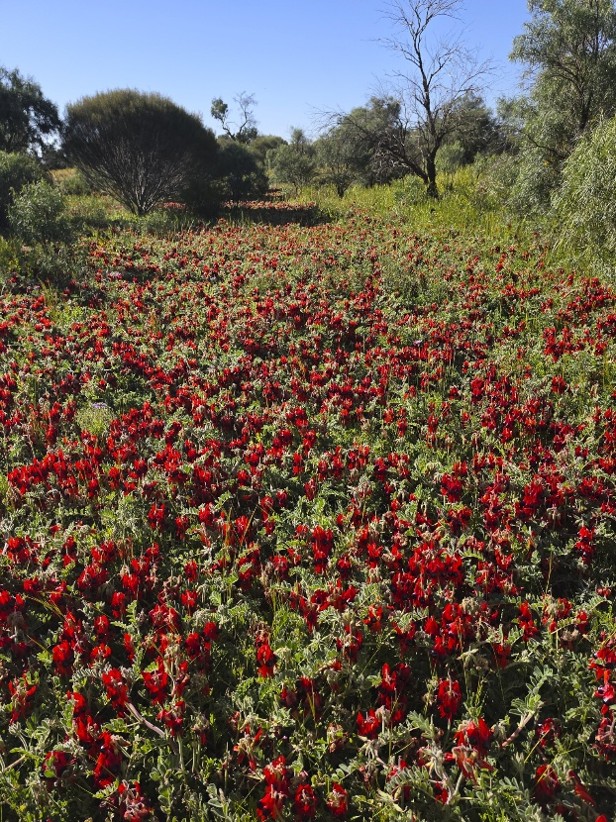
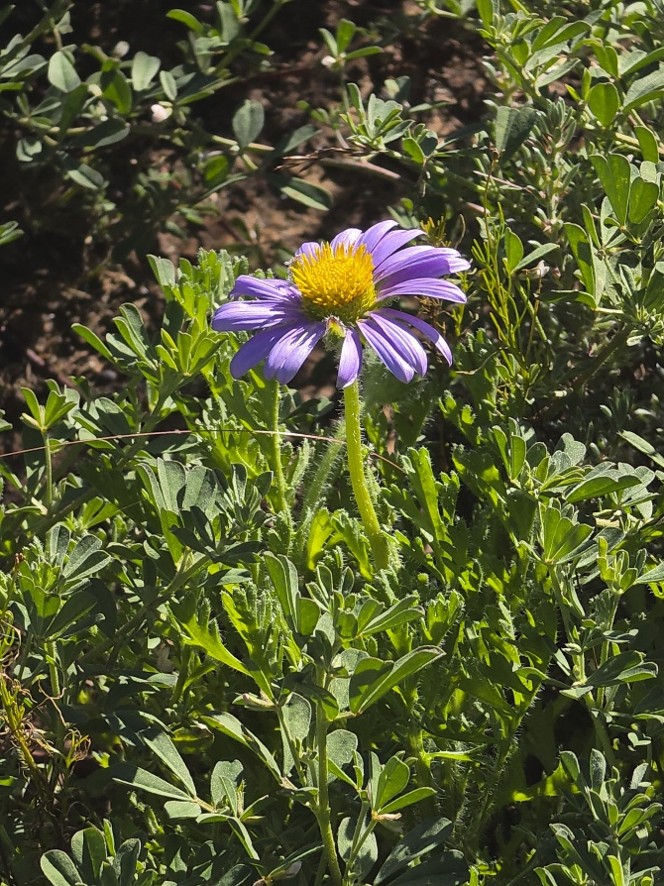
Dr Joe Atkinson noted, “The conditions were some of the most exceptional since record rainfalls in the 1970s. Waist-high speargrass (Austrostipa spp.), as well as Sturt’s desert pea (Swainsona formosa) and Koonamore daisies (Erodiophyllum elderi), filled the gaps among the chenopods.”
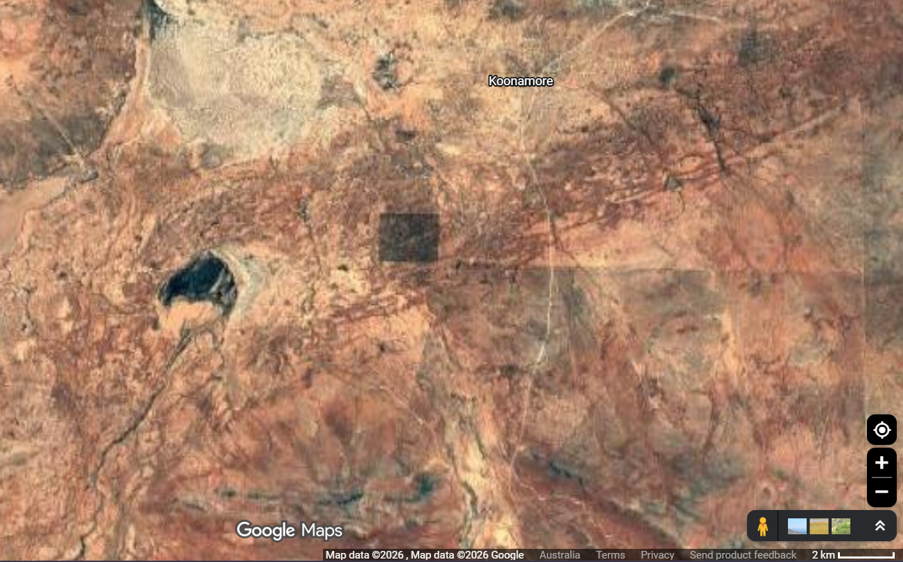
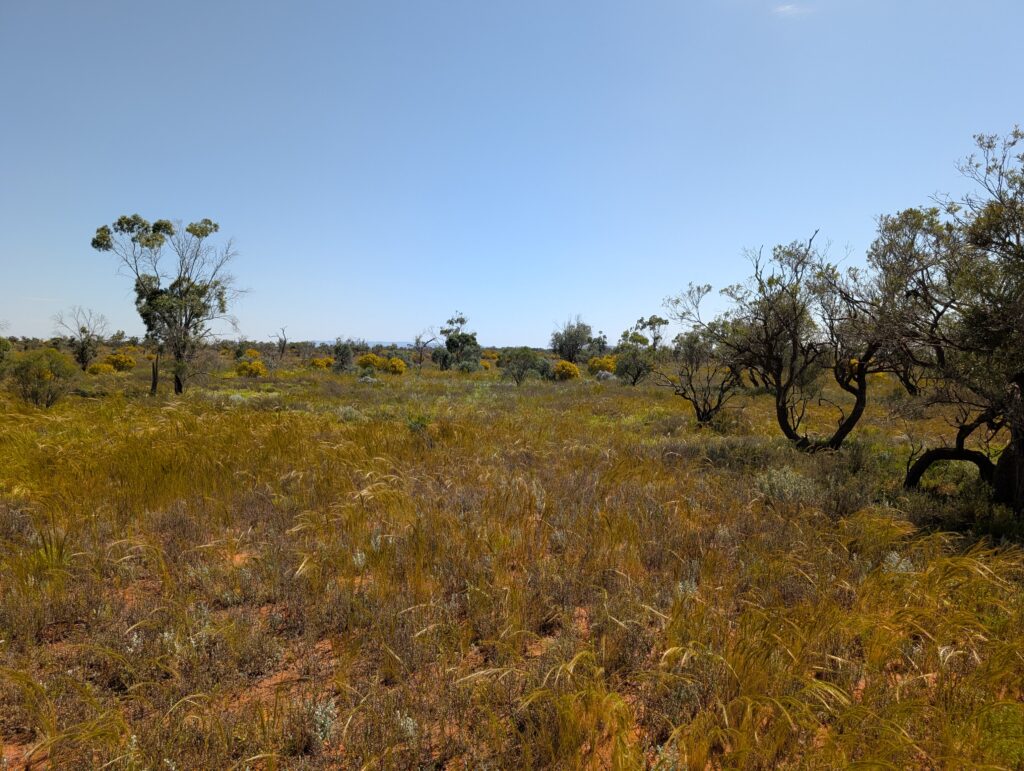
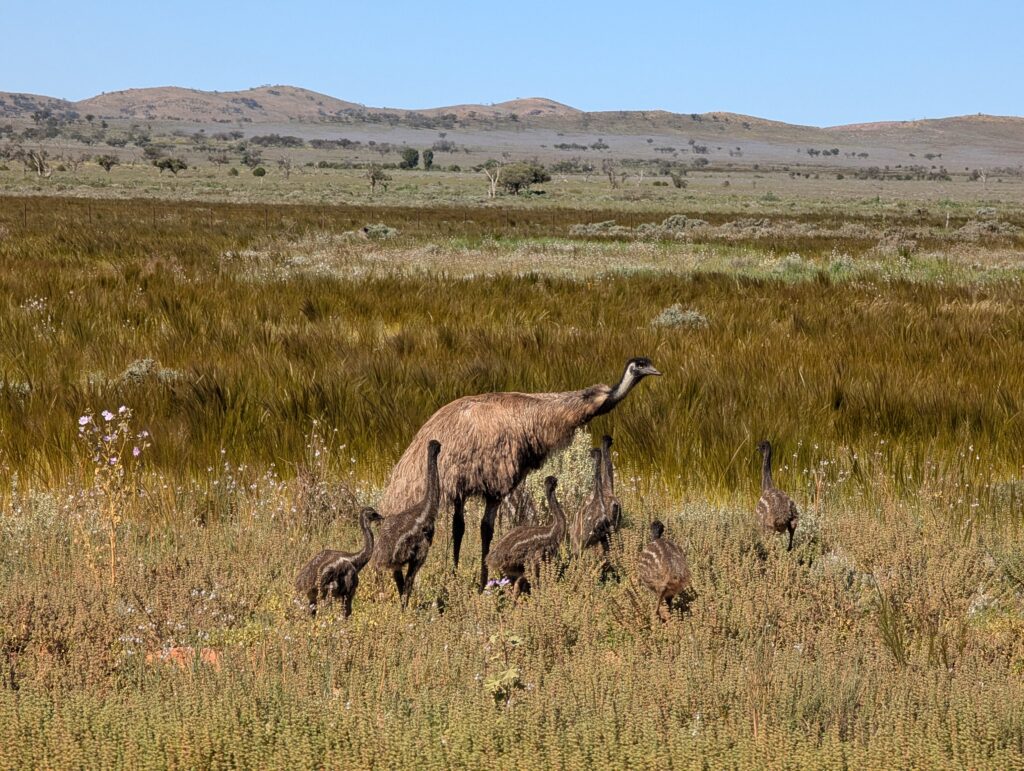
Top L-R: Sturt’s desert pea (Swainsona formosa) super bloom; Koonamore Daisy (Erodiophyllum elderi) (images: Ben Sparrow); Centre: the Koonamore Vegetation Reserve 4 km2 fenced feral herbivore exclusion area is visible from space! (via Google Maps); Bottom L-R: shrubland at KVR; though the reserve was fenced to exclude rabbits and livestock, it did not fully exclude emus (images: Sami Rifai)
The next hundred years
Soon, the Koonamore flux tower will provide globally accessible data-streams with satellite-data connectivity planned for the flux tower, ensuring data will be available live from anywhere in the world. Moreover, its data will join that of TERN’s network of flux tower sites across Australia, ultimately adding micro-meteorological observations of land-atmosphere energy, carbon and water exchanges to the global eddy-covariance data network, FLUXNET.
In addition, the KVR is now fully integrated with TERN’s Ecosystem Surveillance program. Field surveys using the TERN standardised method will be conducted before the end of 2026. TERN’s DroneScape program will also visit the site to collect data using drone-mounted RGB (Red, Green, Blue camera), multispectral, and LiDAR sensors.
Associate Professor Ben Sparrow, TERN Ecosystem Surveillance Lead said “TERN’s ecological survey work at KVR will be used for future calibration and validation of remote sensing data, including satellite imagery collected by international space agencies.”
“Future work at KVR by TERN and Adelaide University is built on the lengthy history of the site. The exciting future possibilities, innovations and international collaborations are only possible because of the hard work and tenacity of the researchers and students who have kept the site going for 100 years. They have created the longest continually monitored ecological site in Australia.”
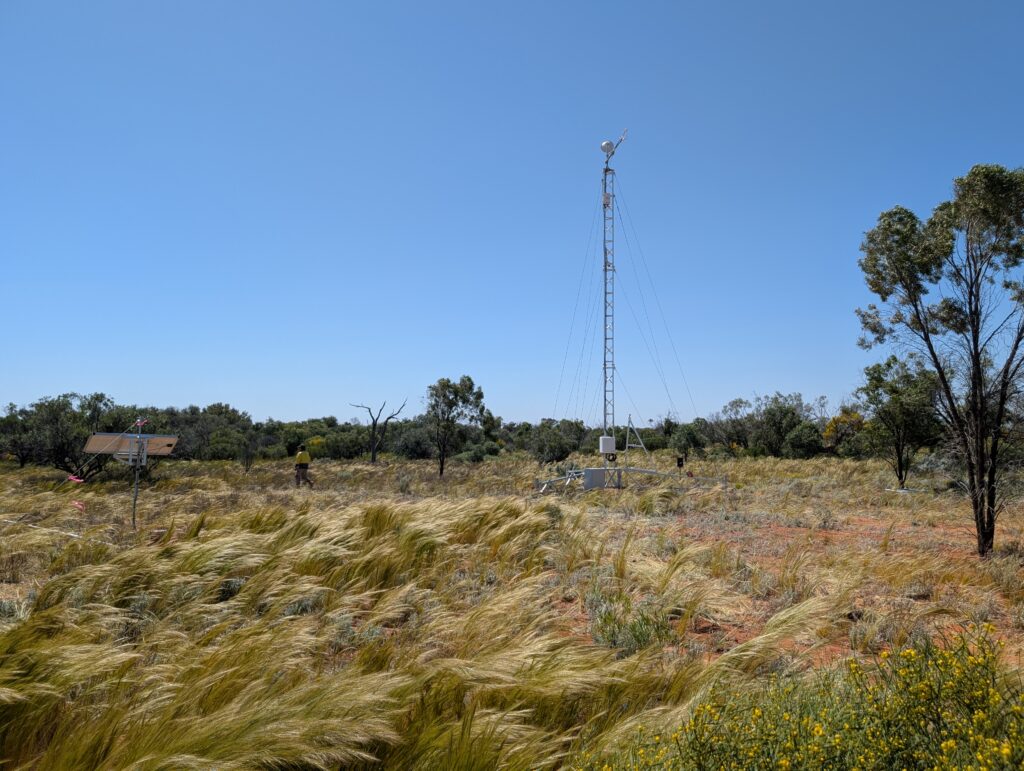
Feature image: the new flux tower at KVR (image provided by Sami Rifai)