TERN’s multiplier effect: one infrastructure benefits many economies
Published
When most people think of TERN Australia, they think of ecology. Images of field plots, flux towers and long-term environmental monitoring often come to mind. And they would be right. But that is only part of the story.
What is becoming increasingly clear is that TERN is much more than an environmental research infrastructure. It is an enabling capability that quietly supports a remarkably diverse range of activities across the Australian economy.
From carbon markets and biodiversity credits to disaster resilience, agriculture, health and water management, reliable environmental data has become essential for evidence-based decision making. Whether we are assessing drought impacts, tracking ecosystem recovery after bushfires, validating carbon accounting, planning urban cooling strategies or monitoring coastal blue carbon ecosystems, they all depend on one thing: trusted, long-term environmental information.
That is where TERN comes in.
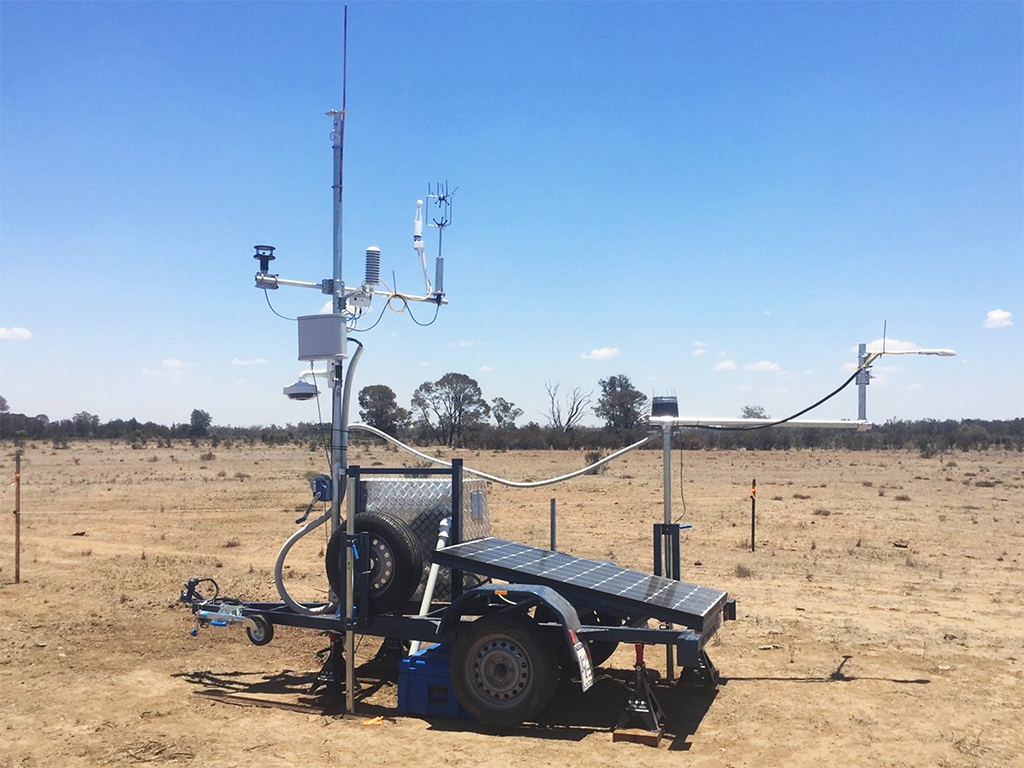
TERN provides a unique combination of field observations, Earth observation products and open-access data infrastructure. Across Australia, its network of ecological plots, flux towers, acoustic monitoring systems and soil monitoring sites generates the measurements that help us understand how ecosystems are changing over time. These observations are then scaled using remote sensing and spatial analytics to create nationally consistent information products that are used by researchers, governments, businesses and communities.
Importantly, TERN’s role extends well beyond research.
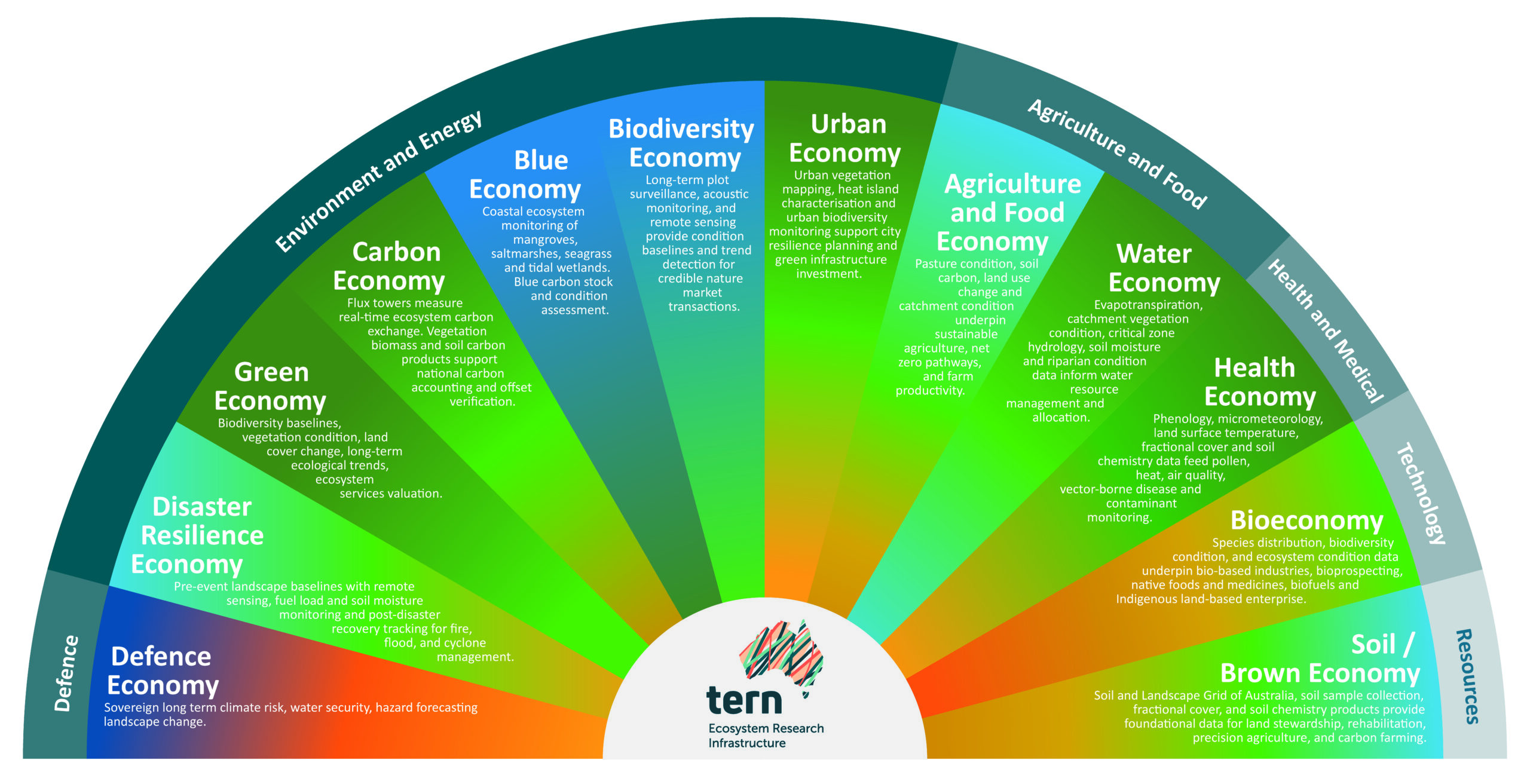
The data collected through TERN help underpin at least eleven interconnected parts of the economy: the green economy, blue economy, carbon economy, biodiversity and nature economy, health economy, disaster resilience economy, agriculture and food economy, water economy, urban economy, bioeconomy, and the soil economy.
Soil carbon monitoring
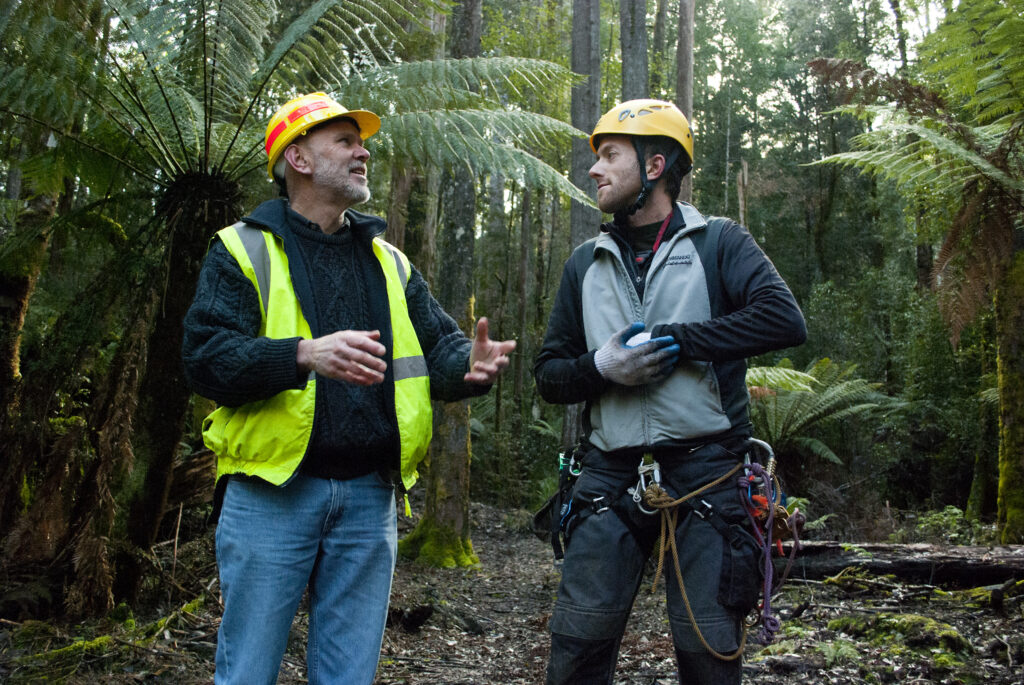
Forestry management
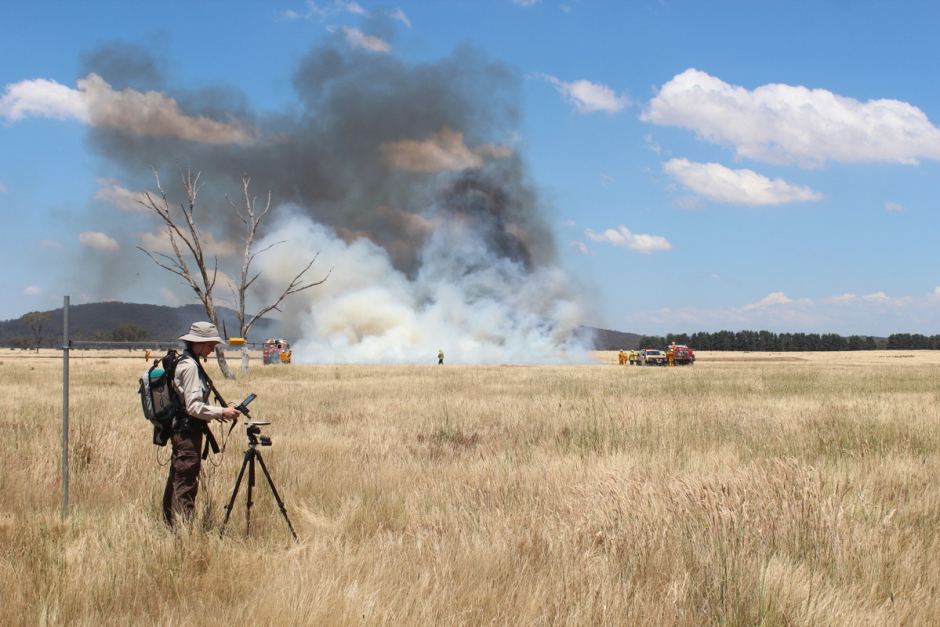
Fuel load assessment (C. Luiz)
What makes this particularly powerful is that the same dataset is often valuable across multiple sectors. A single flux tower measurement can contribute to carbon accounting, water management, agricultural productivity, disaster preparedness and climate adaptation at the same time. Soil data may support precision agriculture, mine rehabilitation, carbon farming and public health applications simultaneously. This multiplier effect means that every investment in environmental monitoring creates benefits that extend far beyond any one user group.
Many Australians encounter the outcomes of TERN-enabled science without ever realising it. Environmental reports, carbon projects, biodiversity assessments, drought planning, heatwave responses and natural disaster recovery efforts all rely on the kinds of long-term, standardised datasets that TERN provides.
As Australia navigates the challenges of climate change, nature repair, sustainable food production, ecosystem health and economic resilience, the need for trusted environmental information will only grow. The question is no longer whether environmental data are important. The question is whether Australia can afford to be without the infrastructure that makes those data possible.
For more than 15 years, TERN has been steadily building that foundation. Today, it is becoming increasingly evident that what began as environmental research infrastructure has evolved into something much broader: an enabling platform that helps support at least eleven economies and the decisions that shape Australia’s future.
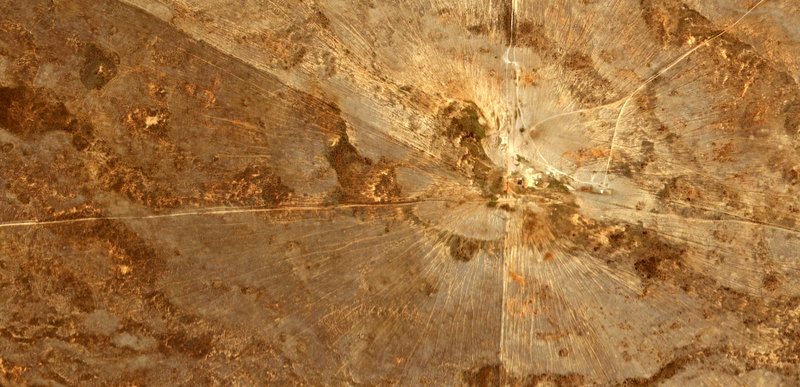
Land management - satellite image of rangeland grazing pressures (M Lewis)
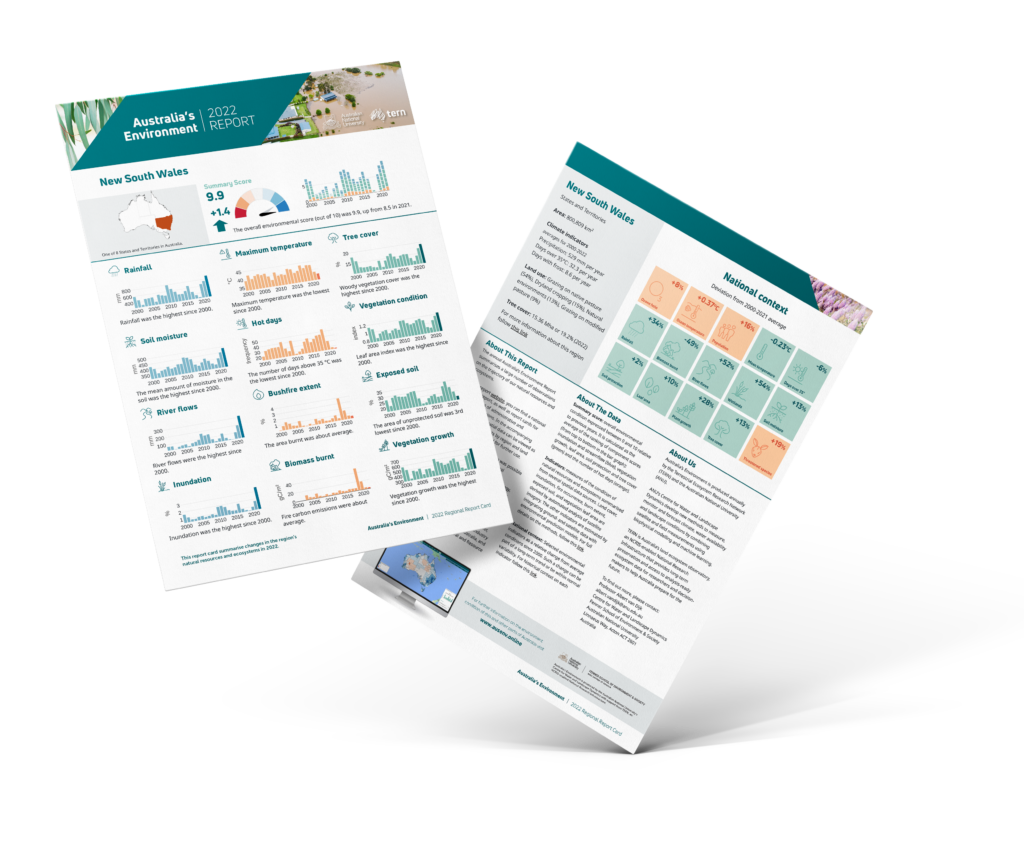
Feature image: concept illustration of TERN as an enabling research infrastructure (credit: TERN)