

August has been a month focused on strategy, partnership and the shared purpose that underpins Australia’s national environmental research infrastructure.
One of the month’s highlights was the inaugural meeting of TERN Australia’s new skills-based Advisory Board in Adelaide. The Board, chaired by Dr Les Trudzik, represents an important evolution in TERN’s governance and positions us strongly for the opportunities ahead.
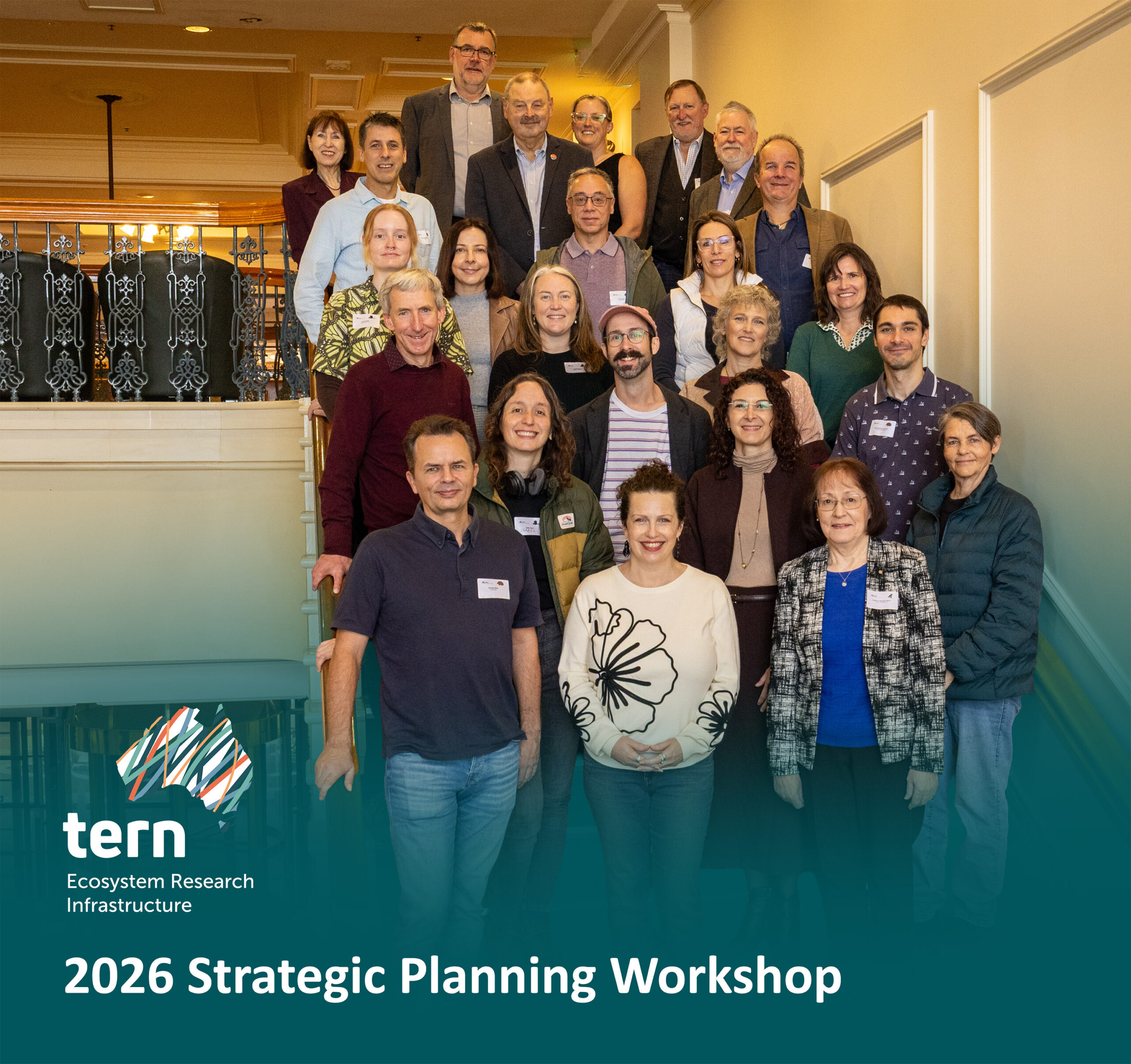
Importantly, the meeting was not confined to formal governance discussions. Advisory Board members joined the TERN Executive Group, Project Office team and Regional Ambassadors for a collaborative workshop to finalise the 2026-31 TERN Strategic Plan. The workshop provided an opportunity to test ideas, challenge assumptions and ensure the next phase of TERN’s development is firmly aligned with the needs of government, industry, researchers and the wider community. It was particularly encouraging to see so much expertise and enthusiasm gathered in one room, united by a commitment to delivering nationally significant environmental data and insight.
Adelaide was also the location for this month’s meeting of the Integrated Earth group, bringing together NCRIS capabilities operating across the earth and environmental sciences with colleagues from Geoscience Australia, CSIRO, the Department of Climate Change, Energy, the Environment and Water, the Bureau of Meteorology and the Australian Institute of Marine Science. The meeting reflected on the findings of the recently released Lateral Economics cost-benefit analysis, which demonstrated the substantial economic and societal value generated through investment in a collaborative ecosystem of Earth and Environment research infrastructure and its associated open-access data services.
In addition to its meeting, the Integrated Earth capabilities toured several South Australian facilities, including the South Australian Drill Core Library, the TERN Australia Soil and Herbarium Collection, and the Australian Plant Phenomics Network’s Plant Accelerator. While these facilities may appear highly diverse at first glance, a common thread quickly emerged: each is generating rich digital representations of the natural world through imaging technologies operating at very different scales but nevertheless demonstrating how digital technologies are transforming the way we observe, understand and manage environmental change.
This theme of innovation was also core to the ADSTAR Summit, which I was pleased to attend early in the month. While the event principally focused on defence and industry, many of the lessons resonated strongly with research infrastructure. Case studies highlighted the value of trusted partnerships, rapid technology adoption, effective use of artificial intelligence and the importance of moving ideas swiftly from concept to implementation. These are principles that increasingly apply across all sectors, including environmental science.
Finally, it is wonderful to see the launch of the Global Ecosystem Research Infrastructure (GERI) integrated drought dataset initiative. For the past few years, this has been a significant international collaboration, demonstrating how harmonised environmental data can support understanding of one of the world’s most pressing environmental challenges. As climate pressures intensify, initiatives such as this highlight the importance of globally connected infrastructure and the role TERN plays within that international ecosystem.
As always, thank you to our staff, partners, collaborators and users for your ongoing support as we continue building Australia’s ecosystem observatory for the benefit of generations to come.
Dr Beryl Morris, Director, TERN Australia