
If you want a snapshot of TERN’s strategic purpose in action, this month’s newsletter is a good place to look. Education, training, outreach and our “living infrastructure” — our people — feature strongly throughout July’s stories.
Together, these four pieces show why standardised, long‑term ecosystem monitoring only works when the knowledge behind it is shared by TERN as widely as the data itself. Two decades of NCRIS investment have enabled TERN to build a skilled national workforce of technicians, analysts and researchers who operate Australia’s ecosystem monitoring infrastructure. That capability underpins industry innovation, government decision‑making, environmental resilience and public wellbeing. And if you want a glimpse of the dedication behind that workforce, Science in the Snow is a great place to start.
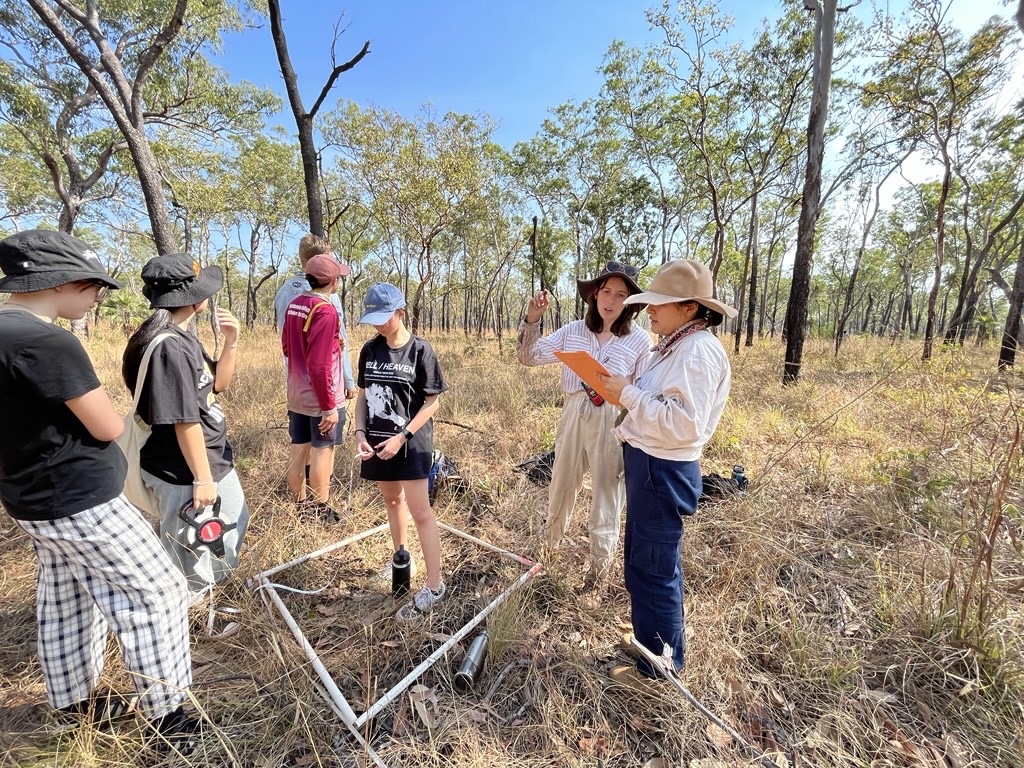
We also highlight how TERN is working with Australian teachers to inspire the next generation of ecologists by connecting classrooms with real ecological data. At the Litchfield Savanna SuperSite, our education strategy comes alive as students and researchers work side by side using the same field protocols that underpin our national datasets. Both stories reinforce the same message: TERN’s value lies not only in the data we collect but in the people we train to understand and use it well.
That commitment continues next week at the Calperum Mallee SuperSite near Renmark, where TERN is running a fully subscribed field training workshop. The demand for hands‑on skills in standardised monitoring remains high across the sector. These workshops are one of the clearest ways TERN shares the knowledge behind our protocols — the foundation of the consistency that makes long‑term ecosystem data so powerful. Participants leave with new techniques and a deeper appreciation of why consistency across sites and over time matters for tracking environmental change.
We also celebrate the achievements of graduate students undertaking short‑term placements with TERN. The latest is Tim Temizyurek from the University of Queensland, who has completed a three‑month HDR placement with our Data Services and Analytics team. Tim developed an automated reporting workflow for the EcoPlots platform, improving the efficiency and consistency of regulatory reporting for the TERN Surveillance capability. It is exactly the kind of placement that benefits everyone: practical experience for the student, and lasting uplift for TERN’s digital infrastructure. Well done, Tim.
Taken together, these stories show how TERN treats education and training as core infrastructure — just as essential as the sensors, plots and data pipelines we maintain. Teachers inspiring students, students undertaking place‑based learning at our SuperSites, practitioners training at Calperum and researchers gaining industry experience through placements all strengthen the same national network.
Thank you for being part of it. I look forward to seeing many of you at future training and outreach events as we continue building the skills base that Australian ecosystem science depends on. In the meantime – happy reading.
Dr Beryl Morris, Director, TERN Australia
Top image: students at Litchfield Savanna SuperSite. Credit: Eleanor Velasquez