

October has been a month of significant national and international engagement for TERN, marked by our submission to Australia’s research infrastructure planning, recognition of excellence within our community, global collaboration through GERI and strong participation in our outreach and training activities.
TERN has formally submitted its response to the 2026 National Research Infrastructure (NRI) Roadmap Exposure Draft, emphasising the essential role of long‑term environmental observation in Australia’s national evidence system. Our submission highlights that continuity of environmental, ecological, coastal, atmospheric and landscape observations is itself a strategic national capability. Points made in the TERN submission include the following.
- We reinforced that Australia’s environmental intelligence, including digital twins, AI-enabled modelling and predictive systems, depends fundamentally on trusted, standardised and interoperable observational datasets.
- We underscored Australia’s globally significant role in environmental observing systems, particularly as a Southern Hemisphere provider of essential climate, carbon, water and ecosystem measurements. Without sustained Australian observations, critical gaps would emerge in global datasets, reducing confidence in climate and Earth system models.
- We advocated for stronger national synthesis capability across NRI facilities to help turn environmental data into actionable knowledge. Tackling complex challenges such as climate change, biodiversity loss and sustainable resource management requires collaboration among government, industry, academia and communities. By bringing together diverse data, expertise and perspectives, synthesis enables evidence-based decisions and solutions with greater impact and real-world relevance.
We are delighted to congratulate Professor Graciela Metternicht, member of the TERN Advisory Board, on her election as a Fellow of the Australian Academy of Technological Sciences and Engineering. This honour acknowledges her outstanding contributions to environmental geospatial science, land degradation assessment and sustainable development. Her recognition is a testament to the impact of her work across Australia and internationally and we are proud to have her guidance as part of TERN’s governance.
October also saw the release of an important new paper on a global ecosystem network of networks initiative (“GENNI”) made possible by the Global Ecosystem Research Infrastructure (GERI), of which TERN is a founding member. The paper, Connecting the World’s Environmental Networks, includes several TERN authors and showcases how GERI is enabling unprecedented scientific collaboration across continents, decades and ecological disciplines.
October also saw TERN deliver another highly successful webinar, this one focused on LiDAR technology. It was the final 2026 webinar and because it attracted such a large international audience from dozens of countries, we’re featuring a LiDAR story in the newsletter to provide more details about practical, scientifically robust approaches to vegetation structure and biomass assessment.
Taken together, these October activities – national policy engagement, international collaboration, recognition of excellence and broad community participation – reflect the strength, diversity and momentum of the TERN community. As the Australian Government moves towards the finalisation of the 2026 NRI Roadmap, TERN will continue advocating for the enabling role of long‑term environmental observation and monitoring in Australia’s research infrastructure system, while fostering the collaborations and capabilities needed for a resilient environmental future.
Until our next catch up in November, all the best.
Dr Beryl Morris, Director, TERN Australia
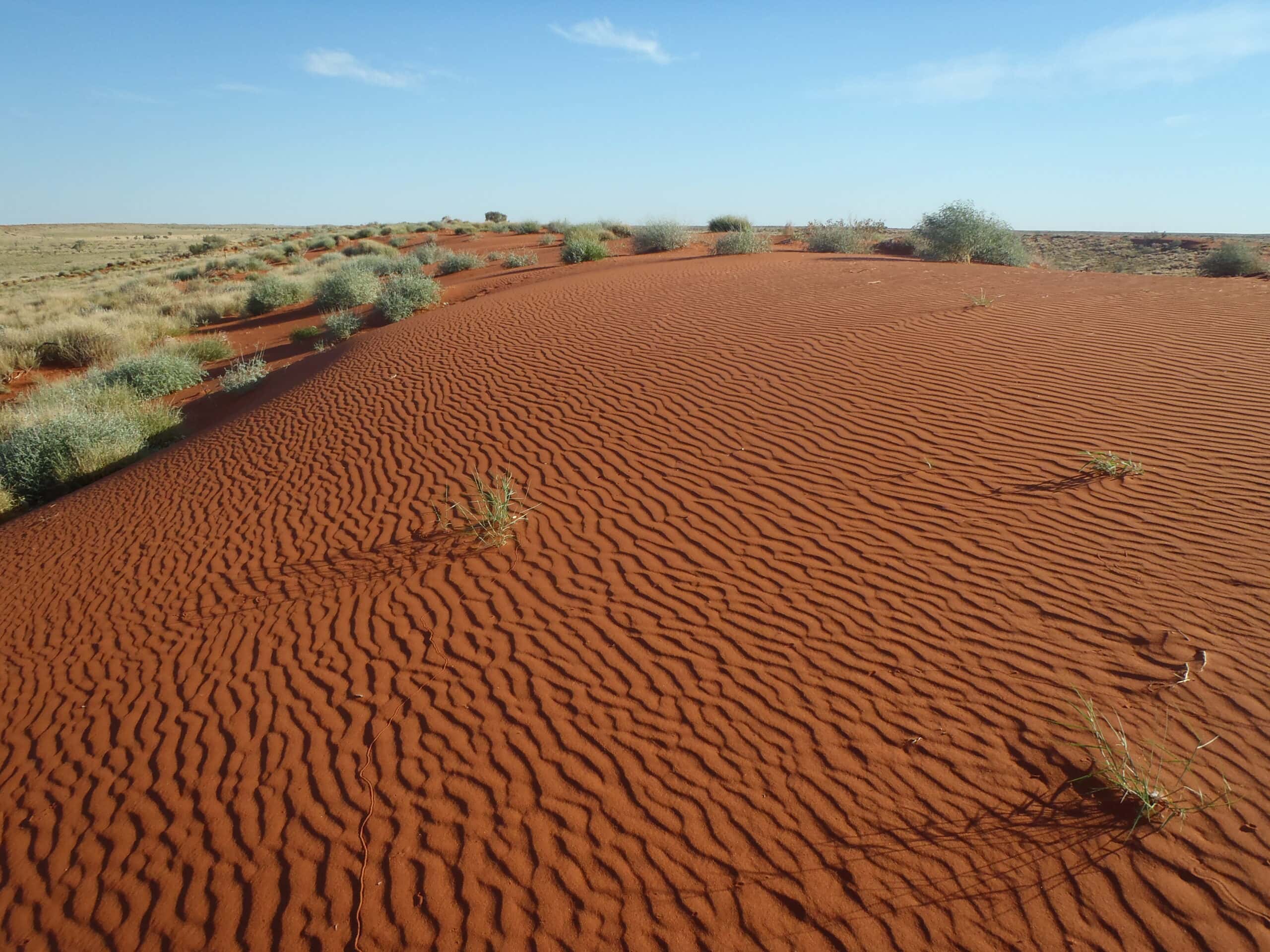
Image: Australian Simpson Desert (credit: Tamara Potter)